In a nutshell
- 🧠 Visual clutter drains attention: it heightens cognitive load, breeds decision fatigue, and creates “attention residue,” making spaces feel like a series of unfinished tasks.
- 🔬 The science matters: cutting extraneous load (messy presentation, unclear storage) frees capacity for germane work—deep focus, creativity, and restorative rest.
- 🧰 Simple edits shrink mental overhead: use a single inbox for paper, set default-off notifications, apply the container rule, and adopt the one-touch rule for fast decisions.
- 🏠 Make your space think for you: create a labelled drop zone, add charging drawers, simplify digital folders, improve lighting, and anchor days with short reset rituals.
- 🌿 The payoff: reducing cognitive load lowers clutter anxiety, shortens decision paths, and restores calm by letting the environment handle routine questions before your brain does.
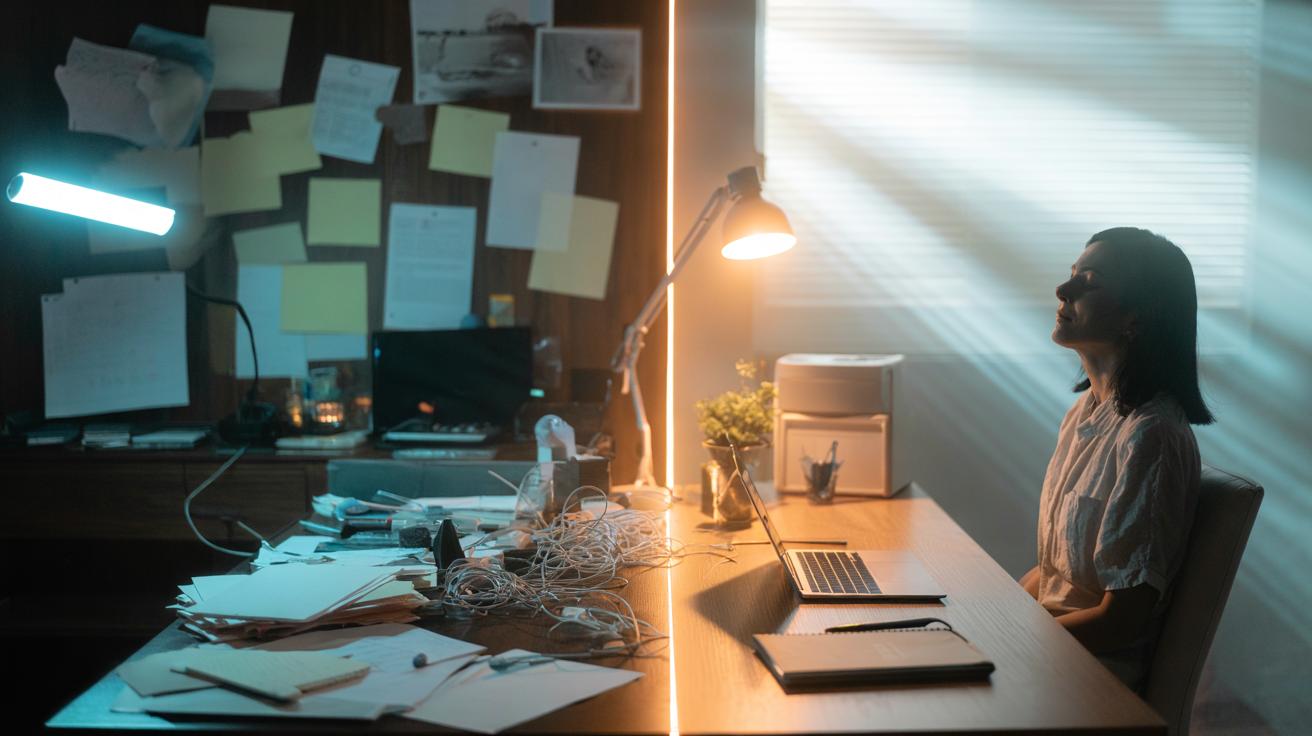
Clutter is not only a mess on the floor; it is a mess in the mind. When surfaces disappear under paperwork and notifications spill across screens, your brain burns energy trying to prioritise, track, and ignore. That energy leak feels like worry, irritability, or inertia. The good news is that serenity is not a personality trait; it is a design choice. By reducing cognitive load—the mental effort demanded by your environment—you can unhook anxiety from your day. Small tweaks compound. A drawer divider here, a default setting there. The aim is not perfection but predictable simplicity that frees attention for what actually matters.
The Mental Tax of Visual Noise
Walk into a room strewn with objects and your brain springs into triage. Each item asks a question: do I need this now, later, or ever? That barrage erodes attentional bandwidth. Psychologists call it cognitive load, and when it spikes, we feel clutter anxiety—a gnawing sense that tasks are unfinished and time is slipping. The mind doesn’t merely see; it must filter, suppress, and decide. That is work. It is why you can feel tired before you have begun. Visual noise is not neutral décor; it is an ongoing tax on working memory and self-control.
There is also the drag of “attention residue,” the mental echo left by incomplete tasks. A half-folded laundry pile pulls at you while you write an email. An unsorted stack of mail hums in the corner of your eye. Those micro-distractions trigger decision fatigue and dilute executive function. Over time, anxiety amplifies because the brain learns the room is a source of unresolved demands. The antidote is not ruthless minimalism but compassionate curation. Reduce what competes for your gaze, and you quickly reduce the number of decisions your mind must juggle.
From Cognitive Load to Calm: The Science
In educational psychology, cognitive load theory separates mental effort into three types: intrinsic (the task itself), extraneous (the way information is presented), and germane (the constructive effort that builds understanding). Homes and offices often drown us in extraneous load: tangled cables, redundant icons, unclear storage, ambiguous “homes” for objects. Trim the extraneous, and you liberate capacity for the germane—deep focus, creative problem-solving, restorative rest. Calm is not created by doing less; it is created by asking your mind to handle less irrelevant detail.
Physiologically, simpler environments lower arousal. Fewer competing stimuli mean fewer threat checks, less scanning, and a more stable baseline for attention. That stability helps dial down stress loops that keep cortisol simmering. Behaviourally, clarity breeds momentum. When the first step is obvious—chargers in the same labelled drawer, pens next to the notepad, a single inbox for post—procrastination shrinks because ambiguity has been removed. The brain loves frictionless sequences. Each environmental cue that eliminates a question reduces the hidden “switching cost” that makes days feel scattered.
Practical Edits That Shrink Mental Overhead
Start with what you see most. Surfaces are prime real estate; keep them purposeful. One tray for keys and wallet. One stack location for incoming post. Use closed storage to hide visual clutter, then label shelves to reduce recall. If you need to remember it, make the environment remember it for you. Create “default off” behaviours: notifications silenced by default, desktop cleared nightly, bags reset before bed. Build friction where it helps—put a return box by the door for items to donate, and a shredder next to the mail spot.
| Clutter Source | Cognitive Burden | Low-Effort Fix | Time Cost |
|---|---|---|---|
| Mixed paperwork | Ambiguity, repeated scanning | Single inbox + weekly review | 10 minutes/week |
| Scattered chargers | Search effort, frustration | Labeled charging station | 15 minutes setup |
| Overloaded wardrobe | Decision fatigue | Capsule rail for weekdays | 30 minutes once |
| Notification sprawl | Constant interruption | Batch alerts twice daily | 5 minutes setup |
Adopt rules that scale: the “one-touch” rule for paper (decide immediately—file, act, or discard), the “container rule” (keep only what fits neatly into a defined space), and visual boundaries (a slim tray for cosmetics, a single cookbook stand by the hob). These constraints are not punishments; they are scaffolds. They convert recurring choices into low-friction defaults and keep your mental overhead light.
Designing Homes and Workspaces That Think for You
Architecture can do quiet cognitive labour. Place zones along the path of use: a drop zone at the entrance with hooks, a tray, and a post inbox; a charging drawer near where devices sleep; recycling within arm’s reach of the kitchen prep area. Use cues that require no thought—bold labels on opaque bins, colour-coded folders, drawer dividers that map to categories you actually use. When the right action is the easiest action, clutter loses its power to accumulate.
Lighting and acoustics help. Warm, even light in the evening reduces agitation, while task lighting sharpens focus where detail matters. So does digital hygiene: a single cloud directory, humane folder names, and a minimal set of app icons. Reserve the desktop for active work only. Close open loops with checklists pinned where you start tasks—laundry cycles, packing lists, shutdown routines. Build “reset rituals” into transitions: five minutes after work to clear the desk, five minutes before bed to stage tomorrow. These micro-habits give your space a rhythm that sustains calm without constant willpower.
The promise of a calmer life is not in owning less stuff; it is in demanding less from your attention. Strip away needless choices and you gain a feeling of time, even on the busiest days. Let your rooms answer questions before your brain needs to. Then watch the background hum of anxiety fall away. When environments carry the load, minds can wander, focus, and rest. What one change—physical or digital—could you make today that would remove the most recurring decision from your week?
Did you like it?4.6/5 (24)