In a nutshell
- 🧪 Powered by acetic acid: a 1:1 mix of distilled white vinegar and water dissolves alkaline films, evaporates fast, and leaves truly residue-free glass.
- ⏱️ The 30-second method: fine mist, top-down zigzags with a microfibre cloth, then a confident dry buff—avoid drips and edges for a streak-free finish.
- 🧰 Smart kit and ratios: use distilled water and an atomiser for even coverage; switch to 2:1 vinegar for stubborn spots, and spray the cloth near frames to protect finishes.
- ⚠️ Pro fixes and safety: streaks mean too much liquid or a saturated cloth; allow 10-second dwell for sticky specks; never mix vinegar with bleach; skip linty paper towels.
- ✨ Big wins: cleaner indoor air, lower cost, less waste, and mirrors that gleam in 30 seconds—turned into quick, repeatable muscle memory.
In a world of pricey sprays and gimmicky wipes, the humble bottle of vinegar remains the quiet champion of crystal-clear glass. Busy morning, fogged bathroom, smudged mirror? No faff. With the right mix and a decent cloth, you can achieve a streak-free finish in roughly 30 seconds, even on a vanity mirror splattered with toothpaste. It’s cheap, low-waste, and kinder to indoor air than many perfumed cleaners. The trick isn’t elbow grease, it’s technique and timing. Below, we set out the science, the exact steps, and the kit you actually need—so your reflection looks sharp, not smeared.
Why Vinegar Works on Glass
At the heart of this domestic marvel is acetic acid, the active component in distilled white vinegar. Glass doesn’t absorb grime; it holds it on the surface. Soap scum, toothpaste binders, and mineral flecks are slightly alkaline or film-forming. A mild acid cuts through, disrupting the bonds that make smears cling to the pane. That’s why a simple 1:1 solution of vinegar and water dissolves haze that regular detergents often smear around. It evaporates quickly, too, reducing the window for streaks to form as droplets dry unevenly.
The result is a clean that’s not just shiny but genuinely residue-free. No perfumes. No surfactant build-up. Crucially, vinegar lowers the surface tension of the remaining moisture, so when you buff, the film vanishes rather than dragging. For those dealing with hard water, this matters twice over: the acid nibbles at mineral spots without needing harsh abrasives. And because the solution is light, you can work faster—mist, wipe, buff—without waiting for anything to “activate”. That speed is the real secret behind the 30-second claim.
The 30-Second Method, Step by Step
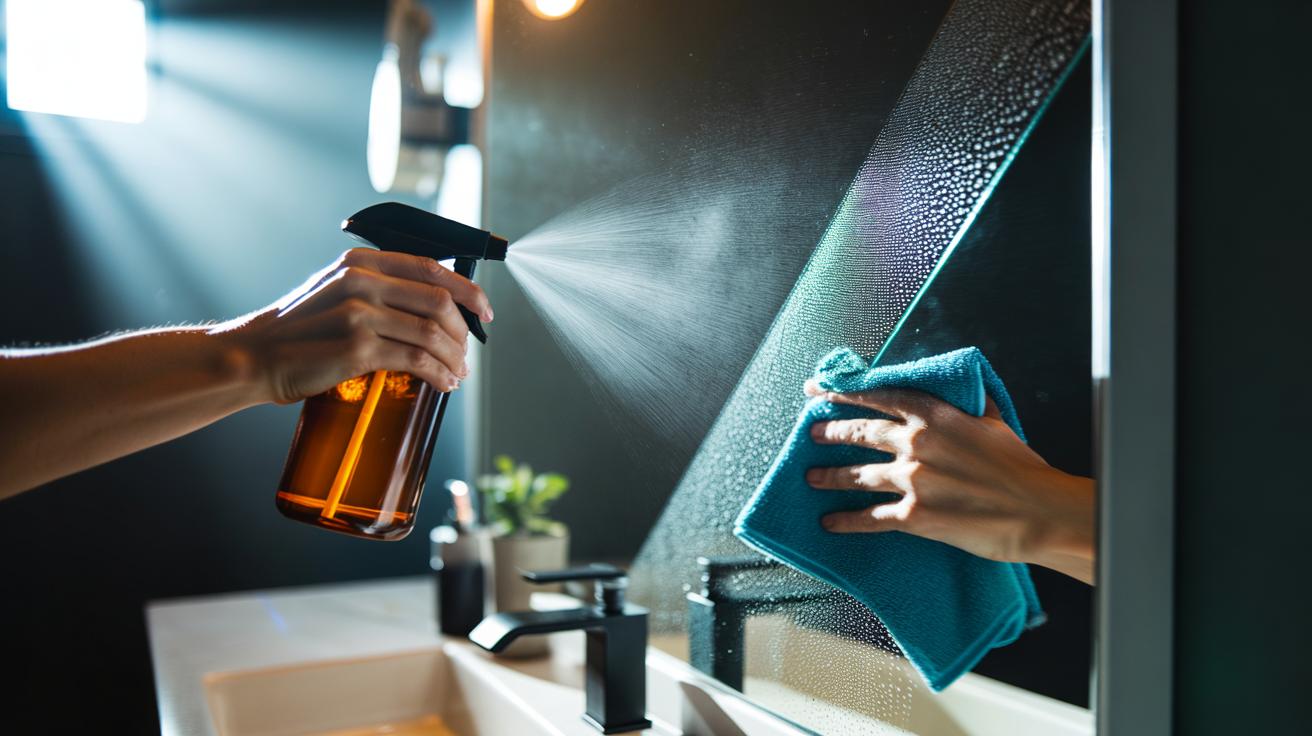
Clock starts now. Fold a clean microfibre cloth into quarters to create multiple fresh faces. Lightly mist the mirror with a vinegar–water mix (aim for fine spray, not drips). Don’t soak the edges; mirrors have backing and frames that dislike moisture. Work from the top corner in fast, overlapping zigzags. Two passes are enough for light smears. Flip to a dry section of cloth, then buff in wide, confident strokes until the glass flashes bright. That’s it. Done in half a minute, with no streaks.
Got heavier grime? Add ten seconds. First, do a quick “load” wipe to break the mess, then a second mist—sparingly—followed by the buff. If you see faint arcs, your cloth is saturated or dirty; change the face or grab a fresh one. For bathroom mirrors, run the fan or open a window—drier air speeds evaporation and kills streak risk. Avoid paper towels; they shed lint and leave ghost lines. The combination that consistently wins is fine mist + microfibre + dry buff. Simple. Repeatable. Rapid.
Choosing the Right Tools and Ratios
Not all vinegar is equal for glass. Choose distilled white vinegar, typically 5% acetic acid, for a neutral scent and predictable cleaning power. Tap water works, but distilled water minimises mineral spotting, especially in hard-water regions. An atomiser spray bottle creates a fine mist that covers evenly without puddling. The baseline mix is 1:1 (vinegar:water). For stubborn toothpaste or hairspray, use 2:1 for a single pass, then revert to the standard. For delicate finishes nearby—painted frames or silvered mirror edges—spray the cloth, not the glass. This prevents capillary creep that can stain or corrode.
| Item | Why It Matters | Tip |
|---|---|---|
| Distilled white vinegar | Consistent acidity for streak-free results | Stick to clear, food-grade; avoid flavoured types |
| Distilled water | Reduces mineral residues | Ideal in hard-water areas; helps perfect clarity |
| Atomiser bottle | Even coverage without drips | Look for a fine, adjustable spray |
| Microfibre cloth | Lifts film, buffs dry quickly | Wash without fabric softener to keep grabby fibres |
If you crave a hint of scent, add a drop of lemon essential oil—but keep it sparing. Oils can haze if overdone. The cleaner the recipe, the cleaner the glass.
Troubleshooting and Pro Tips
Streaks after buffing usually mean one of two things: too much liquid or a saturated cloth. Use fewer sprays, then turn to a drier section of microfibre. If you’re battling stubborn specks—hair mousse, sticker residue—dab with a corner moistened in a stronger 2:1 vinegar mix, let sit 10 seconds, then wipe and buff. For limescale nicks, repeat the dwell once rather than scrubbing; glass scratches easily. Always spray onto the cloth when working near frames, electrics, or antique silvering.
Timing matters. Clean when the mirror is cool and the room is ventilated; hot, steamy air slows evaporation and breeds streaks. For giant mirrors or patio doors, consider a squeegee for the wet pass, then finish with a microfibre buff for sparkle. Skip newspaper—modern inks and papers vary and can smudge. Never mix vinegar with bleach-based bathroom products; it can release hazardous fumes. If your mirror has a special anti-fog or smart coating, check the maker’s care notes. When in doubt, test a corner. The goal stays the same: fast passes, light mist, dry finish.
A bottle of vinegar, a splash of water, a decent cloth—nothing flashy, yet the pay-off is striking: gleaming glass in half a minute, every time. You’ll spend less, bin fewer plastic bottles, and get a finish that perfume-laden sprays rarely match. The secret is control—fine mist, minimal liquid, confident buffing. Adopt the routine once and it becomes muscle memory, the speedy last step before leaving the house. Will you swap your usual glass cleaner for this 30-second method, and what mirror or window will you test first to prove it to yourself?
Did you like it?4.4/5 (26)