In a nutshell
- 🌿 Acetic acid acts as a fast, contact herbicide, rupturing leaf cuticles and causing rapid desiccation—highly effective on tiny seedlings, weaker on deep-rooted perennials.
- ⚗️ Choose the right strength: ~5% for new sprouts, 6–10% for young annuals, and 20–30% horticultural vinegar for stubborn growth—balanced against safety risks.
- 🌤️ Timing and conditions matter: apply on warm, dry, still days, ensure full foliage coverage, add a non-ionic surfactant, and never mix vinegar with bleach.
- 🛡️ Practice precise technique and PPE: use shields near ornamentals, keep spray low to reduce drift, protect skin/eyes, and remember vinegar is non-selective—it will scorch grass and crops.
- 🧱 Know the limits and integrate: vinegar offers no residual control, so pair quick knockdowns with mulch, hoeing, and targeted digging for perennials to maintain paths and beds.
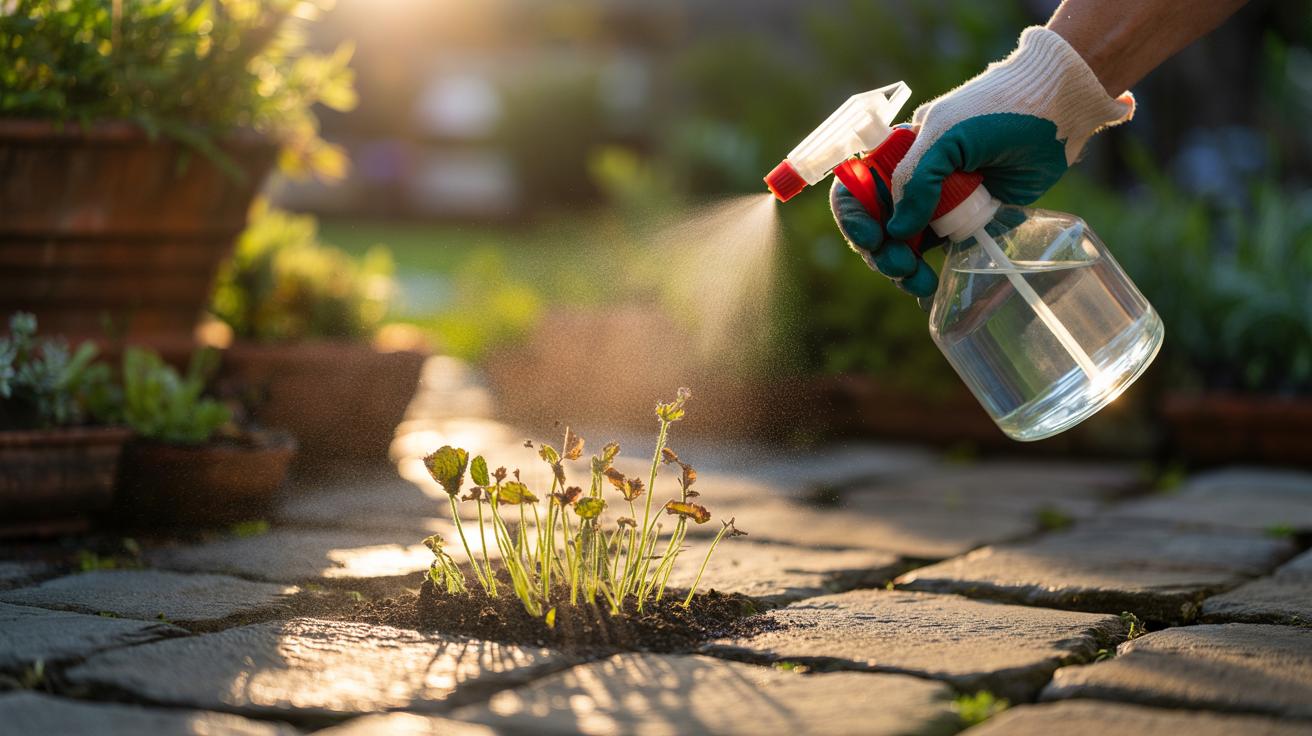
Across pavements, patios and allotments, the humble vinegar bottle has become an unlikely ally. Gardeners swear by its fast-acting bite, claiming it can halt weeds almost before they grow. The science isn’t magic; it’s chemistry. When you spray a young weed with vinegar, the acetic acid in the liquid rips through protective leaf layers and collapses tender cells. That means quick browning, quicker wilting. It’s visible, almost immediate. And while it won’t replace every weedkiller, it can be precise, cheap and surprisingly effective in the right conditions. Used well, vinegar is a sharp, short-lived, non-selective strike on soft growth.
How Acetic Acid Scorches Weeds on Contact
Vinegar’s bite comes from acetic acid, a small molecule that slips into the plant’s protective cuticle and acidifies internal fluids. That sudden pH shock blows apart membranes, leaking water and electrolytes, leading to swift desiccation. In hot, dry weather the effect is accelerated; leaves crumple in hours. There’s no systemic journey to roots, no stealth. Think of it as a surface burn that drains a plant’s ability to photosynthesise. Seedlings and small annuals have little in reserve, so they fold fast. Thick-skinned perennials, by contrast, often bounce back.
You may see a light “sizzle” on hot stone as moisture flashes away, but the real action is cellular. The spray stops growth because it destroys the tissues doing the growing. Vinegar is a contact herbicide, not a root-killing cure. That distinction matters: repeat hits are usually needed. Strike when weeds are tiny—cotyledon or first true leaf stage—for best results. On larger leaves, full coverage is crucial. Miss a patch and the plant regroups from surviving green tissue.
Expect rapid visual results but short persistence. Rain or heavy dew dilutes the acid and softens impact. That’s why timing beats volume. Less splash, more precision, on a dry, sunlit day.
Choosing Concentration, Weather, and Targets
Not all vinegars are equal. Household bottles sit around 5% acetic acid, which singes tiny seedlings yet struggles with established weeds. “Cleaning vinegar” creeps up to 6–10% and delivers a firmer knock. Horticultural vinegar ranges from 20–30%: powerful, fast, and hazardous to skin and eyes. Pick based on the weed’s age and toughness, and on your tolerance for risk. Use the weakest strength that achieves reliable knockdown on your target weeds. Weather matters too. Warm, bright days intensify dehydration; wind makes drift dangerous. Early growth stages are the sweet spot.
Consider this quick guide before you spray:
| Product | Acetic Acid % | Best Targets | Notes & Hazards |
|---|---|---|---|
| Household vinegar | ~5% | New seedlings, moss, algae | Safe to handle; may need repeats |
| Cleaning vinegar | 6–10% | Young annual weeds | Stronger odour; wear eye protection |
| Horticultural vinegar | 20–30% | Stubborn annuals, small perennials | Corrosive; gloves, goggles, long sleeves essential |
Add a few drops of a non-ionic surfactant to help wet waxy leaves. Avoid salt; it can poison soil and nearby plants. And never mix vinegar with bleach—this can release dangerous chlorine gas. In the UK, use only products authorised for weed control and follow the label to the letter.
Application Technique and Safety You Shouldn’t Skip
Technique decides outcomes. Start with a dry, still morning. Shield ornamentals with cardboard or a spray guard, then mist foliage until just shy of runoff. The aim is uniform wetting, not puddles. Keep the nozzle low to curb drift, and target seedlings at the crack of appearance. Patios, gravel paths, drive edges—hard standings respond beautifully. Lawns do not; vinegar is non-selective and will scorch grass as quickly as it scorches weeds.
Personal protection is non-negotiable at higher strengths: chemical-rated gloves, goggles, long sleeves. Rinse equipment with water after use and neutralise residues with a little bicarbonate if you’ve sprayed concentrated acids. Store tightly sealed, away from metals that can corrode. On porous stone, test a corner first; repeated acid can roughen finishes. Near vegetables, use shields or switch to hand weeding—contact spray on edible foliage is a no.
Finally, plan for follow-up. A week later, inspect and respray any regrowth. Pair vinegar with mulch or a sharp hoe to interrupt new arrivals. That layered approach preserves the speed of a burn-down while building longer intervals between flare-ups.
Does Vinegar Stop Weeds Before They Sprout?
Yes—and no. Vinegar excels at slamming emerging seedlings the moment they breach the surface. At that threadlike stage, a light spray can halt growth “before” weeds become visible plants. But it offers virtually no residual control. Once diluted by moisture and buffered by soil, acetic acid quickly loses potency. Seeds nestled below the crust remain untouched. Vinegar does not create a lasting chemical barrier in soil.
So how do you make “prevention” real? Timing and layering. Patrol after rain or cultivation and hit the first green flush fast. Follow with 5–8 cm of organic mulch to block light, conserving moisture and suppressing the next batch. On paths, a flame weeder or sharp hoe can pair with vinegar to clear threads at the surface. For deep-rooted perennials—dandelion, dock, bindweed—cut-and-spray may tidy, but roots will likely rebound. Digging or targeted systemic alternatives are the honest solution there.
Think of vinegar as a rapid-response tool in an integrated kit. It buys time, keeps hard surfaces tidy, and reduces seed set. Used consistently, it knocks back the seed bank’s momentum, which is the nearest thing to “before they grow” most gardens ever see.
Used thoughtfully, vinegar spray is both blunt and brilliant: a fast burn for soft weeds, a discipline that rewards timing, and a reminder that not every solution needs to be synthetic. Keep your ambitions realistic—green scorch today, tidy joints tomorrow, and a plan for what returns. Add mulch, sharpen the hoe, watch the forecast, then strike. The result is control, not chaos. How will you build vinegar into a wider, season-long strategy that keeps seedlings in check without sacrificing safety or the plants you love?
Did you like it?4.4/5 (27)