In a nutshell
- 🌾 Rice acts as a fast, accessible desiccant: its hygroscopic grains adsorb vapour quickly in small, closed closets, with noticeable relief in 10 minutes; it’s reusable by oven-drying.
- ⚙️ Rapid setup: fill breathable sachets or shallow trays, use a 250–500 g dosage per cubic metre, target damp hotspots, keep the door closed, and consider a gentle fan; add bicarbonate of soda for odour control.
- 📦 Know the limits: rice’s capacity is modest; combine with silica gel for steady control or calcium chloride for severe damp, and track conditions with a hygrometer aiming for 45–55% RH.
- ⚠️ Safety and care: avoid cooked rice and staining oils, keep away from children and pets, prevent dust contact with delicate fabrics, and always air-dry soaked items before storage.
- 📊 Smart choices: use rice for quick tweaks, silica gel for balance, calcium chloride for winter bursts, and charcoal for odour; refresh sachets weekly in wet spells and focus on stability, not desert-dry air.
What if the secret to a fresher, drier wardrobe is already in your kitchen cupboard? Uncooked rice, a humble staple, doubles as a quick, low-cost desiccant that can tame clammy closets and fend off musty odours. In very small spaces, its effect can register astonishingly fast. Within 10 minutes, you may notice damp air softening and fabrics feeling less clammy, especially where air is still and the door is shut. This isn’t magic—it’s science meeting practicality. Below, you’ll learn how hygroscopic rice draws in water vapour, how to deploy it for an instant boost, and how to combine it with smarter strategies for lasting protection.
Why Rice Absorbs Moisture So Quickly
Uncooked rice is rich in starches and has a naturally porous structure. Those micro-pores create significant surface area, inviting water molecules to settle on and in the grain through a process scientists describe as adsorption and limited absorption. The effect is strongest when the surrounding relative humidity (RH) is high and the air is still. In a small, closed closet, rice can begin to draw in vapour almost immediately, which is why the first 10 minutes can feel transformative—especially around damp shoes, belts, and linings.
There’s a catch: rice’s total moisture capacity is modest compared with industrial desiccants like silica gel or calcium chloride. But for fast, accessible relief, it works. The key is proximity and exposure. The more grains exposed, the faster the vapour exchange. Spread rice thinly in breathable pouches or shallow trays to maximise contact with the air. Think “broad and thin”, not “deep and dense”. As the closet air moves towards equilibrium, the rice slows the climb in RH, buying you time and sparing fabrics from that damp, sour note that signals mould risk.
Another advantage: rice is reusable. Gently dry it in a low oven (90–100°C) for 60–90 minutes to drive off accumulated moisture. Stored in an airtight jar, it’s ready for its next on-call shift. That simple cycle—absorb, dry, repeat—makes rice a nimble, circular tool for British weather’s on–off damp spells.
How to Deploy Rice in Your Closet in 10 Minutes
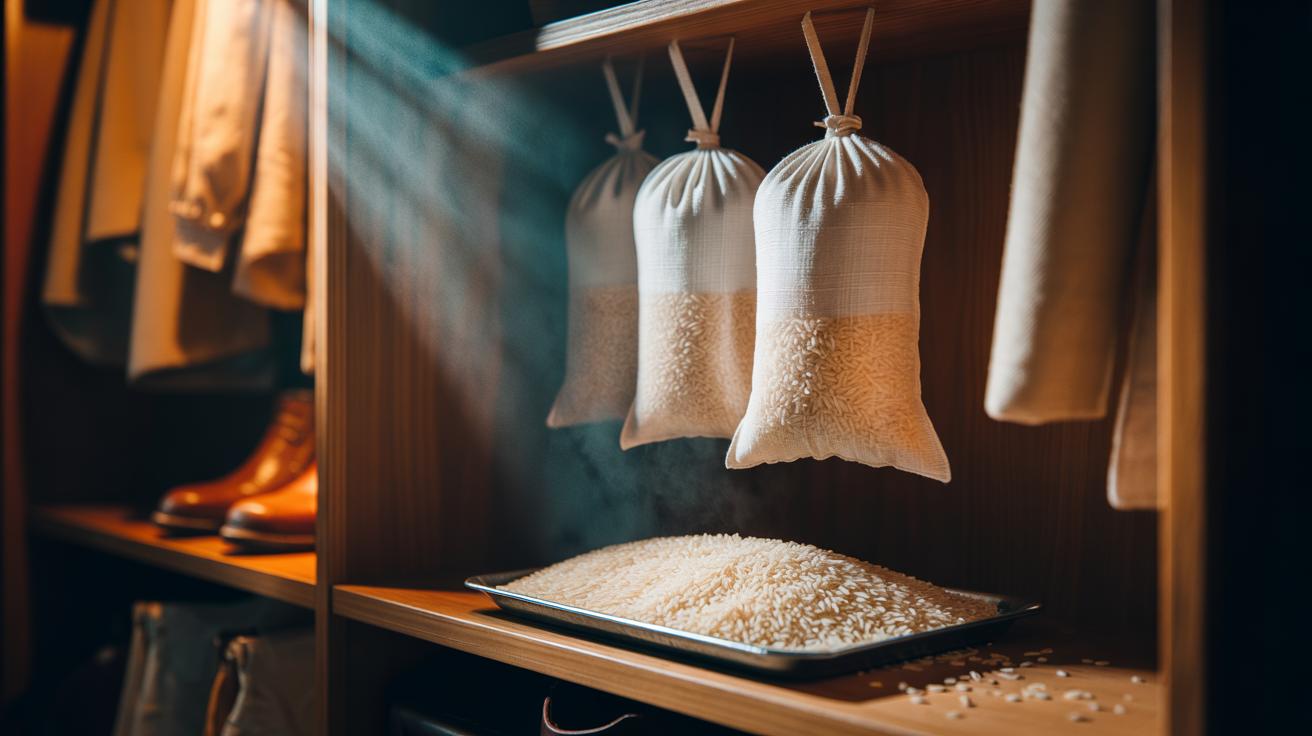
Speed matters. For a rapid RH dip, you need surface area and placement. Fill small, breathable sachets (old cotton socks, muslin bags, coffee filters) with uncooked rice and tie them off. Alternatively, scatter 1–2 cups on a baking tray and slip it onto a shelf away from clothes. Use roughly 250–500 g per cubic metre for a compact wardrobe, doubling the dose after very wet weather or when shoes are stored while still damp from rain.
Target hotspots. Place sachets near the floor where cool, moist air pools; tuck one by leather boots and another near the back panel where airflow is minimal. Close the door to keep the microclimate contained. In as little as 10 minutes you may feel a difference when you open the door: air that’s less heavy, fewer foggy whiffs, linings that don’t cling. For persistent damp, add a small, silent fan on a timer to nudge air past the rice, speeding exchange without blowing fibres about.
Maintenance is simple. When rice clumps or feels slightly tacky, it’s done its job. Dry it in a low oven and rotate in a fresh batch. Label sachets with the date; swap weekly in wet months. For extra odour control, add a teaspoon of bicarbonate of soda to each bag. Keep sachets out of direct contact with delicate fabrics to avoid dust transfer, and always store wet garments elsewhere until they’re surface-dry.
Safety, Limits, and Smarter Combinations
Rice is safe, cheap, and quiet—but it has limits. Its capacity plateaus once the grains approach equilibrium with the room air. If your wardrobe sits above 65% RH for days, rice alone won’t hold the line. That’s where combinations shine. Pair rice with a small tub of silica gel for mid-term control, or deploy calcium chloride crystals during winter to tackle heavy, sustained damp (they deliquesce into liquid, so use a drip-proof tray). For eco flair, activated charcoal can help with odour, though it’s slower on moisture.
Health and housekeeping matter too. Avoid scented oils that might stain fibres, and never use cooked rice—it invites pests and mould. Keep sachets away from toddlers and pets. For leather and suede, rice helps stabilise the air, but don’t rely on it to dry soaked items; blot and air-dry first. A pocket-sized hygrometer costs little and tells you the truth: aim for 45–55% RH to protect fabrics, papers, and electronics stored on shelves.
Plan a rhythm. Refresh rice weekly in wet spells, fortnightly in fair weather. Vent closets for five minutes daily, then close them to let the desiccants work. If numbers still creep up, step up to a plug-in dehumidifier overnight and keep rice as your daytime buffer. The blend—ventilation, absorbents, and smart storage—delivers reliable, mould-resistant calm.
Quick Comparison of Household Desiccants
Curious how rice stacks up? Here’s a compact guide to speed, capacity, and practicality. Use it to tailor your setup: rice for a fast tweak, silica gel for balanced performance, calcium chloride for tough weeks. Mix and match depending on the season and the size of your wardrobe. Always position absorbents safely, keep containers upright, and monitor your RH to avoid over-drying fine leathers or musical instruments that prefer steadiness.
| Absorbent | Speed (First 10 Min) | Capacity | Reusable? | Best Use |
|---|---|---|---|---|
| Rice (uncooked) | Fast in small spaces | Low–moderate | Yes (oven-dry) | Quick fixes, daily balance |
| Silica gel | Fast | Moderate–high | Yes (recharge) | Steady control, low mess |
| Calcium chloride | Moderate | Very high | No | Severe damp, winter bursts |
| Activated charcoal | Slow | Low | Yes (sun-dry) | Odour control, minor moisture |
| Bicarbonate of soda | Slow | Low | No (practical) | Odour aid, small lockers |
For everyday wardrobes, start with rice. Add silica gel if your hygrometer trends high after rain. Reserve calcium chloride for deep winter or ground-floor cupboards where cold walls condense vapour. The goal is stability, not desert-dry. Keep sachets visible so you remember to refresh, and store spares in airtight jars to preserve their hunger for moisture. With this layered approach, you’ll turn a fickle British microclimate into something serene, predictable, and kind to your favourite knits and leather goods.
Rice won’t replace a dehumidifier in a soaked flat, but it’s a brilliant first responder for small, stale closets craving quick relief. Harness its hygroscopic punch, scale wisely, and keep an eye on RH to prevent mould from taking hold. In just 10 minutes, a well-placed sachet can tip the balance. Ready to experiment—start with rice today, then build a custom mix for your wardrobe’s quirks—what combination will you try first?
Did you like it?4.4/5 (29)