In a nutshell
- 🧪 Hard water leaves stubborn limescale from calcium and magnesium; acidic cleaners work best, with UK regions like the South-East facing hard water build-up faster.
- 🍋 Lemon’s citric acid both dissolves alkaline deposits and acts as a chelating agent, preventing re-deposition, while its slight viscosity helps it cling better than vinegar.
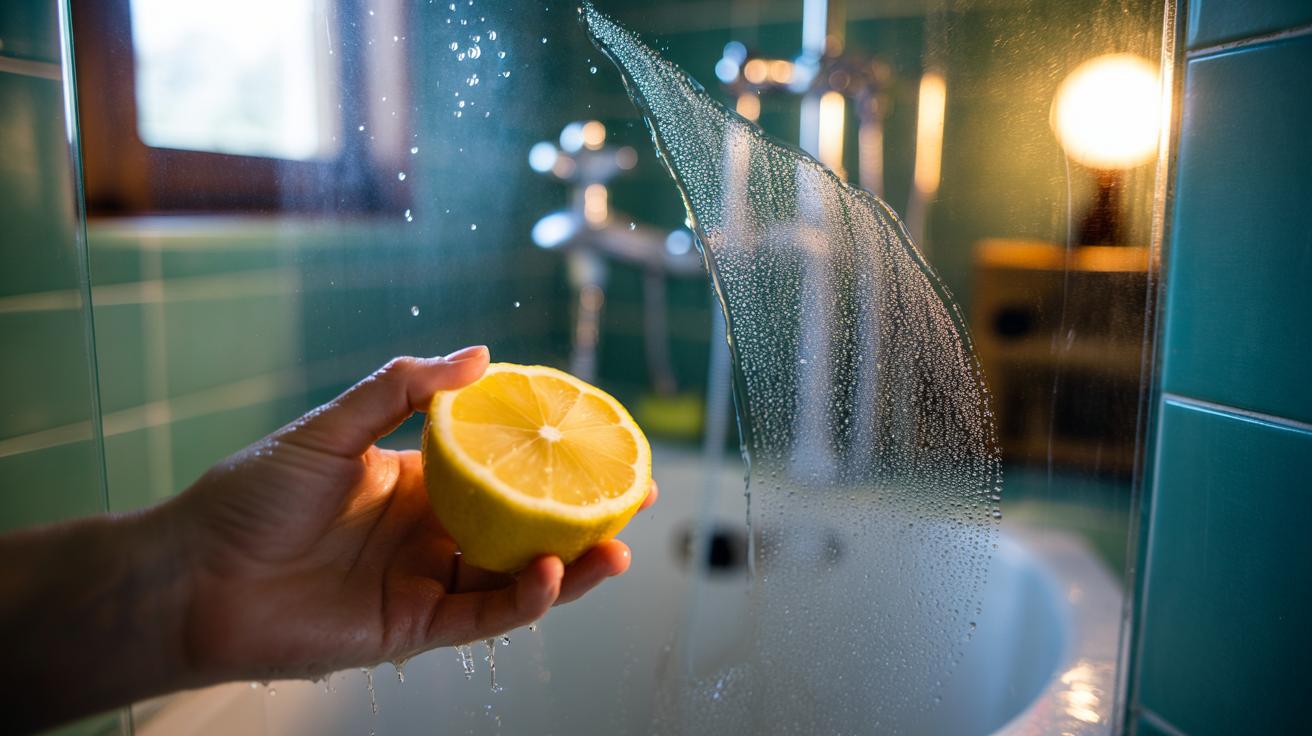
- ⏱️ The two-minute method: warm, cut, and rub the lemon over glass and chrome, wait two minutes, then buff with a microfibre cloth, rinse, and squeegee for a clear finish.
- ⚠️ Safety essentials: avoid marble, limestone, and terrazzo; limit contact on plated fittings, patch test coatings, keep contact brief on grout, and never mix with bleach (risk of chlorine gas).
- 🧼 Troubleshooting and upkeep: repeat short cycles for heavy scale, use a light dusting of bicarbonate of soda only for texture, and squeegee after showers to slow future build-up.
Your shower doors look cloudy. Taps feel gritty. That’s hard water leaving mineral deposits, a dull film that mocks ordinary cleaners. A lemon can flip the script. Slice, rub, wait two minutes, and the glass clears as if a curtain’s been raised. It’s not magic; it’s chemistry you can smell. Bright, sharp, faintly fizzy. In kitchens across Britain, the humble lemon hides a powerhouse: citric acid. Used correctly, it dissolves limescale fast and safely, and it does so with a scent that won’t make your eyes water. Here’s why it works, what to avoid, and how to master a two-minute refresh.
Why Hard Water Leaves Stubborn Marks
Hard water is loaded with calcium and magnesium ions. When water dries on glass, tiles, and chrome, those ions combine with carbonates and bicarbonates, forming limescale—the chalky residue you can feel with a fingertip. Soap complicates things; fatty acids in soaps bind to minerals, creating a cloudy soap scum that clings like glue. The result: opaque swirls, speckles, a grey veil that steals shine.
These deposits are alkaline. That’s the crucial point. Alkaline residues respond best to acids, which donate protons and break the mineral bonds. Apply the right acid briefly and the crust releases without heavy scrubbing. Glass and most metals are resilient to short acid exposure, so the transformation feels instant. Too often we reach for abrasive pads, which scratch and haze surfaces. Chemical mismatch is the real problem.
In the UK, where regional water hardness varies widely—London and much of the South-East being notably hard—bathrooms suffer fast build-up. You see it on shower screens first, then on the lip of taps, then across grout lines. Attack fresh deposits quickly and maintenance becomes effortless. Leave them, and the layer densifies, demanding more time and pressure later.
The Chemistry Behind Lemon’s Cleaning Power
Lemon contains ~5–8% citric acid plus smaller amounts of ascorbic acid. Citric acid does two clever things. First, it supplies hydrogen ions (H+) that neutralise alkaline limescale. Second, it acts as a chelating agent, grabbing hold of metal ions like calcium and magnesium to keep them dissolved, preventing re-deposition. That’s why the glass looks truly clear rather than smeared.
In simple terms, acid meets carbonate, fizzing carbon dioxide, and leaving soluble salts that rinse away. You’ll sometimes hear a whispering sound. That’s the reaction working. The low pH is the engine; the chelation is the steering. Together, they turn a stubborn mineral crust into a rinseable solution within minutes.
| Cleaner | Approx. pH | Contact Time | Best For | Avoid On |
|---|---|---|---|---|
| Fresh lemon juice | ~2.0 | 1–3 minutes | Glass, chrome, stainless steel | Marble, limestone, travertine |
| Diluted lemon (1:1 water) | ~2.3–2.6 | 2–5 minutes | Light limescale, routine wipe-downs | Unsealed natural stone, cement-heavy grout |
Because lemon is mildly viscous and slightly oily, it clings better than clear vinegar. The natural oils leave a faint sheen, helping water bead temporarily. That hydrophobic boost makes the next clean even easier.
Two-Minute Method: Step-by-Step
Prep first. Open a window for ventilation. Grab a lemon, a soft microfibre cloth, and a squeegee. If the lemon is fridge-cold, warm it for 10 seconds in the microwave to loosen the juice. Warm citrus spreads and wets the surface faster, saving seconds you’ll feel.
Cut the lemon in half. Squeeze gently to wet the cut face, then rub directly over the glass, taps, and shower fittings. Aim to coat evenly; don’t flood. If the screen is large, work in vertical panels. Leave for two minutes. You may hear faint fizzing on heavy spots—good sign. For shower heads, remove and soak in lemon juice for up to five minutes, or bag-and-elastic-band the head in situ for targeted descaling.
After the wait, buff with the microfibre using light circles. The film should slip. Rinse thoroughly with warm water. Squeegee top to bottom. Dry edges and seals. For stubborn corners, twist the lemon like a pencil eraser, then repeat the short wait. Do not use on marble, limestone, or other acid-sensitive stone; wipe accidental splashes immediately. On plated brass or nickel, limit contact to a minute and test a discreet spot first.
Troubleshooting, Safety, and When Not to Use
If the limescale is old and thick, two minutes may only dent it. Repeat the cycle, focusing on rewetting rather than scrubbing. You can dust a dampened area with a whisper of bicarbonate of soda for mechanical lift, but understand the trade-off: it partially neutralises the acid. Use it sparingly for texture, not as a full blend. Acid does the dissolving; abrasion only helps loosen edges.
Mind your materials. Avoid all natural stone and terrazzo; acids etch and dull calcium-rich surfaces irreversibly. On cementitious grout, keep contact brief and rinse well. Painted or lacquered fittings may be sensitive—patch test. If your shower has anti-lime coatings, check the manufacturer guidance; acids can void warranties. Never mix lemon juice with bleach: the reaction releases chlorine gas, which is hazardous even in small bathrooms.
Skin and eye safety matters. Wear washing-up gloves, especially if you have cuts. Rinse splashes promptly. Store leftover halves in a labelled container and use within a day; potency fades. If you prefer less fragrance, filter the juice and apply with a spray bottle for precision. Keep contact times short, repeat as needed, and finish with a squeegee every shower to slow build-up.
A lemon won’t remodel your bathroom, but it will restore clarity you thought was lost. The method is quick, the science sound, and the afterglow oddly satisfying—glass that squeaks, metal that flashes, water that slides away. Used with care, this is a low-cost, low-tox trick that outperforms many bottled cleaners. Next time steam fogs the screen, reach for the fruit bowl and set a timer. What surface in your bathroom are you most keen to test first, and how will you measure the difference after two minutes?
Did you like it?4.4/5 (23)