In a nutshell
- 🍋 Lemon juice’s citric acid loosens grease via low pH and chelates hard‑water minerals, boosting surfactants for faster wipe-off.
- 🧽 Easy method: 1:1 lemon juice + warm water with a drop of washing-up liquid; spray, allow 2–3 minutes dwell, wipe, then rinse and dry.
- 🧪 Science check: trace limonene helps lift oily films; acids don’t saponify—cleaning comes from acid-softening and surfactant emulsification.
- ⚠️ Surface rules: safe on glass, tiles, enamel, stainless; avoid marble, limestone, travertine, concrete, unsealed grout, cast iron seasoning, raw aluminium; patch-test painted areas.
- 🔁 Smart swaps: use a 5–7% citric acid solution or vinegar if needed; skip bicarbonate (it neutralises acid); rinse food-contact zones.
Grease happens. Searing a steak, crisping bacon, flash-frying aubergines—each leaves tiny splatters that seem to set like varnish across hobs, tiles, and cupboard doors. Here’s the fast, frugal fix: lemon juice. It’s not just a folksy tip; the real worker here is citric acid, naturally abundant in lemons, which helps break bonds between oily residue and your kitchen surfaces. Add a touch of heat and a hint of detergent and the mess lifts in satisfying swipes. No specialist spray. No eye-watering fumes. Just a fruit, a cloth, and a little know-how. Used correctly, lemon juice dissolves stubborn kitchen grime in minutes.
Why Lemon Juice Cuts Through Grease
Grease clings because it’s hydrophobic—oil and water famously don’t mix. Lemon juice changes the equation in two useful ways. First, its low pH (typically around 2) helps loosen the bind between cooked-on residue and the surface, softening the film so it releases under light pressure. Second, lemon contains trace lemon oil (limonene), a mild solvent that assists with oily films. While acids don’t magically dissolve lipids the way strong detergents do, citric acid boosts cleaning performance by chelating minerals that otherwise hinder detergents, especially in hard-water areas common across the UK.
When combined with warm water, the solution flows better and penetrates microscopic pores in splashbacks or enamel. Add a tiny drop of washing-up liquid, and you introduce surfactants that form micelles around oil particles, allowing them to be wiped away. The synergy matters: acid loosens, chelation reduces water hardness interference, surfactant lifts, the cloth removes. It’s simple chemistry applied to real kitchens. The result? Grease that once felt baked-on becomes a film you can swipe off in two passes, not ten.
The Simple Method: Mix, Spray, Wipe
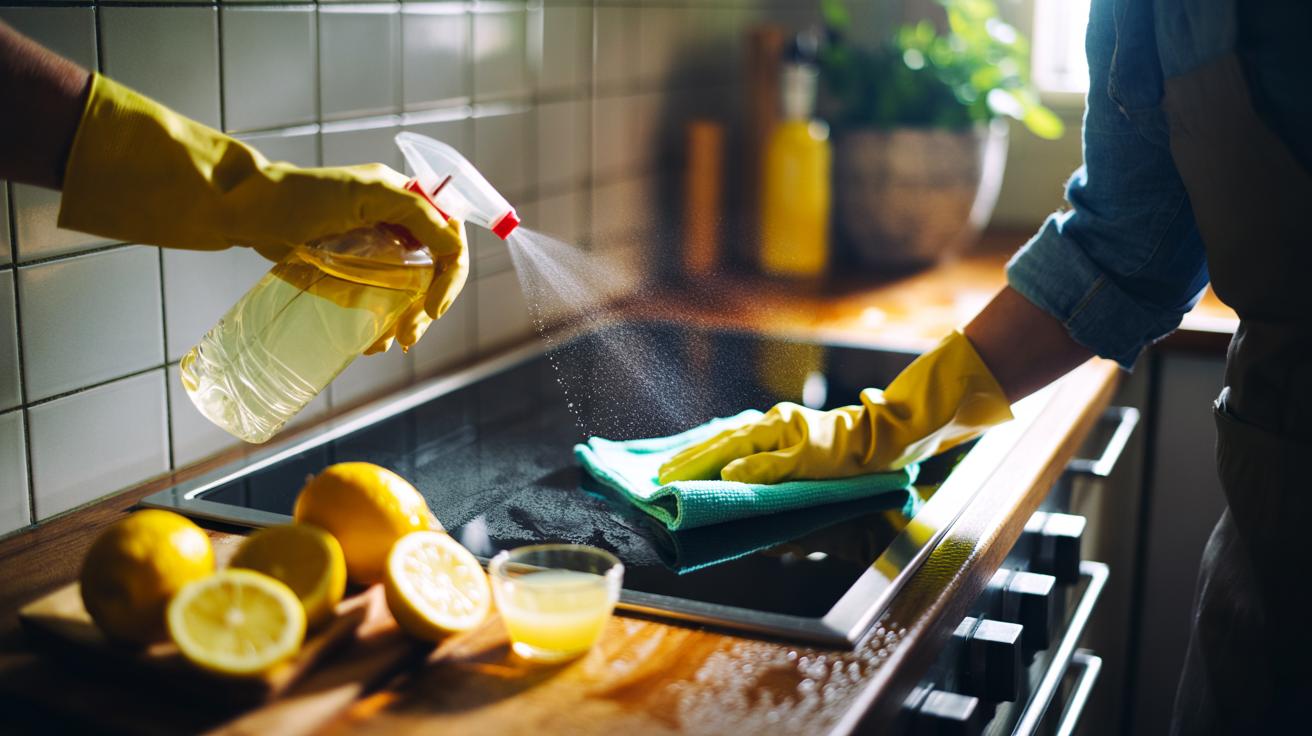
Start with fresh lemon juice or bottled pure juice. Mix one part lemon juice with one part warm water in a trigger bottle. For heavy splatters, add a tiny drop—truly a drop—of washing-up liquid. Spritz the greasy area until evenly damp but not streaming. Leave it for two to three minutes. This is the crucial dwell period where the citric acid and surfactants do their quiet work. Wipe with a clean microfibre cloth using light pressure. Stubborn spots? Reapply, wait 60 seconds, and use the cloth’s textured edge. Finish with a rinse pass of clean water and a dry buff to leave steel, glass, or enamel streak-free.
Always test in an inconspicuous corner before first use. For microwaves, heat a bowl with the same mix for 90 seconds, let the steam condense, then wipe—the loosened film lifts beautifully. On cooker hoods, spray onto the cloth first to avoid drips into electrics. Keep motion gentle; forcing baked-on carbon can scratch enamel or lacquer. And remember: a fresh lemon scent is pleasant, but you’re not masking smells—you’re dismantling the grime so the odours go too.
| Recipe | Dwell Time | Best For | Avoid/Use Caution |
|---|---|---|---|
| 1:1 lemon juice : warm water + 1 drop detergent | 2–3 minutes | Glass, ceramic hobs (cool), tiles, enamel, stainless steel, painted splashbacks | Marble, limestone, travertine, concrete, unsealed grout, cast iron seasoning, raw aluminium |
Science Spotlight: Citric Acid at Work
Citrus cleaners succeed through several intertwined mechanisms. The star is citric acid, a tricarboxylic acid that binds (chelates) calcium and magnesium ions. In hard water, these ions interfere with surfactants, making grease harder to lift. Chelation frees the surfactant to do its job, so even a minuscule amount of washing-up liquid suddenly seems stronger. The low pH also disrupts the sticky matrix of cooked proteins and sugars that glue grease to surfaces, softening that varnish-like layer that forms near hobs and oven doors.
Then there’s limonene, present in lemon zest oils. While there’s not much in juice alone, a small amount can act as a gentle solvent, helping release oily films. Heat raises grease fluidity, which is why warm solutions and steam-assisted wipes work quickly. One myth worth busting: acids don’t “saponify” fats; that’s an alkaline process. What you’re seeing is a mix of acid-assisted softening, mineral capture, and surfactant-driven emulsification. The result is a wipeable emulsion rather than a smeared mess. That’s why the method feels faster, and why rinsing leaves a satisfyingly clean, squeak-free finish.
Safety, Surfaces, and Smart Substitutions
Acids and stone don’t mix. Never use lemon juice on marble, limestone, or travertine—the acid etches calcium carbonate, leaving permanent dull spots. The same caution goes for concrete worktops and unsealed grout. On stainless steel, lemon is fine, but don’t let it sit for ages; wipe, rinse, and dry to avoid cosmetic markings. Painted cupboards usually behave, yet do a patch test in a low corner first. Skip cast iron seasoning—acid can strip that prized patina. Raw aluminium may grey; lacquered brass can spot if the coating’s compromised.
No lemons to hand? Use a 5–7% citric acid solution made from food-grade powder; it stores well and is scent-neutral. White vinegar (acetic acid) also cuts film, but its odour lingers and it lacks citric’s superior chelation. For very stubborn grease, apply the lemon solution, wait, then follow with a standard degreasing spray—acid first, detergent second. Avoid mixing with bicarbonate; the fizz is theatrical, but it neutralises the acid’s cleaning edge. Rinse food-contact zones like chopping boards and fridge shelves after cleaning. Good practice, and good taste.
Lemon juice won’t replace every cleaner under your sink, but it’s a nimble specialist: brilliant on fresh splatters, capable on light polymerised films, and gentle enough for daily wipe-downs. It’s cheap, local, biodegradable, and delightfully simple. The payoff is speed—the kind you feel when a greasy backsplash goes from tacky to immaculate in a minute flat. Next time the pan pops and spatters, reach for the lemon first. Will you try the 1:1 lemon-and-warm-water mix this week, and which surface in your kitchen will you debut it on?
Did you like it?4.5/5 (29)