In a nutshell
- ✨ Use uncooked rice as a quick pre‑clean: it absorbs moisture and light oils, lifting grime in under ten minutes for fewer streaks and a brighter finish.
- 🧪 The science: starch granules, capillary action and gentle micro‑abrasion free stuck‑on dirt; grains swell slightly to settle into micro‑dips and grab residues.
- 🧹 Method: Sprinkle a thin layer of dry rice, wait 5–8 minutes, lightly press with a soft brush, then sweep or vacuum and finish with a barely damp mop.
- 📋 Best matches: Choose white long‑grain for most sealed floors; short‑grain speeds sticky lifts; brown rice adds friction for textured tiles; avoid unsealed stone or oiled timber.
- ⚠️ Safety and scope: Patch test glossy hardwoods, keep pets away, discard used grains; this is a fast pre‑clean, not a full mop replacement.
Britain loves a clever shortcut, and this one hides in plain sight in most kitchen cupboards: rice. When scattered across a mucky patch, uncooked rice acts like an instant sponge for grime, oil and light moisture, pulling dirt up from the surface so you can sweep it away without smearing. The trick? A blend of capillary action, micro‑abrasion and starch. It sounds unlikely. It works. Used correctly, rice can refresh dull patches and lift debris in under ten minutes. No fancy kit, no harsh chemicals. Just a bag of grains, a soft brush, and a little patience. Your floors will thank you, and so will your schedule.
The Science Behind Rice’s Rapid Absorption
Think of uncooked rice as millions of tiny, thirsty tools. Each grain contains starch granules that attract water molecules, while the grain’s porous matrix encourages capillary action, drawing thin films of moisture and suspended dirt upwards. The slightly angular edges provide a gentle micro‑abrasive effect, nudging stubborn particles free without the aggressive scratching of harsh powders. Add the husk’s trace silica and you get a mild polishing touch on robust surfaces. This is why a light scatter of rice can break the bond between sticky grime and your floor in minutes.
There’s also a useful physics twist. As grains absorb moisture, they swell a fraction and roll less, settling into micro‑dips where grit hides. That stabilises the “absorbent carpet,” giving the grains longer contact time with filmy residues, light oils, and everyday kitchen spill blackening. Importantly, rice is hygroscopic rather than dissolving outright, so it grabs moisture without turning into sludge. The result is a cleaner lift, fewer streaks, and less elbow grease.
Does it replace a proper mop? Not entirely. Rice excels at the first pass—lifting loose grime, oily fingerprints and damp crumbs—so the final wipe becomes swift and streak‑free. Treated this way, the bag in your pantry becomes a reliable, low‑cost pre‑cleaner that boosts whatever routine you already trust.
Step‑By‑Step: Clean a Grimy Patch in Under 10 Minutes
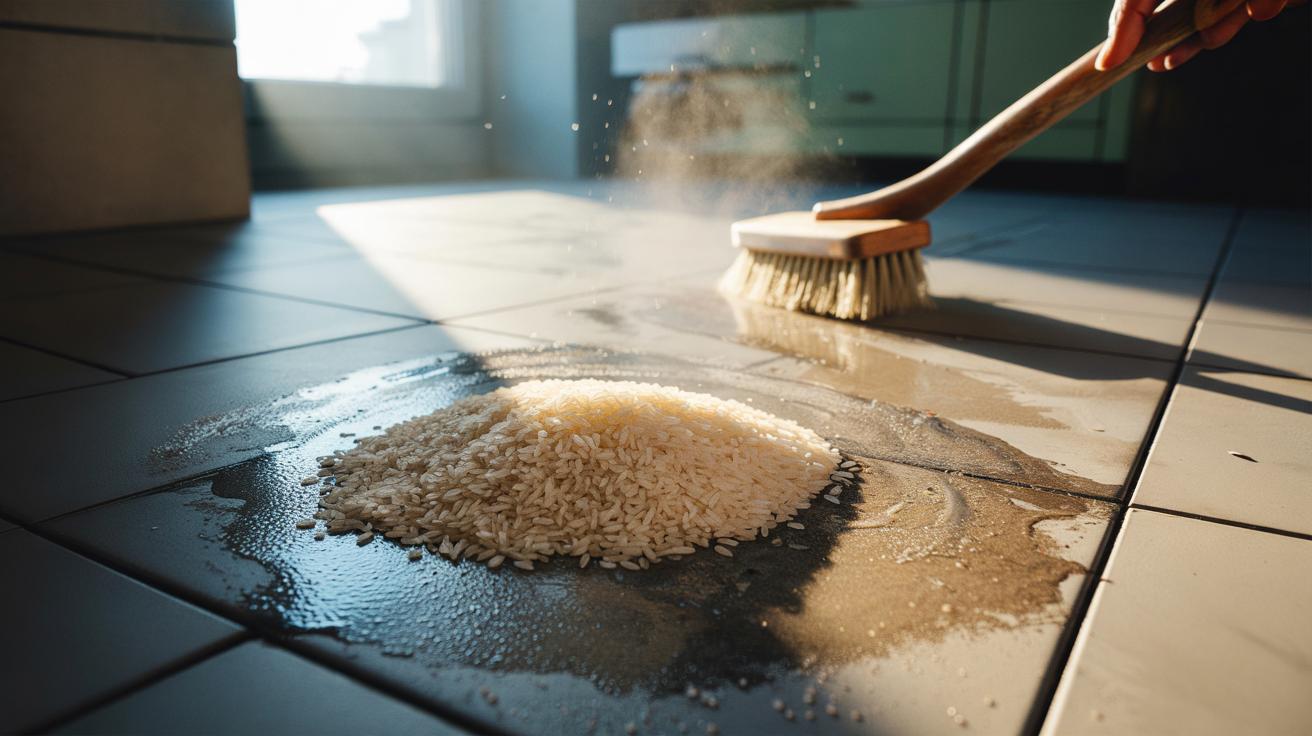
First, clear the area of loose debris so the rice can target the sticky stuff. Shake out a thin, even layer of uncooked white rice—roughly one small handful per square metre—directly over the marked patch. For slightly oily splashes, add a second, lighter sprinkle so grains touch every glossy bit. Don’t wet the rice; the grains must be dry to pull moisture and dirt effectively.
Wait 5–8 minutes. That’s the sweet spot where starch and surface texture engage. During this time, gently press the grains with a soft brush or microfibre cloth to improve contact, especially in grout lines or wood crevices. Avoid grinding pressure on delicate finishes. When the clock hits eight, sweep or vacuum the rice slowly, capturing the lifted grime. Follow with a barely damp mop—warm water with a teaspoon of mild washing‑up liquid or a splash of white vinegar for sealed tiles—to erase any faint starch haze.
Safety and care matter. Test on an inconspicuous spot first if you have soft, high‑gloss polyurethane on hardwood. Skip rice on unsealed stone or waxed finishes that mark easily. Keep pets from nibbling the grains mid‑clean, and always dispose of rice after use. Done right, the whole routine takes less than ten minutes and leaves a floor that looks newly mopped—without the slog.
Choosing the Right Rice and Surfaces
Different grains behave a little differently on the floor. For most households, standard white long‑grain is the easy winner—low in surface powder, firm, and consistent. Short‑grain varieties run slightly starchier and can lift sticky residues faster, though they may leave a whisper of film if you skip the final damp wipe. Brown rice, with its bran intact, offers a touch more texture for stubborn patches on tiles. The golden rule: match grain texture to surface resilience and always finish with a light wipe.
| Rice Type | Best For | Wait Time | Notes |
|---|---|---|---|
| White Long‑Grain | Everyday spills on sealed wood, laminate, tiles | 5–8 mins | Reliable, low residue; easy to sweep |
| Short‑Grain | Sticky patches, light oil on tiles | 4–7 mins | Higher starch; follow with damp wipe |
| Brown Rice | Textured tiles, grout lines | 6–9 mins | More friction; avoid on high‑gloss wood |
On surfaces: tiles and sealed vinyl are the most forgiving. Sealed hardwood responds well if you’re gentle and quick, using a soft brush and that essential damp finish. Avoid unsealed stone and oiled timber where starch and grit can bind to pores. When in doubt, a tiny patch test saves a large headache. Pair the technique with a weekly mop, and you’ll notice less build‑up, faster resets after cooking, and a floor that keeps its quiet, clean sheen.
It’s rare to find a household staple that doubles as a smart cleaning ally, yet rice earns its cupboard space twice—once at supper, and once underfoot. Used as a quick pre‑clean, it conquers greasy marks, crumbly spill zones and those mysterious dull patches that survive a rushed mop. Ten minutes, one handful, big payoff. Your floors look brighter, and your routine gets lighter. Ready to give your kitchen or hallway a swift rice refresh this week, and which surface will you test first to see the difference for yourself?
Did you like it?4.4/5 (28)