In a nutshell
- ✨ Tarnish explained: silver dulls as silver sulfide (Ag2S) forms from sulphur in air and foods, scattering light and masking the metal’s natural shine.
- ⚗️ Fast fix: a salt-and-aluminium foil bath creates a tiny galvanic cell that drives an electrolytic reaction, reducing Ag2S back to silver—non‑abrasive and rapid.
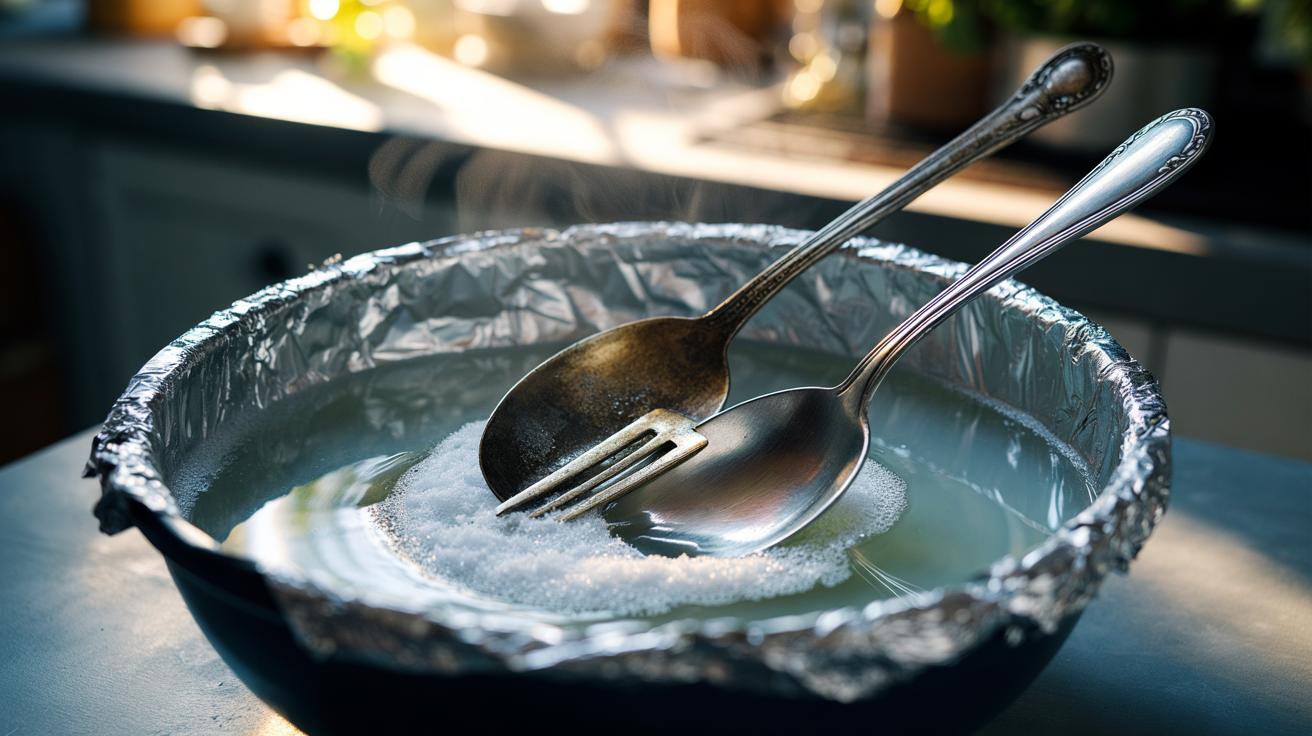
- 🛠️ Simple steps: line a bowl with foil, add hot water plus salt (and bicarbonate), ensure silver touches foil, wait 2–10 minutes, then rinse and dry for instant brightness.
- ⚠️ Smart cautions: avoid gem‑set or glued items, lacquered pieces, and deliberate patinas; for thin silver plate, consider professional re‑plating if wear is visible.
- 🗄️ Longer life: clean after egg/mustard contact, store with anti‑tarnish strips, keep away from rubber and humidity, preserving engravings by minimising abrasive polishing.
It sounds like kitchen alchemy, yet the science is clear: a pinch of common salt, a sheet of aluminium foil, and hot water can return lacklustre knives and forks to mirror-bright glory in minutes. No harsh rubbing, no grey paste creeping under your nails. This is an electrolytic rescue, not old‑fashioned abrasion. The trick exploits a tiny galvanic cell that forms in your washing-up bowl, making tarnish surrender at speed. For households weary of endless buffing, it’s a revelation. For chemistry teachers, it’s an elegant demo hiding in plain sight among pantry staples and tepid tea towels.
What Tarnish Is and Why It Forms
Silver doesn’t rust; it tarnishes. The culprit is silver sulfide (Ag2S), a dark compound that grows when silver meets sulphur-bearing molecules in the air and in foods. Eggs, onions, wool felt, rubber bands, even certain paints release sulphur. Over time, these traces react at the surface, turning gleam to gloom. The layer is thin yet stubborn. Light scatters on the roughened film, so your cutlery looks dull, sometimes streaky, occasionally almost pewter-black. It’s chemistry doing what chemistry does: quietly, relentlessly.
Not all “silver” behaves equally. Sterling silver (92.5% silver) tarnishes readily but recovers beautifully. Silver plate is a base metal coated with a hair-thin layer of silver: it also tarnishes, but aggressive polishing can strip that precious veneer. Stainless steel doesn’t tarnish like silver because it forms a passive chromium oxide film rather than sulphides. That’s why method matters. Mechanical polishing removes material; smart chemistry converts the film back to silver without grinding away the surface. For heirlooms and lightly plated items, that distinction is not pedantry—it’s preservation.
Environmental factors accelerate the fade. Warm, humid kitchens, porous storage fabrics, and proximity to rubber can turbocharge tarnish. A little planning—anti-tarnish strips, low-sulphur paper, sealed drawers—pays off in fewer rescue missions later.
How the Salt-and-Foil Method Works
The miracle is a galvanic cell you build in a bowl. Line the base with aluminium foil, add hot water, then dissolve a spoon of salt (sodium chloride) or bicarbonate. The salt is the electrolyte, carrying charge between metals. Place tarnished silver so it touches the foil. Aluminium is more reactive than silver; it willingly oxidises, donating electrons. Those electrons flow through the contact point, reducing silver sulfide back to metallic silver on your fork’s surface. Sulphur migrates to the aluminium, where it’s bound harmlessly. The tarnish is chemically reversed, not scrubbed away. Heat speeds ions; speed shortens soaking time.
You may catch a faint whiff, akin to eggs—trace sulphide species leaving the silver. It’s fleeting. Unlike abrasive creams, which literally shave off nanometres of silver to reveal brighter metal, this reaction restores what’s already there. The headline result is swift: a few minutes, often less. The quiet bonus? Less wear on engravings, hallmarks, and crisp beading that polishing compounds slowly blur.
| Method | What It Does | Typical Time | Material Loss | Best For |
|---|---|---|---|---|
| Salt + Aluminium Bath | Reverses Ag2S to Ag via redox | 2–10 minutes | None to negligible | Routine tarnish on silver/silver plate |
| Abrasive Polish | Physically removes tarnish layer | 10–30 minutes | Low, cumulative | Spot stains; final buff |
| Professional Re-Plating | Applies new silver layer | Days–weeks | N/A | Worn or patchy plating |
Step-By-Step: Rapid Restoration at Home
1) Line a heatproof glass or ceramic bowl with aluminium foil, shiny side up. 2) Add roughly 1 litre of very hot (not boiling) water. 3) Stir in 1 tablespoon of salt; optional but helpful: 1 tablespoon of bicarbonate of soda to buffer and boost conductivity. Conductivity is the accelerator pedal in this reaction.
4) Place your tarnished pieces in the bath so parts of the silver touch the foil. Keep items from overlapping if they’re heavily tarnished. 5) Wait. Light tarnish vanishes in two or three minutes; severe black sulphide may take up to ten. Flip once for even contact. You’ll sometimes see bubbles, sometimes not—both are normal. 6) Lift one piece and test a small patch with a soft cloth; if bright, you’re done.
7) Rinse thoroughly in clean warm water to remove any residual ions. 8) Dry immediately with a lint-free microfibre cloth, wicking moisture from joins and hinges. 9) For a final pop, a quick buff with a non-abrasive silver cloth is fine. Do not overdo abrasive polishing: the shine should already be back thanks to the electrolytic step. 10) Store in low-sulphur, airtight conditions—anti-tarnish pouches are inexpensive and effective.
Safety, Caveats, and Longevity Tips
Use common sense. Avoid soaking gem-set jewellery (porous stones like turquoise or pearls hate hot, salty water) and pieces with glued components, such as some knife handles or weighted candlesticks—heat and water can loosen adhesives. If an item has deliberate oxidised detailing, the bath may soften that patina. When in doubt, spot‑test an inconspicuous area first. Also skip lacquered silver; you’ll only lift the coating.
Think about the life of your plating. If silver plate is visibly thin or patchy, electrolytic cleaning won’t rebuild metal; it simply removes sulphide. Consider professional re-plating for heirloom-level restoration. For maintenance, wash after contact with eggs, mustard, and vinegar-rich dressings—culprits for accelerated tarnish. Dry thoroughly; lingering moisture invites new chemistry. Store with anti‑tarnish strips, avoid rubber bands, and don’t wrap in newspaper (inks and sulphur compounds are unhelpful bedfellows). The environmental upside is real: this method uses kitchen ingredients, not solvent-heavy polishes, and it preserves the crispness of engraving by avoiding abrasion. That means beauty today, and detail tomorrow.
So, salt and foil aren’t folklore. They’re a neat redox hack that turns Ag2S back into silver, fast, gentle, and repeatable. In a jiffy, dull becomes dazzling, and your Sunday tableware looks like it just left the silversmith’s bench. The bigger story is control: understanding the chemistry lets you pick the lightest touch that does the job, extending the life of both sterling and plate. Will your next clean be a tiny experiment or a full revival? What piece in your drawer deserves five minutes of science today—and what result will surprise you most?
Did you like it?4.7/5 (28)