In a nutshell
- 🔬 Baking soda (sodium bicarbonate) tackles burnt cheese via mild alkalinity, gentle fine abrasion, and tiny bursts of CO₂ that lift residue from enamel and glass.
- 🧽 Moisture, light surfactants, and absorbent fibres drive capillary action, wicking loosened grime into the wipe for a residue-free, streak-free finish with no smears or sheen.
- 🛠️ Best practice: work on a warm oven (40–50°C), allow 20–30 seconds of dwell time, use light circles then a clean straight pass, flip the wipe often, and rinse and dry to confirm no drag or odour.
- 🛡️ Safer cleaning: a buffered, non-caustic approach that’s kind to enamel, tempered glass, and self-clean liners, with credible odour neutralisation; avoid raw aluminium surfaces.
- ✨ Results that show: no trace of burnt cheese, minimal pressure needed, negligible micro-scratch risk, and a door-glass shine where reflections reveal the true, streak-free clean.
Burnt-on cheese in a hot oven is the domestic equivalent of concrete. It sticks, it smokes, it smells. Yet a new generation of oven wipes boosted with baking soda wipes it all away with surprising ease. The secret is chemistry that’s gentle but relentless: a mild alkali that loosens proteins and fats, micro-fine particles that lift residue, and a damp substrate that wicks grime from enamel and glass. No rubber gloves that feel like gauntlets. No choking fumes. Used correctly, the wipe-and-powder duo leaves no tell-tale sheen, smudge, or shadow—just clean metal, ready for the next roast.
Why Baking Soda Beats Burnt Cheese
Cheese scorched onto oven walls is a cocktail of denatured proteins, caramelised sugars, and polymerised fats. It’s tough because heat drives off water and cross-links the remaining material, turning a soft spill into a lacquer. Sodium bicarbonate tackles this in three complementary ways. First, as a mild alkaline buffer (around pH 8.3), it helps “unzip” proteins and disrupts the sticky bonds that glue residue to the surface. Second, the powder’s fine crystalline particles act as a gentle abrasive, scrubbing without gouging your enamel or tempered glass. Third, in the presence of acidic traces, bicarbonate releases tiny bursts of CO₂, adding lift under the grime.
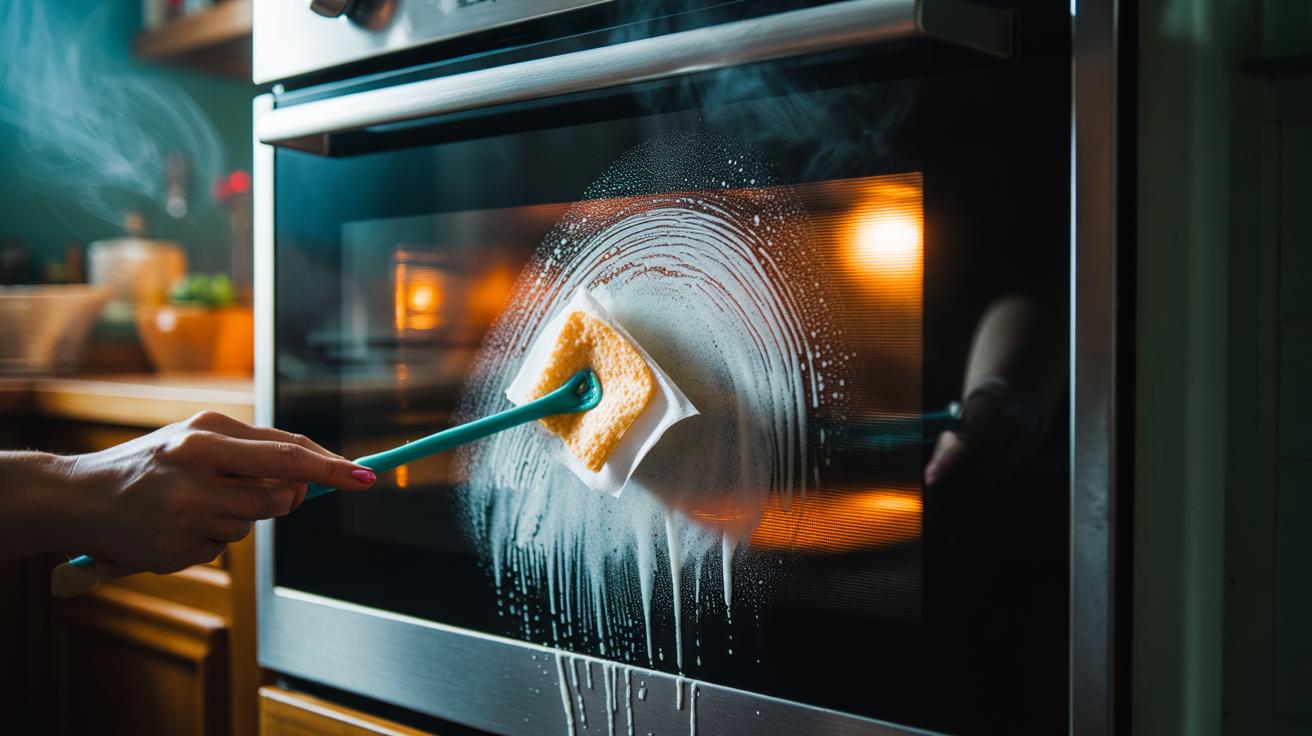
The wipe itself matters. Its moisture softens the crust and carries the bicarbonate into micro-cracks. Capillary action does the quiet work: liquefied soils are drawn off the surface and trapped in the fibres. A light circular motion maximises contact, then a single clean pass removes the slurry. The result is a residue-free finish, with no greasy film and no streaks that catch the light. That’s why these wipes excel on oven doors where reflections betray the slightest smear—and why they’re kinder than harsh caustics on family kitchens.
The Science Behind Powder-Powered Wipes
Think of baking soda as a smart tool rather than a brute-force stripper. Its buffering capacity resists wild pH swings, so it degrades soils without etching. Against fatty deposits, it nudges a little saponification, helping convert clingy greases into easier-to-rinse forms. The wipe’s surfactants—present in tiny, skin-safe amounts—lower surface tension, so the solution creeps beneath carbonised edges. As it works, bicarbonate particles keep their structure, preventing sludgy smearing. Minimal pressure, maximum contact time: that’s the trick. Let chemistry loosen, then let fibres lift.
Some brands add cellulose-rich cloths that retain water evenly, avoiding wet spots that can leave halos. Others use embossing to create micro-scrapers that glide across textured enamel. Crucially, bicarbonate’s particles are softer than glass and enamel, so micro-scratch risk is negligible with normal force. You’ll often see odour claims too. They’re credible. Bicarbonate neutralises acidic vapours, quenching lingering “burnt dairy” notes without heavy fragrance. For anxious owners of self-clean liners, the mildness is welcome: residues go, coatings stay. It’s targeted cleaning, not scorched-earth.
| Mechanism | What Happens | Result |
|---|---|---|
| Mild alkalinity | Loosens protein bonds and softens caramelised sugars | Crust becomes wipeable |
| Fine abrasion | Particles dislodge residue without scratching | Clean, clear surfaces |
| CO₂ release | Micro-bubbles lift soils at acidic spots | Fewer streaks, faster removal |
| Surfactant + fibre | Low tension wetting and capillary capture | No film left behind |
How to Use Oven Wipes for Best Results
Technique decides whether you get a showroom shine or a smeary near-miss. Start with a warm oven, not a hot one—about 40–50°C. Warmth softens residues and speeds the chemistry without flashing off moisture. Press the wipe onto the stain for 20–30 seconds to let the bicarbonate hydrate and penetrate. Work in small sections. Short, light circles first, then a single, straight finishing stroke to remove the slurry. Flip to a clean area of the wipe often; loading causes streaks.
For glass doors, use even gentler pressure. If you meet a glossy patch, it’s usually congealed fat—rewet, wait, then lift. Oven racks? Lay them flat on newspaper, wipe along the bars, then buff dry with a microfibre cloth. Don’t chase every last speck in one pass—dwell time beats force. If you’re dealing with old, blackened cheese from a pizza mishap, mist with water first, then apply the wipe. Avoid raw aluminium trays; bicarbonate can darken them. Finish with a quick rinse using a fresh damp cloth, then dry. The test: bright reflections, no drag under the fingertip, no odour.
In a market of harsh gels and nose-prickling sprays, oven wipes with baking soda are the quiet revolution: non-caustic, low-odour, and astonishingly effective on burned-on dairy. The science is simple yet elegant, turning chemistry and texture into a two-step of soften-and-lift that leaves nothing behind but clean shine. If your weeknight lasagne betrays you, the remedy now fits in a single sachet. What’s the most stubborn oven spill you’ve faced, and which tactic would you like tested next in a real British kitchen?
Did you like it?4.5/5 (26)