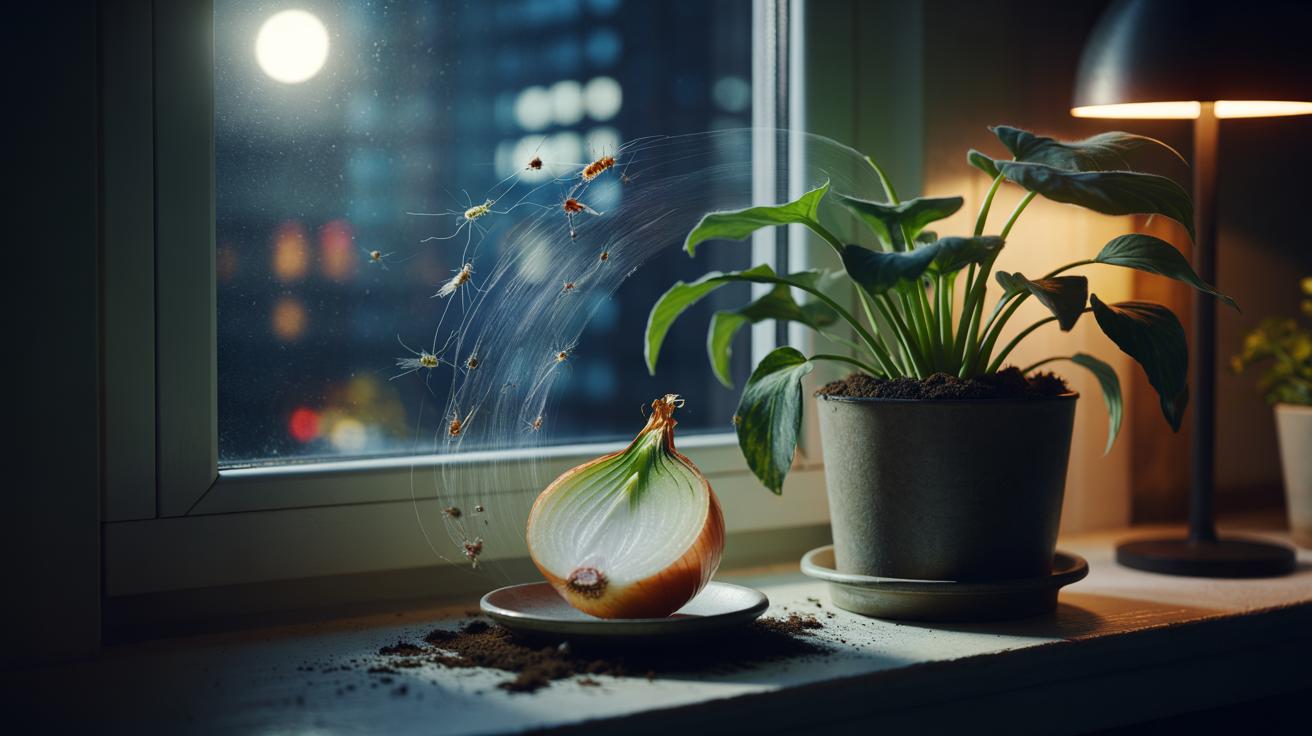
In a nutshell
- 🧅 The onion slice releases sulphur compounds (thiosulfinates and syn‑propanethial‑S‑oxide) that disrupt pest cues, repelling aphids, fungus gnats, and thrips while offering mild antimicrobial benefits—effective for light infestations, not a cure-all.
- 🛠️ Method: cut a 5–8 mm slice, bruise it, place on a saucer 2–5 cm from soil for 8–12 hours overnight, then remove; repeat for 2–3 nights and do not leave for days or let juice touch leaves.
- 🐛 Targeting: strong impact on fungus gnats and aphids, moderate for thrips, mild for spider mites, poor for scale/mealybugs; eggs are unaffected, so hygiene and repetition matter.
- ⚠️ Safety: ventilate lightly, keep slices out of reach of pets—onions are toxic to cats and dogs—and replace nightly to prevent mould; avoid combining with oil or copper sprays the same evening.
- 🌿 Integrate with care: dry topsoil for gnats, prune and rinse leaves, use sticky cards, and adjust humidity for mites—an affordable, chemical-free tactic that buys time while plants recover.
It’s the trick you can try tonight: place a fresh onion slice by a houseplant and let its sulphur compounds do the quiet night shift. No sprays. No sticky traps. Just kitchen chemistry at work while you sleep. The scent that makes you tear up is the same signal that convinces sap-suckers to move on. This is a low-cost, chemical-free nudge to push minor infestations back under control. It won’t replace good plant care, but it buys time. Used sensibly—short bursts, good airflow—it can tip the balance against aphids, fungus gnats, and the odd thrips scouting party. Simple, slightly pungent, surprisingly effective.
How Sulphur in Onions Sends Pests Packing
Slice an onion and enzymes spring into action. Alliinase meets S-alk(en)yl cysteine sulfoxides and, in seconds, you’ve got a cocktail of thiosulfinates and the eye-prickling syn‑propanethial‑S‑oxide. These volatile sulphur molecules evaporate readily, creating a faint halo around your plant. Insects and mites rely on exquisitely tuned antennae and mouthparts to find suitable hosts. The onion’s chemistry scrambles that signal. To a fungus gnat looking for moist soil, it’s like static on the radio. To aphids and thrips, it’s a warning flare that the buffet is shut.
There’s also a microbial angle. Thiosulfinates can suppress some moulds and soil fungi at very low doses. That’s handy when gnat larvae feed on algae and decaying matter in compost. Short, targeted exposure—hours, not days—maximises repellent benefits without stressing the plant. You’re not poisoning anything; you’re exploiting natural deterrence. The impact is subtle yet visible by morning: fewer fliers, slower nibbling, less honeydew. It’s not a cure-all for heavy infestations or scale insects encased in armour. But for a windowsill skirmish, sulphur’s soft power is substantial.
The Overnight Method: Step-by-Step and What to Expect
Choose a firm brown or red onion. Cut a 5–8 mm slice, then bruise it lightly to release more juice. Place it on a small saucer beside the pot, 2–5 cm from the soil surface. Keep it off leaves and stems to avoid contact irritation. For hanging plants, perch the saucer on the rim or suspend a thin slice in mesh. Close the door to concentrate volatiles, crack a window very slightly for comfort. Eight to twelve hours is the sweet spot. Do not leave the slice in place for days; decomposition invites mould and can stress plants.
By morning, tap the pot. You should see fewer adult gnats lifting off, sluggish aphids, and reduced thrips activity near tender growth. Wipe any visible honeydew and rinse leaves gently. Remove the onion, compost it, and bin the saucer rinse-water. Repeat nightly for two or three sessions if pests persist, rotating the slice’s position around the plant. Pair with basics: allow the top 2–3 cm of compost to dry for gnats, prune badly infested tips, and vacuum nearby dust where pests lurk. It’s a quiet routine. It’s also gratifying.
Which Pests Respond Best—and Which Do Not
Different bugs, different thresholds. The onion’s sulphur halo excels against small, soft-bodied pests that navigate by scent and are put off by sharp volatiles. Others barely flinch. Use the table below to target expectations and save time.
| Pest | Typical Signs | Likely Impact of Onion Volatiles | Notes |
|---|---|---|---|
| Fungus gnats | Flies around soil; larvae in compost | Good short-term repellence of adults | Dry topsoil and use sand grit to break cycle |
| Aphids | Clusters on soft tips; honeydew | Noticeable deterrent; slows feeding | Squash/wash-off survivors; check undersides |
| Thrips | Silvery streaks; speckling | Moderate; helps with early presence | Combine with sticky cards and pruning |
| Spider mites | Fine webbing; stippled leaves | Mild; may reduce activity briefly | Raise humidity and rinse foliage |
| Scale/mealybugs | Waxy bumps; cottony tufts | Poor; limited effect | Manual removal and alcohol swabs |
Eggs are largely unaffected, so repeat exposure and basic hygiene are essential to break life cycles. Indoors, you’re unlikely to harm beneficials, but outdoors this method is less precise. If pets roam, remember onions are toxic to cats and dogs if ingested; position slices out of reach and dispose of them promptly.
Safety, Smell, and Plant Health Considerations
Onion volatiles dissipate quickly, but the aroma can linger on fabric. Vent lightly after treatment. Sensitive species—ferns, blooms on orchids, tender new growth—can react to strong scents, so increase distance or reduce exposure time. Never let onion tissue touch leaves; the juice is potent and can cause localised burn. Keep slices on a saucer, not directly on soil for succulents and cacti where excess moisture risks rot. For leafy houseplants, a nearby placement, not buried, is the rule.
Choice matters. Brown onions tend to pack a bigger sulphur punch; red onions are slightly gentler; spring onions are mild but usable if that’s what’s in the fridge. Replace each slice after a single night to avoid bacterial odours. If you’re asthmatic or scent-sensitive, start with a half-slice at greater distance. Avoid combining with oil-based leaf shines or copper sprays on the same night; keep interventions simple and spaced. The goal is short pulses, clean air by day, and steady plant recovery fueled by light, water discipline, and fresh growth.
Used with care, the onion-slice tactic is a tidy, frugal tool for managing low-level pests without reaching for a spray bottle. It buys breathing space, complements sound watering habits, and reminds us that chemistry lives in the larder. You may still need manual removal or a deeper clean-up, but the night shift works quietly in your favour. One slice, one evening, less fuss. Which plant on your windowsill will you test tonight—and how will you tweak the setup to suit its quirks and your home’s rhythm?
Did you like it?4.5/5 (22)