In a nutshell
- 🧪 The science: tannins (polyphenols) in tea are mildly acidic (≈pH 5) and disrupt oils/proteins so fingerprints and soap film lift in about 30 seconds.
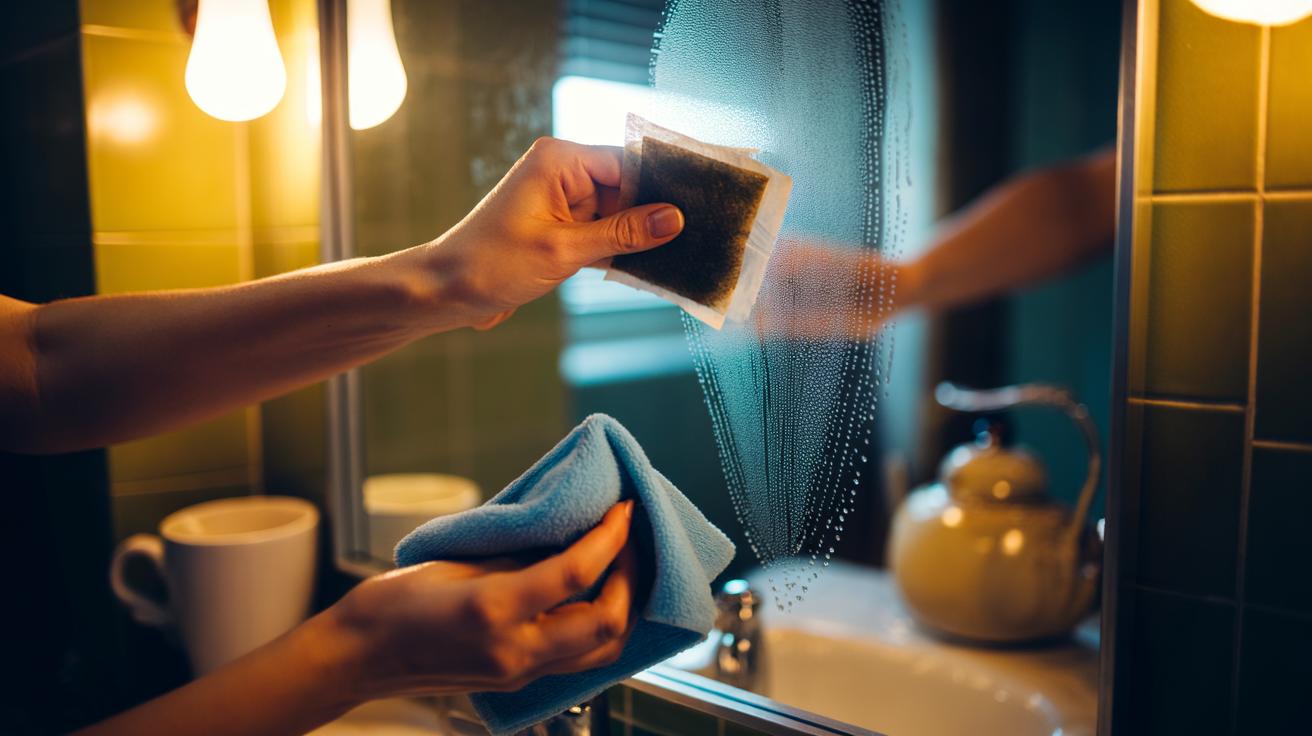
- 🔧 Method: briefly brew a black tea bag, use it warm and damp (not dripping), wipe in S-shapes, pause 30 seconds, then buff dry with a clean microfibre cloth for a mirror shine.
- ♻️ Advantages: ultra low-cost, no ammonia or VOCs, minimal plastic waste, and a neutral scent; ideal for everyday smears—though heavy limescale may still need a descaler.
- ⚠️ Cautions: avoid anti-glare or specialty coatings, don’t soak seals or wood, brew lightly to prevent tinting, and test on coated glass; match tea type (black/green/white) to sensitivity.
- 🧼 Pro tips: use the two-cloth rule, pre-dampen with distilled water in hard-water areas, add a tiny drop of washing-up liquid for greasy spots, and reuse spent bags to cut waste.
Put down the pricey glass spray and reach for a humble tea bag. In kitchens and bathrooms across the UK, cleaners are discovering that the tannins in black tea can cut through fingerprints, steam haze, and soap mist astonishingly fast. In as little as 30 seconds, organic grime softens and lifts, revealing a mirror-bright finish. It’s a thrifty trick that makes sense: brewed tea is mildly acidic, rich in polyphenols, and naturally astringent. That cocktail helps loosen residue without a chemical fog. With a warm bag, a clean microfibre cloth, and a steady wipe, glass gleams, noses aren’t assaulted, and the bin isn’t fuller of plastic. Simple. Effective. Surprisingly scientific.
The Chemistry Behind Tannin-Powered Cleaning
Tea owes its cleaning clout to polyphenolic tannins, the compounds responsible for that familiar mouth-drying astringency. These large, reactive molecules cling to and destabilise the protein- and oil-based films that make glass look grubby. Fingerprints contain sebum, stray cosmetics, and environmental dust. Tannins grip that mix, disrupting the slick interface so a cloth can lift it away. Warmth is crucial: a slightly heated tea bag softens waxy deposits and helps the solution spread thinly across the pane.
There’s more at play. Brewed tea sits around pH 5, a gentle acidity that can nudge mineral haze from hard water, especially where soap scum has bound to limescale. It won’t strip a stubborn chalky crust, but it will loosen the surface binders that cause smearing. This is why light mist and fingerprints vanish while heavy limescale may remain. The result is counterintuitive yet reliable: tannins make dirt easier to grab, not harder, leaving less residue when buffed with a dry microfibre cloth.
Step-by-Step: From Kettle to Crystal-Clear Glass
Start with one plain black tea bag—no added oils or flavourings. Dunk it in freshly boiled water for 30–60 seconds, squeeze lightly, then let it cool to warm. Wipe the glass in overlapping S-shapes, paying attention to edges where grime collects. Wait for roughly 30 seconds to let the tannins do their work, then buff dry with a clean microfibre cloth. For windows, use a second dry cloth to finish the edges. If the bag dries, re-wet and squeeze again; you want it damp, not dripping.
A quick guide helps you choose the right targets:
| Surface | Works Well | Caution |
|---|---|---|
| Bathroom mirrors | Fingerprints, steam haze | Avoid dripping into wooden frames |
| Shower glass | Soap film, light water marks | Heavy limescale may need a descaler |
| Interior windows | Cooking mist, smears | Don’t soak seals or putty |
| Glass tables | Greasy fingerprints | Test on coated glass finishes |
Tip: Use soft water or filtered rinse on very hard-water days to avoid fresh spotting. Never brew too strong; over-extracted tea can tint pale frames.
Why It Beats Commercial Sprays for Everyday Smears
Convenience sells, yet a tea bag argues back on cost, scent, and sustainability. A single bag costs pennies and yields multiple quick cleans, without propellants or synthetic fragrance that lingers on bathroom air. No harsh ammonia. No cloying perfume. No single-use plastic trigger bottle. For renters and families sensitive to volatile organic compounds, that’s a relief. The warm, slightly acidic solution breaks down skin oils and light soap residues so they release on the first pass; the buff brings the mirror shine.
There’s an honest caveat. Tannins tackle organic grime brilliantly, but they’re not miracle workers against serious limescale or builder’s dust. For those, a targeted vinegar soak or a dedicated descaler is faster. Think of tea as the everyday spritz you already own, refilled by the kettle. It’s biodegradable, low-waste, and satisfying—especially when you see yesterday’s toothpaste fog vanish in half a minute. In a cost-of-living squeeze, a warm tea bag is a small, smart rebellion that leaves glass spotless.
Troubleshooting and Pro Tips
Streaks happen when cloths are dirty or the solution dries unevenly. Fix it with the “two-cloth rule”: one slightly damp for the wipe, one bone-dry for the buff. If your tap water is very hard, pre-dampen the cloth with distilled water to avoid fresh mineral trails. Brew lightly; darker tea can leave faint tan marks on silicone or unsealed grout. If the glass feels tacky, you used too much liquid—go lighter and buff longer.
Match tea to task. Black tea is strongest; green tea is gentler and less staining; white tea is ideal for pale frames. Skip herbal blends containing citrus oils, which can smear. Don’t use on anti-glare coatings, camera lenses, or specialised tints without checking guidance. For greasy cooker hoods or BBQ lids, add a single drop of washing-up liquid to the cloth after the tea wipe; the surfactant partners with the tannins to finish the job. And yes, the bag can be spent—yesterday’s cooled, damp bag works a treat and keeps waste down.
Cleaning hacks come and go, but this one endures because it’s grounded in simple chemistry and everyday practicality. Tannins grip the grime you actually see, warm water softens it, and a decent microfibre whisks it away. Thirty seconds, a gentle buff, and you’re done. No special bottle. No sharp smell. Just clear views and sharp reflections that make a room feel instantly fresher. Will you keep a small stash of used tea bags by the sink and turn brews into brilliant glass, or is there another low-cost, low-waste trick you swear by for a streak-free shine?
Did you like it?4.5/5 (26)