In a nutshell
- 🧪 The science: citric acid lowers surface pH to disrupt microbes and loosen proteins, while mild chelation frees mineral “glues” and lemon’s oils cut grease; a short dwell helps break biofilms.
- 🌳 Wood matters: its porous, capillary structure aids fast drying and odour control; lemon swells surface fibres to lift grime, but it’s not a steriliser—use heat or approved sanitisers after high‑risk raw meat prep.
- 🧼 Method: sprinkle coarse salt, scrub with a lemon half, allow 2–3 minutes contact, quick warm rinse, then thorough drying upright; recondition with food‑grade mineral oil monthly.
- ⚠️ Avoid: over‑soaking, long wet contact, and acidic overkill; keep water minimal, ensure rapid drying, choose non‑iodised salt, and warm the lemon briefly to boost juice.
- 🍋 Payoff: an eco‑friendly, low‑cost routine that de‑greases, deodorises, and removes bacteria‑laden residues—ideal for everyday boards—by pairing acidity and abrasion.
Reach for a halved lemon and you can restore a tired wooden board in minutes. It’s not magic. It’s chemistry you can smell. The citrus tang signals citric acid and essential oils at work, loosening greasy films, lifting stains, and unsettling microbes that cling to knife-scarred surfaces. Wood responds well to gentle, acidic care: fibres swell slightly, residues release, odours fade. Rinse, dry, and the grain looks newly scrubbed. The method is simple enough for a weekday supper yet serious enough for food safety. Used properly, lemon is a fast, low-cost way to strip bacteria‑laden residues from wood, without harsh bleaches or synthetic fragrances.
What Makes Lemon Work on Wood
Lemon’s cleaning power begins with low pH. Citric acid drops the surface pH on the board, which can disrupt bacterial cell membranes and denature proteins that help residues stick. That same acid also performs gentle chelation, binding minerals such as calcium and magnesium that glue grime into knife grooves. As the mineral “cement” loosens, a quick scrub lifts away the softened film. Acid weakens the residue’s grip so mechanical action can finish the job.
There’s more in the rind. Lemon peel releases small amounts of limonene, a solvent that cuts through fats without soaking the wood. Trace ascorbic acid adds an antioxidant effect that helps with odours. None of this turns a lemon into a hospital-grade sanitiser, but the cocktail matters. It de-greases, de-scales, and deodorises in one pass.
Contact time is crucial. A 2–3 minute dwell lets acid penetrate biofilms, that slimy matrix bacteria use for protection. Salt, often partnered with lemon, acts as a fine abrasive that scours without gouging fibres. Together they deliver a one-two: chemical disruption followed by gentle physical removal. Rinse well, then dry thoroughly to prevent moisture-loving microbes from bouncing back.
The Nature of Wooden Boards and Why Acid Helps
Wood isn’t inert plastic. It is a porous, capillary material with cell walls that wick moisture away from the surface, often trapping bacteria inside a drying environment they dislike. Studies over decades have shown microbial counts on wood can fall faster than on plastic as boards dry. That said, juices and fats can still lodge in knife scars. Left alone, those residues feed odour, staining, and microbial persistence.
Enter lemon. Light acidity swells superficial fibres, lifting the film at the interface where residues grip. The chelating action unglues mineral-rich deposits from hard water and meat proteins, while the citrus oils loosen fats. Unlike heavy detergent, a halved lemon keeps liquid volume low, reducing the risk of deep waterlogging that can warp a board or force contaminants deeper into the grain.
Wood also contains natural compounds—tannins, phenolics—that contribute mild antimicrobial behaviour, but they are not a cleaning plan. The lemon method supports what wood does well: quick drying and odour control. For boards used with raw poultry, official advice still points to heat or approved sanitisers. Lemon is a maintenance hero, not a stand‑alone defence for high‑risk contamination.
How to Clean With Lemon and Salt, Step by Step
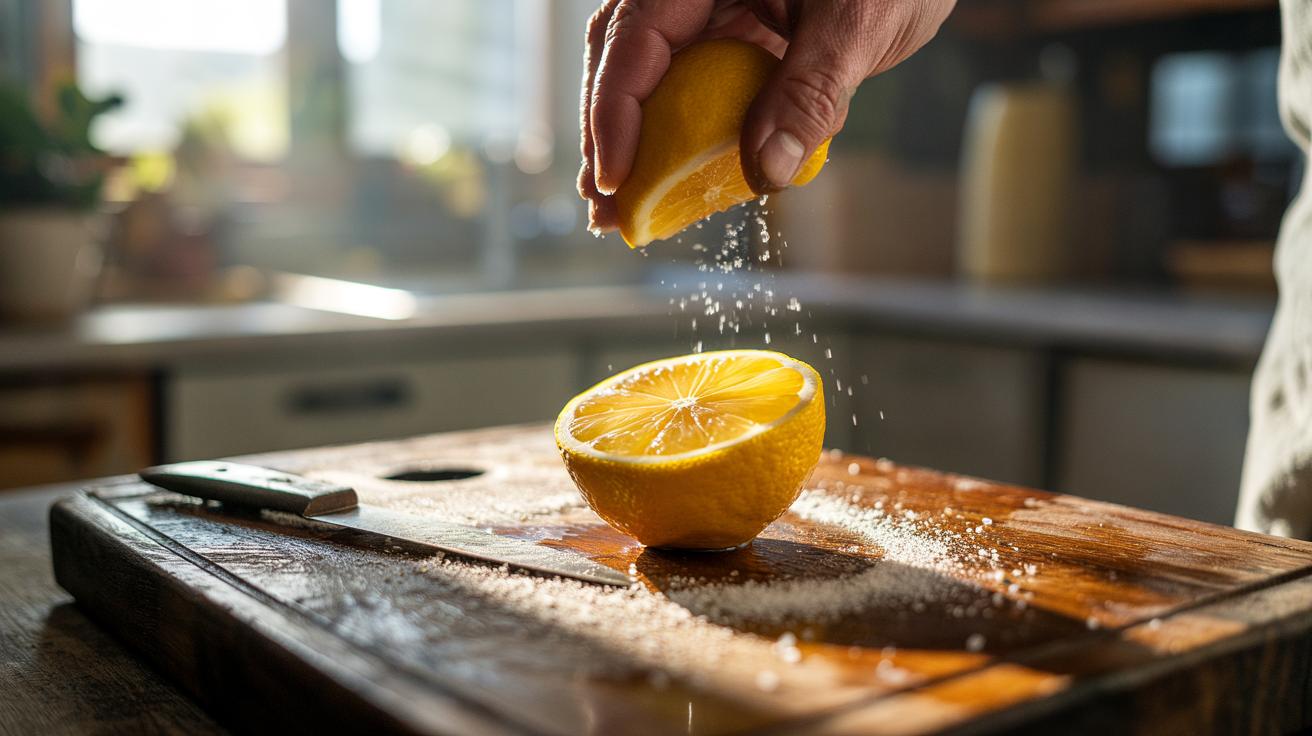
Start with a clean sink and dry board. Slice a lemon in half. Sprinkle coarse salt—sea salt or kosher—across the surface. Use the cut side of the lemon as a scrubber, pressing firmly to drive brine into knife marks. Work in tight circles, then along the grain. Let the acidic slurry sit for 2–3 minutes for biofilm disruption, but don’t wander off; wood should never remain wet for long. Scrub once more, rinse quickly in warm water, and wipe dry. Stand the board on edge to air-dry. Finish with a light coat of food-grade mineral oil once a month to seal fibres.
| Item | Function | Typical Amount | Tip |
|---|---|---|---|
| Lemon half | Acidic cleaner; solvent oils | 1–2 halves | Microwave 10 seconds to boost juice |
| Coarse salt | Mild abrasive; draws moisture | 1–2 tablespoons | Choose non-iodised to reduce staining risk |
| Warm water | Rinse away loosened residues | Quick rinse | Avoid soaking; speed matters |
| Mineral oil | Reconditions; slows absorption | Thin coat | Apply on fully dry wood only |
Common mistakes? Over-soaking, acidic overkill, and neglecting the drying step. If your board smells damp hours later, you’ve left it too wet. Use a clean tea towel and airflow to speed the dry, then oil when bone-dry to keep fibres supple and less absorbent next time.
Lemon halves earn their place beside the sink because they do three things at once: cut grease, chelate mineral gunk, and unsettle microbes on wooden boards primed to dry quickly. The result is practical, frugal, and pleasantly fragrant. Still, be realistic. Acid and abrasion clean brilliantly, but they don’t sterilise. For raw meat aftermath, turn to heat, peroxide-based sanitisers, or diluted bleach as food-safety guidance recommends. For everyday veg, fruit, bread, and cheese prep, citrus and salt keep wood honest. What will you change in your board-care routine this week to balance speed, safety, and sustainability?
Did you like it?4.7/5 (22)