In a nutshell
- 🫧 The synergy of baking soda and carbonation unleashes CO₂ microbubbles that lift grime while mild alkalinity loosens oils and sticky sugars—visible results in about two minutes.
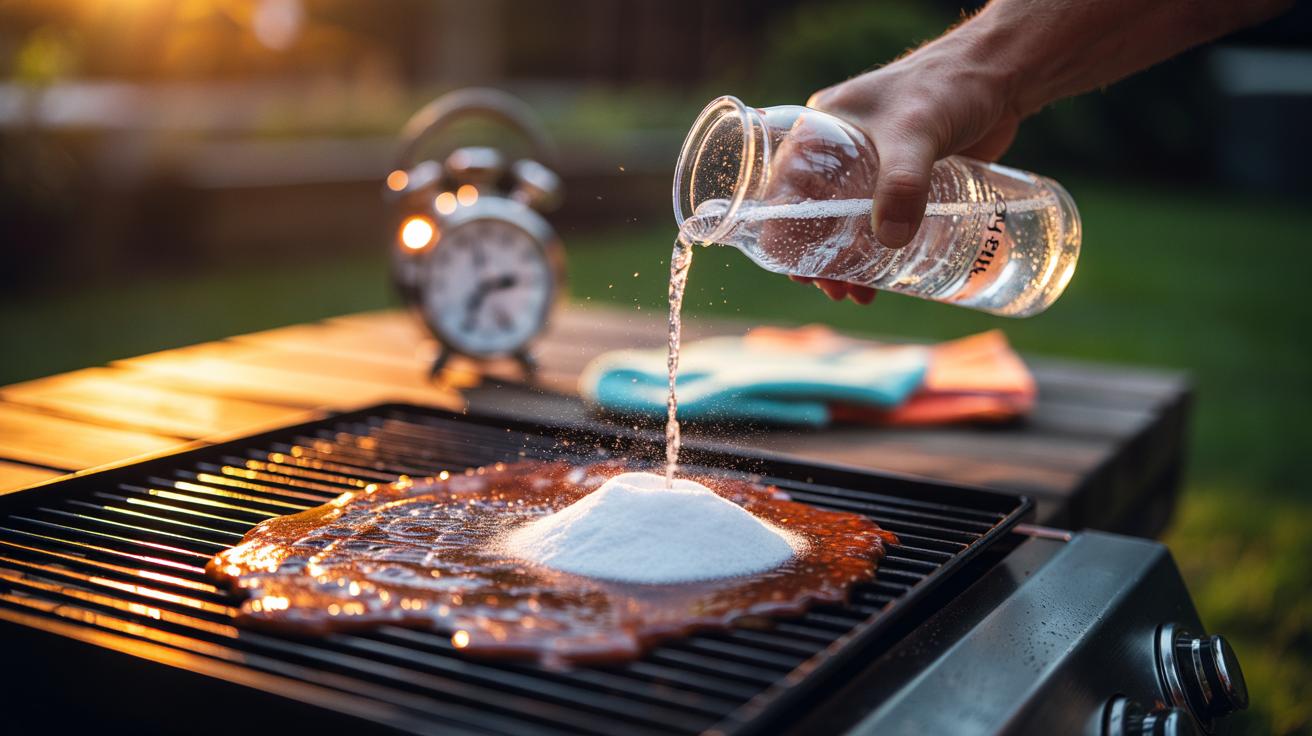
- ⏱️ Two‑minute method: sprinkle baking soda, mist with carbonated water (or 1:1 vinegar–water for heavy caramelisation), wait 60–90 seconds, agitate, wipe, and rinse; repeat once for stubborn spots.
- 🧽 Targets tough BBQ messes: grease, smoky film, and caramelised sauces on grill grates, fabrics, patio tiles, and stainless tools—gentle on surfaces yet highly effective.
- ⚠️ Avoid pitfalls: no acids on natural stone, test aluminium, don’t soak seasoned cast iron, and never mix with bleach or seal reactive mixtures in containers.
- 🔧 Pro tips: pre‑warm grills, use nylon on enamel, blot fabrics then launder, keep freshly opened fizzy water for stronger lift, and stash soda by the BBQ for rapid clean‑ups.
Barbecue weather leaves souvenirs. Stubborn streaks of sauce, sugary glaze welded to grill bars, grease halos on aprons and patio slabs. Here’s the fast fix hiding in your cupboard: baking soda supercharged by carbonation. When these two meet, fizzing microbubbles pry up grime while a gentle alkaline lift loosens oils and protein residues. No harsh bleach. No endless scrubbing. In as little as two minutes, the mess starts to float free, letting you wipe, rinse, and get back to the party. The trick is timing the fizz, using the right ratio, and knowing where to avoid acids. Let’s make those stains surrender—quickly, cheaply, safely.
Why Carbonation Works With Baking Soda
Think of carbonation as tiny jackhammers and baking soda as a mild, grease-splitting assistant. Sodium bicarbonate raises pH slightly, disrupting the bond between fatty barbecue splatters and surfaces. Add bubbles—via club soda, seltzer, or a dash of vinegar—and a storm of CO₂ microbubbles rushes beneath the stain. They wedge into pores on metal, ceramic, and fabric fibres, lifting the mess so it can be carried away in the rinse. The fizz doesn’t just look dramatic; it does mechanical work. Meanwhile, bicarbonate buffers odours and helps break down sticky sugars that have caramelised onto grill grates and trays.
Prefer a greener clean? This duo is low-tox, cheap, and readily available, which matters when you’re de-gunking a big barbecue after a long afternoon. Use freshly opened carbonated water for the strongest effervescence, or splash in white vinegar for extra bite on syrupy sauces. The fizz is brief, so act while it’s alive. Timing is everything: wet the soda thoroughly, agitate while bubbling peaks, then rinse before residue resettles. It’s controlled chemistry, scaled for the garden, the kitchen, and the cool box.
Two-Minute Method: Step-by-Step
Kit list: baking soda, carbonated water (or white vinegar for heavy caramelisation), a spray bottle, a soft brush, and a microfibre cloth. Sprinkle a light veil of baking soda directly over the stain—thin and even. Mist with fizzy water until you see active bubbling. If the stain is gluey, switch to a 1:1 vinegar–water spritz to intensify the fizz. Wait 60–90 seconds, then gently agitate with the brush. Wipe. Rinse with clean water or a damp cloth. Stubborn spot? Repeat once. Total working time: about 120 seconds. It’s brisk, controlled, and it saves your elbows from punishment.
Use this quick chart to match surface and mix. Do not seal vinegar and baking soda in a closed container—pressure builds. And remember, cooler sparkling water holds more CO₂, but slightly warm water speeds grease softening; aim for room temperature.
| Surface | Mix Ratio | Wait Time | Notes |
|---|---|---|---|
| Grill grates (stainless/enameled) | 2 tbsp soda + 100 ml carbonated water | 1–2 min | Brush along bars; rinse hot. |
| Cotton apron/napkins | 1 tsp soda + 50 ml carbonated water | 1 min | Blot, don’t rub; launder after. |
| Patio stone/tiles | 3 tbsp soda + 1:1 vinegar–water | 2 min | Rinse generously; avoid marble. |
| BBQ tools (stainless) | 1 tbsp soda + 80 ml carbonated water | 1–2 min | Dry to prevent spots. |
What Stains It Tackles—and What To Avoid
This fizz-and-alkali team excels on grease streaks, smoky film, sticky barbecue sauce, and protein drips that have set during a long cook. The bubbles undermine surface tension, freeing residues from metal and fabric, while bicarbonate loosens oxidised fats that make everything feel tacky. It’s especially good on sugary glazes that have caramelised and glued themselves to grates. On plastics and enamel trays, the gentle pH avoids the harshness of caustic cleaners, yet still delivers a visible lift. On fabrics, carbonation helps push soils up and out rather than driving them deeper into the weave.
There are caveats. Avoid strong acids on natural stone like marble or limestone—vinegar can etch the surface; use club soda only. Be cautious around aluminium, which can dull with repeated alkaline exposure; test a hidden patch first. Don’t soak seasoned cast iron; spot-treat, wipe, then re-oil. Never mix with bleach or store reactive mixes in sealed bottles. Deep, burnt-on carbon that’s gone truly black may need a longer soak or a scraper before the fizz can finish the job. Dye transfers and scorch marks are different beasts; reach for targeted stain removers after the quick clean.
Pro Tips for Grills, Aprons, and Patios
For grills, pre-warm the metal for 60 seconds with the lid down, then cut the heat off. Warmth softens grease so the CO₂ can sneak underneath. Sprinkle soda while the grate is just hand-safe, then unleash fresh fizzy water. Use a nylon brush, not steel, on enamel. On stainless, brush along the grain to avoid micro-scratches. For aprons, slide a spoon under the fabric to create a firm backing, so the fizz lifts upward rather than bleeding through. Blot, don’t rub. Follow with a standard wash to finish brightening and remove any remaining bicarbonate.
On patios, corral the area with a damp border so lifted grime doesn’t wander. Keep the fizz active: mist again if bubbles fade too soon. A soft deck brush gives the bubbles more grip on textured stone. If odours linger after a fish-heavy cook, sprinkle a final dusting of dry baking soda, leave ten minutes, then sweep. Freshly opened sparkling water always outperforms a flat bottle. Store a small can by the barbecue kit; it’s the fastest way to exploit effervescence when guests have barely finished their burgers.
Used smartly, the partnership of baking soda and carbonation turns post-barbecue chaos into a quick, satisfying reset. Two minutes of fizz can replace twenty minutes of scrubbing, and it spares your surfaces the punishment of harsher chemicals. It’s frugal, kinder to the environment, and surprisingly effective on the mixed messes a cookout creates—grease, sugar, smoke, and drips. Keep a tin of soda and a can of something bubbly within reach of the grill, and the clean-up hurdle shrinks to a hop. Which stubborn barbecue stain will you challenge with the fizz-first method this weekend?
Did you like it?4.4/5 (20)