In a nutshell
- 🥚 Eggshells are primarily calcium carbonate (CaCO3), which dissolves slightly in acidic water to raise pH, boost alkalinity, and temper temporary hardness fast.
- ⚗️ By reacting with dissolved CO2, shells shift the carbonate–bicarbonate equilibrium, stabilising pH so water behaves “softer” even if total calcium changes little.
- 🔧 Practical wins include kettles, coffee, brewing, and gardening, where shells act as nucleation sites for scale; they do little for permanent hardness like calcium sulphate.
- ⏱️ Maximise effect with crushed pieces (0.5–2 mm), warm water, and agitation; small doses often suffice, with noticeable impact in 10–60 minutes and replacement when surfaces smooth.
- 🧼 Stay safe: rinse, de-membrane, and bake shells; avoid over‑alkalising, descale appliances routinely, and remember true softening needs ion exchange—eggshells mainly add buffering.
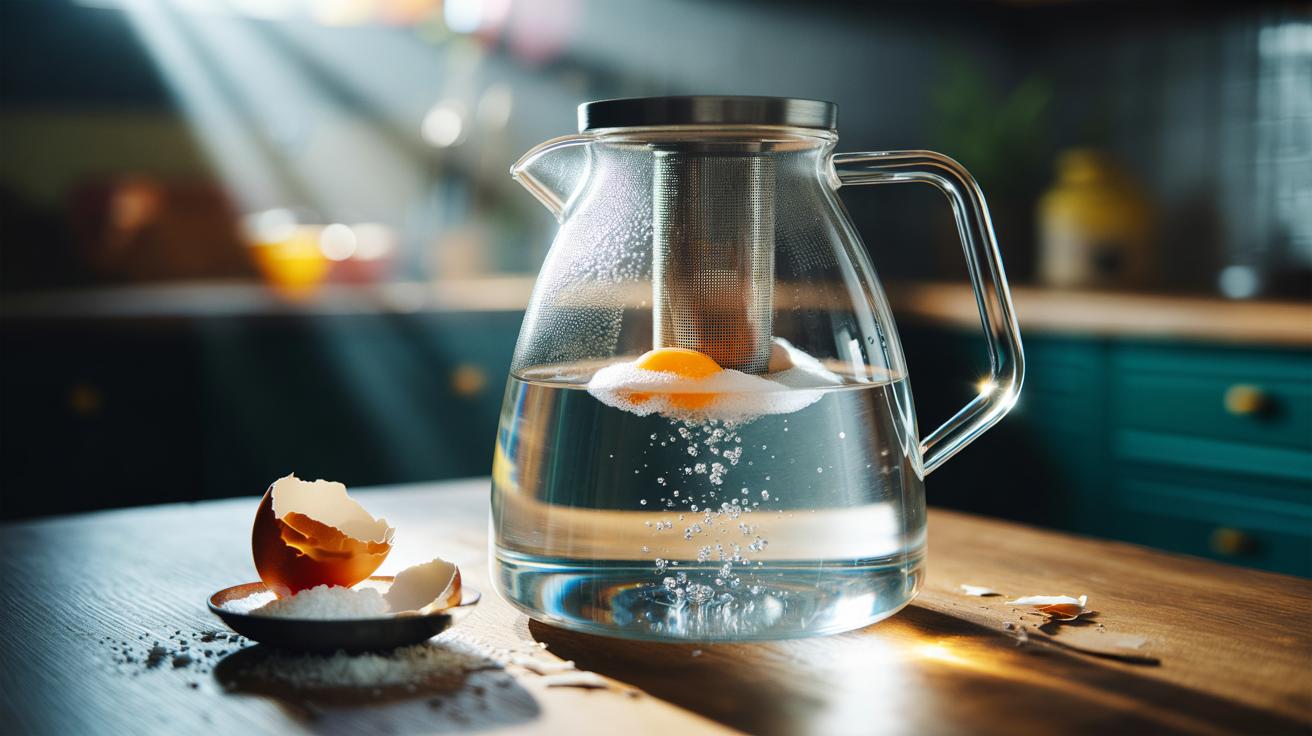
Across Britain’s hard-water heartlands, a folk fix keeps resurfacing: drop a clean eggshell into the jug or kettle, give it a swish, and the water tastes gentler within minutes. The chemistry behind this kitchen trick is far from myth. Eggshells are overwhelmingly calcium carbonate, a mineral that reacts with dissolved acidity and nudges the pH upward, altering how minerals behave. The effect can feel startlingly quick. Yet it is also bounded by equilibria, temperature, and surface area. Eggshells can raise pH and tame “temporary” hardness tendencies, but they are not a universal softener for every mineral problem. Here is how the science plays out, and how to use it sensibly at home.
Why Eggshells Work: Chemistry in the Kitchen
Eggshells are about 95–97% calcium carbonate (CaCO3), the same stuff that builds chalk cliffs and kettle scale. In slightly acidic water, CaCO3 dissolves at the surface. The reaction consumes acidity and forms bicarbonate (HCO3−), a species that lifts pH and strengthens the water’s alkalinity, the crucial buffer against sudden swings. Think of it as fitting the water with stabilisers. As pH rises, minerals that were comfortable in solution become more inclined to precipitate or cling to surfaces — and sometimes, to the shells themselves.
The twist is in the details. In carbonated tap water, dissolved CO2 lowers pH and keeps calcium in motion as temporary hardness. When eggshells dissolve a little, they soak up that acidity and tip the carbonate–bicarbonate equilibrium. The result is a brisk move toward neutrality and a reduction in corrosivity. The water can behave “softer” with soap and taste less sharp, even though the overall calcium content may not drop dramatically. What truly changes fast is the buffer, not simply the mineral count.
From Sink to Soil: Practical Uses and Limits
In a kettle or coffee carafe, rinsed shells can act as nucleation sites where limescale prefers to settle, sparing glass and metal. Home brewers use crushed shells to temper acidity in mash water; gardeners add them to watering cans for seedlings sensitive to acidic swings. For day‑to‑day cooking and tea, the win is often flavour: reduced tang and a cleaner, less metallic note. There are limits. Permanent hardness — typically calcium sulphate or magnesium salts — will not vanish. The shell doesn’t chelate minerals; it shifts the balance and invites some carbonate to drop out if conditions encourage it.
Safety matters. Bake shells at low heat to dry and sanitise, then crush to expose fresh surfaces. Avoid cloudy fragments in served drinks by confining pieces in a clean muslin bag or tea infuser. Aquariums demand caution: a slow, buffered rise in alkalinity may help certain species, but sudden pH jumps are dangerous. Never alter aquarium pH without a reliable test kit and a gradual plan. For household appliances, the trick is periodic, not permanent: use shells during a boil, then discard and descale as usual to prevent hidden build-up.
Optimising the Effect: Surface Area, Heat, and Time
The speed of pH lift depends on contact. Crush shells into 0.5–2 mm granules to multiply surface area, and swish or stir to refresh the boundary layer where dissolution happens. Warmer water accelerates the reaction. So does mild acidity: slightly sour tap profiles (often pH 6.5–7) draw more carbonate from shells than already alkaline water. If you are brewing or cooking, a brief pre‑soak — five to ten minutes — often suffices for a noticeable change in taste and behaviour with soap.
Use less than you think, test, then adjust. A teaspoon of clean, crushed shell in a litre can nudge pH and boost alkalinity without overdoing calcium. For clarity, confine fragments to a bag so any precipitated scale collects there. In kettles, a handful of larger pieces can encourage limescale to plate on the shell rather than on the element. Replace when they become smooth: the reactive micro-pits have been spent. Below is a quick reference to keep tweaks on target.
| Parameter | Typical Effect | Notes |
|---|---|---|
| Eggshell composition | 95–97% CaCO3 | Trace proteins and magnesium present |
| Solubility in pure water | Very low (~15 mg/L) | Dissolves faster in slightly acidic water |
| Time to noticeable pH change | 10–60 minutes | Faster with warm water and agitation |
| Best particle size | 0.5–2 mm | Balance between speed and easy removal |
| Works best on | Temporary hardness | Limited effect on permanent hardness |
Safety, Taste, and Appliance Care
Start clean. Rinse shells, peel away membranes, then bake at 120–150°C for 10–15 minutes. This knocks back microbes and fragile odours. Store in a dry jar. Do not over‑alkalise beverages; aim for subtlety, not chalky water. If soap scum is your main frustration, remember: real “softening” is removal of calcium and magnesium, typically via ion exchange or reverse osmosis. Eggshells don’t do that. What they offer is a dose of alkalinity that stabilises pH, tempers acidity, and can coax scale to settle where you choose.
Appliance owners should keep up routine care. Empty kettles after each use, let shell fragments dry separately, and descale periodically with citric acid. In coffee, a whisper of carbonate rounds harshness in dark roasts; in tea, overdoing it mutes brightness. Gardeners watering brassicas and tomatoes can harness the gentle pH lift without resorting to synthetic additives. For aquaria or sourdough water, test first. When you control pH change in small, measured steps, eggshells become a precise tool, not a blunt instrument.
Eggshells prove that a humble waste can be a buffering powerhouse: a kitchen‑counter route to raising pH swiftly, calming temporary hardness, and steering scale away from prized surfaces. The method is cheap, reversible, and surprisingly elegant — provided you respect its limits and measure its effects. Keep the science in sight, and the results are predictable. Keep it tidy, and your kettle, cup, and seedlings will thank you. With your next dozen eggs, will you experiment with clean, crushed shells — and test how far a little calcium carbonate can take your water?
Did you like it?4.4/5 (27)