In a nutshell
- 🧪 Why it works: Mild acids and sulphur compounds in onion juice break down greasy films fast, aiding quick evaporation for streak-free glass.
- 🧴 Quick method: Blend, strain, and dilute (2:1 for light dust, 1:1 for traffic film), allow 30–60s dwell time, wipe with a microfibre cloth and finish with a squeegee.
- ⚠️ Safety & surfaces: Ventilate, protect eyes/skin, avoid unsealed wood or polished stone, test tinted films, and remember onions are toxic to pets; don’t mix with bleach or ammonia.
- 💷 Cost & eco: One cheap onion makes roughly a litre of cleaner, it’s biodegradable, reduces plastic via refills, and offers low-odour results versus vinegar or ammonia sprays.
- ✨ Pro tips: Work top-to-bottom, use less liquid to curb smears, flip cloth sides often, control odour with lemon zest or mint, and finish with a squeegee for a pro-level shine.
British homes battle smeary windows all year: greasy handprints, pollen, traffic film, even the ghostly haze left by candles. Here’s the surprise from the veg drawer. Onion juice slices through that grime with speed and gusto, turning dull panes bright in minutes. The method is simple, the kit is basic, and the results are oddly satisfying. There’s science behind the sparkle, not superstition. Better yet, it’s affordable, eco-lean, and kind to most frames when used sensibly. If you want a fast, streak-free clean without harsh fumes, onion is an unlikely hero worth trying today.
Why Onion Juice Works on Glass
The cleaning power starts in the bulb. Fresh onions contain mild acids and reactive sulphur compounds that help disrupt greasy films and lift light bio-residue from glass. That acidity isn’t as punchy as vinegar, but it’s sufficient to loosen fingerprints, cooking vapours, and the faint haze that accumulates from city air. Meanwhile, the liquid’s natural volatiles aid quick evaporation. Less dwell, fewer smears. A quick pass with a microfibre cloth and a squeegee, and the pane flashes clean. It’s chemistry meeting practicality in a way that just works.
There’s also a polishing effect. The diluted juice softens stuck-on specks—fly spots, fine dust, street soot—so they release with minimal pressure. That means less rubbing, which is kinder to delicate coatings and older glazing. It won’t tackle heavy limescale deposits—that’s vinegar’s territory—but for day-to-day grime, onions excel. Odour? Brief and workable. It disperses quickly, especially if you crack a window. Add a little citrus peel to the bottle if you’re scent-sensitive. The result is consistent: sharp clarity, brisk drying, and a pane that resists new smudges for longer than you’d expect.
Quick Method: From Bulb to Brilliant Pane
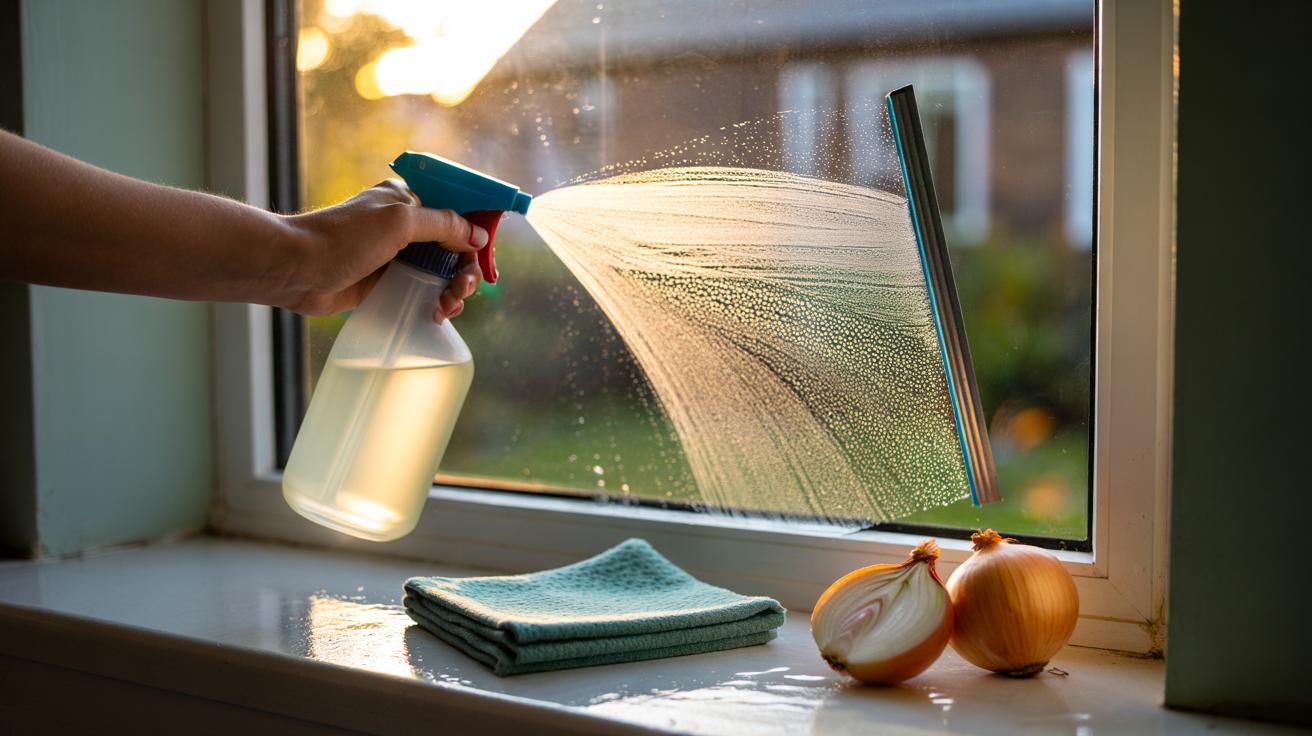
Grab a medium onion, a blender or grater, a sieve, a spray bottle, and two cloths—one damp microfibre, one dry. Peel the onion, chop, and blitz with 250 ml cool water. Strain the pulp. Dilute the juice 1:1 with water for standard grime; go 2:1 (water:juice) for lightly dusty glass. Optional: add one small drop of washing-up liquid per 500 ml for extra slip, but avoid a suds fest. Spray lightly. Allow a short dwell time—30 to 60 seconds—so the solution can loosen the film. Wipe with overlapping strokes. Finish with a squeegee or a dry cloth to banish streaks.
| Use Case | Dilution Ratio | Dwell Time | Notes |
|---|---|---|---|
| Daily touch-ups | 2:1 water:juice | 30 sec | Fast spray, quick wipe; minimal odour. |
| Greasy prints/traffic film | 1:1 water:juice | 60 sec | Optional tiny drop of washing-up liquid. |
| Exterior dirt spots | 1:1 water:juice | 90 sec | Agitate with damp cloth; squeegee to finish. |
Work top to bottom. Change cloth sides often; dirty fabric streaks. For skylights or high panes, use a pole-mounted pad or squeegee and spray sparingly to prevent drips. Less liquid equals fewer smears and faster shine. If you notice a faint film, you’ve likely used too much solution or too soft a cloth. Switch to a tighter-weave microfibre, reduce spray, and finish with a blade. The whole routine takes minutes, turning a dreaded chore into a quick, almost meditative sweep.
Safety, Smell, and Surface Compatibility
Onion juice is mild but not trivial. It can irritate eyes and skin during prep, so chill the onion for ten minutes and open a window. Wear light gloves if you’re sensitive. Ventilation is your friend for a quick, tear-free session. Keep the mixture away from polished stone and unsealed wood; acids, even gentle ones, can etch or dull them. Glass is fine, as are most uPVC frames and painted sills when you wipe spills promptly. Unsure about tinted films or specialist coatings? Test a tiny corner first and check for haze after drying.
Pets matter. Onions are toxic if ingested by cats and dogs, so store the bottle sealed and wipe any drips that reach floors. Odour control is simple: add a strip of lemon zest or a few crushed mint leaves to the bottle and strain before spraying. The smell vanishes quickly once dry. If you’re cleaning around rubber seals, go light—ponding liquid can creep under gaskets. Avoid mixing onion juice with bleach or ammonia cleaners; not dangerous, but pointless and pongy. On its own, it’s clean, targeted, and surprisingly courteous to most surfaces.
Cost, Time, and Eco Credentials
This is frugal cleaning. A single UK supermarket onion—often 15–25p—yields enough concentrate for roughly a litre of working solution after dilution. That’s multiple window days for a small flat. The time saving is tangible: spray, short dwell, wipe, and a squeegee finish. No long buffing. No heavy fragrance hanging in the room. It’s a low-fuss, high-clarity routine that rewards consistency. Compared with vinegar, onion is gentler on paints and leaves less lingering tang. Compared with ammonia sprays, it skips harsh vapours while still breaking down everyday grease.
Environmentally, you’re winning twice. The liquid is biodegradable, bottle refills cut plastic, and you can make it from onion ends that might otherwise be binned. For stubborn limescale on shower glass, keep vinegar as a specialist tool; for nicotine haze, cooking fog, and mucky fingerprints, onion is the quick daily driver. If you polish after with a newspaper sheet or a tight-weave cloth, the finish gleams. Add the habit to your Friday tidy-up and your windows will look professionally maintained, even on a grey Tuesday in Manchester.
In a scrappy world of cleaning hacks, onion juice earns its place by being quick, cheap, and startlingly effective. It’s not a miracle, just smart chemistry put to work with a cloth and a steady hand. You’ll see the room brighten, literally, as light floods through a panel freed from invisible film. The biggest surprise is how little effort it requires. Ready to try the bulb trick on your panes this week, or will you stick with your usual spray and see which method wins the next sunny morning? What result would convince you to switch?
Did you like it?4.6/5 (22)