In a nutshell
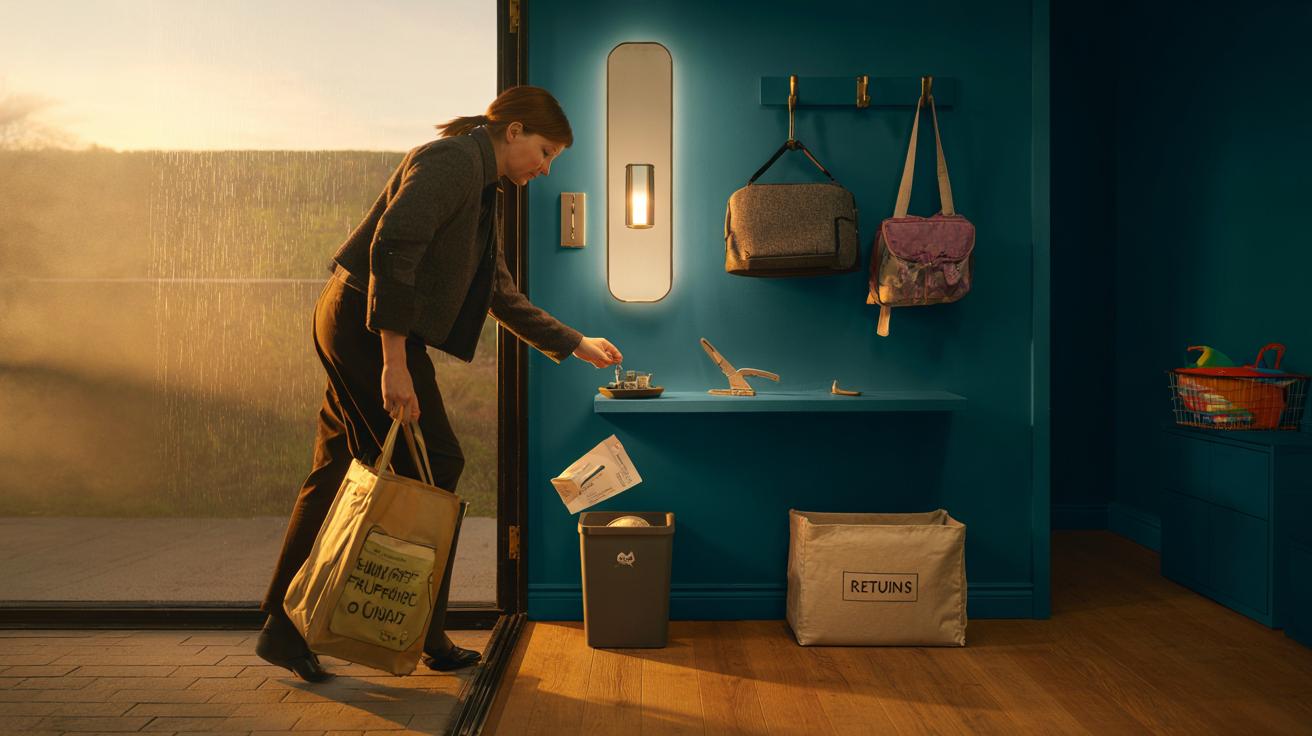
- 🧠 Pattern interruption: Break habit loops by adding micro-friction to old routines and micro-ease to new ones; edit the environment (hooks, key tray, letter knife + recycling by the door) so tidy becomes the path of least resistance.
- 🚪 First-touch fixes: Create a default drop zone within two steps of the door—tray for post, hook for bags, bowl for coins—and deploy a two-minute reset to keep visible surfaces clear nightly.
- 🧺 Faster replacements: Put the folding station and hangers by the dryer, run daily micro-loads, and use one toy basket per child, per room; design the new routine to be quicker than the messy one.
- 📊 Small data wins: Photograph hotspots at 9pm, time your resets, track parcels opened within 24 hours, and use friction mapping (over three steps = failure) to reposition tools until they’re used.
- ⚡ Overnight impact: Tiny edits deliver immediate relief; by shifting cues and adding quick resets, clutter loses momentum and rooms feel lighter by tomorrow.
We don’t drown in clutter because we’re lazy. We drown because our routines quietly funnel stuff to the same spots, every single day. The science-backed fix is simple and surprisingly fast: pattern interruption. Change the cue. Break the loop. Rethink the route your post, keys, laundry and parcels take the moment they enter your home. Clutter is not a storage problem; it’s a behaviour pattern. Break the pattern and the mess can’t form. Tonight, not next month. This is the tidy home equivalent of pulling the handbrake on a runaway trolley — quick, dramatic, and oddly satisfying.
What Pattern Interruption Actually Means
Every mess has a story. A cue, a routine, a reward. You drop the post on the hall table, promise you’ll sort it later, and enjoy the tiny relief of being home. That’s the loop. Pattern interruption cuts into this sequence by adding micro-friction at the old habit and micro-ease at the new one. Move the letterbox basket away from the first flat surface you meet. Park a shredding bin by the front door. Put a tray under the mirror for keys, nothing else. Small changes, big flow shifts.
It also means editing the environment so it “speaks” a new instruction. Hooks at child height for school bags. A visible hamper in the bathroom, not the bedroom. If the environment forces a different action, the routine changes overnight. Don’t aim for perfect storage just yet; aim for interruptive placement. The goal isn’t discipline but inevitability. Make dropping the parcel knife by the recycling box the easiest option. Make the sofa the hardest place to leave a jumper. The loop rewrites itself when the path of least resistance points to tidy.
Routines That Breed Mess — And How to Break Them
The biggest clutter culprits are predictable. Post and parcels stall in the hallway. Laundry hops from chair to chair. Dishes yo-yo between sink and counter. Toys migrate like starlings. Each is a stable, self-feeding loop. The fix is not a new basket in the same spot; it’s a changed pathway. Place visual cues where the habit begins, not where it ends. A bold “Open–Sort–Recycle” card by the front door. A folding station next to the dryer, not on the sofa. Interrupt at the first touchpoint and the mess never takes root.
Crucially, design replacements that are faster than the old behaviour. Pre-label returns envelopes. Keep a micro caddy of pegs, lint roller and hangers where clean washing lands. Add a five-minute audio cue at 8pm for a two-minute reset of surfaces. Don’t announce a new system; shrink the steps. When the replacement routine is shorter and more satisfying, clutter loses its energy source.
| Habit Loop | Interruption | Time Cost | Expected Impact |
|---|---|---|---|
| Post dumped in hallway | Letter knife + recycle bin at door | +30 seconds | Paper piles vanish; action on arrival |
| Keys sprawled on table | Small tray by light switch | Neutral | Clear table; no frantic searches |
| Laundry on chairs | Folding shelf + hanger hook by dryer | +2 minutes | Clothes away same day |
| Toys across lounge | One basket per child, per room | +3 minutes | Floor visible; easy resets |
Quick Interventions You Can Start Tonight
Speed matters. So start with three micro-upgrades that deliver instant order. First, pick a default drop zone for everything entering the house. One tray for post, one hook for bags, one bowl for coins. That’s it. When every newcomer has a home within two steps of the door, clutter can’t spread. Second, stage a two-minute reset at the most visible surface — kitchen island, coffee table, hallway console. Set a timer, clear, bin, wipe. Third, put a returns bag by the front door, pre-addressed if possible. Parcels cease orbiting.
Want extra punch? Add a basket sweep at 8pm: one basket, one lap of the flat, redistribute in five minutes. Place a small recycling bin upstairs to catch packaging from bathrooms and bedrooms. Swap a laundry day for a daily micro-load; drying becomes predictable, folding trivial. And stack temptations in your favour: keep the phone charger in the tidiest room so you end the night there, not in the chaos zone. None of this is grand. It’s surgical. Tiny edits that redirect daily traffic and put surfaces back in service.
Measuring Progress: Small Data for a Tidy Home
Clutter shrinks fastest when you can see the win. Capture a phone photo of your worst clutter hotspots at 9pm for one week. Count how many are clear by 9:10 after your reset. Track parcels opened within 24 hours of arrival. Note laundry loads completed same day. What you measure, you maintain. You don’t need a spreadsheet; a notes app will do. The point is to turn “I think it’s better” into “Surfaces clear in eight minutes, nightly”.
Also measure resistance. If a new hook isn’t used, move it ten centimetres. If the tray fills, downsize what’s allowed there to keys and fobs only. Use friction mapping: tally the steps to put an item away; if it’s over three, you’ll abandon it. Shorten the path. Put bins where rubbish happens, not where you wish it did. And reward the loop change. A cup of tea after your two-minute reset is a perfectly British reinforcement. When the data shows momentum, habits lock in.
Breaking clutter isn’t about buying prettier baskets or becoming a different person. It’s about interrupting the tiny, daily routes that let mess accumulate, and making the tidy action the easiest one to take. The payoff is swift, almost cheeky: rooms feel lighter by tomorrow, and your future self stops firefighting. Experiment tonight. Shift one cue, add one micro-friction, create one shortcut to “away”. Then watch the piles fail to materialise. Which routine will you break first — and what small interruption will you try before you sleep?
Did you like it?4.4/5 (25)