In a nutshell
- 🍞 Use a slice of bread as a moisture buffer to keep cake soft, placing it against cut surfaces and sealing everything in an airtight container to create a gentle, protective microclimate.
- 🧪 The science: starch retrogradation firms crumb as cakes cool, but bread with higher water activity donates vapour that slows firmness and reduces evaporation from the sponge.
- 🛠️ Practical steps: choose plain bread, position it close to the vulnerable crumb (or on parchment), check after 60–90 minutes, and rotate or replace slices for larger cakes.
- 🧊 Storage and safety: Refrigeration speeds staling; keep at room temperature if safe. For dairy or fresh fruit fillings, refrigerate and rely on tight wrapping or freeze instead for better texture retention.
- 🔄 Alternatives and pitfalls: try simple syrup, airtight wrap, or freezing; avoid flavour transfer from strong breads, and remember this hack buys hours—a day at most—not long-term storage.
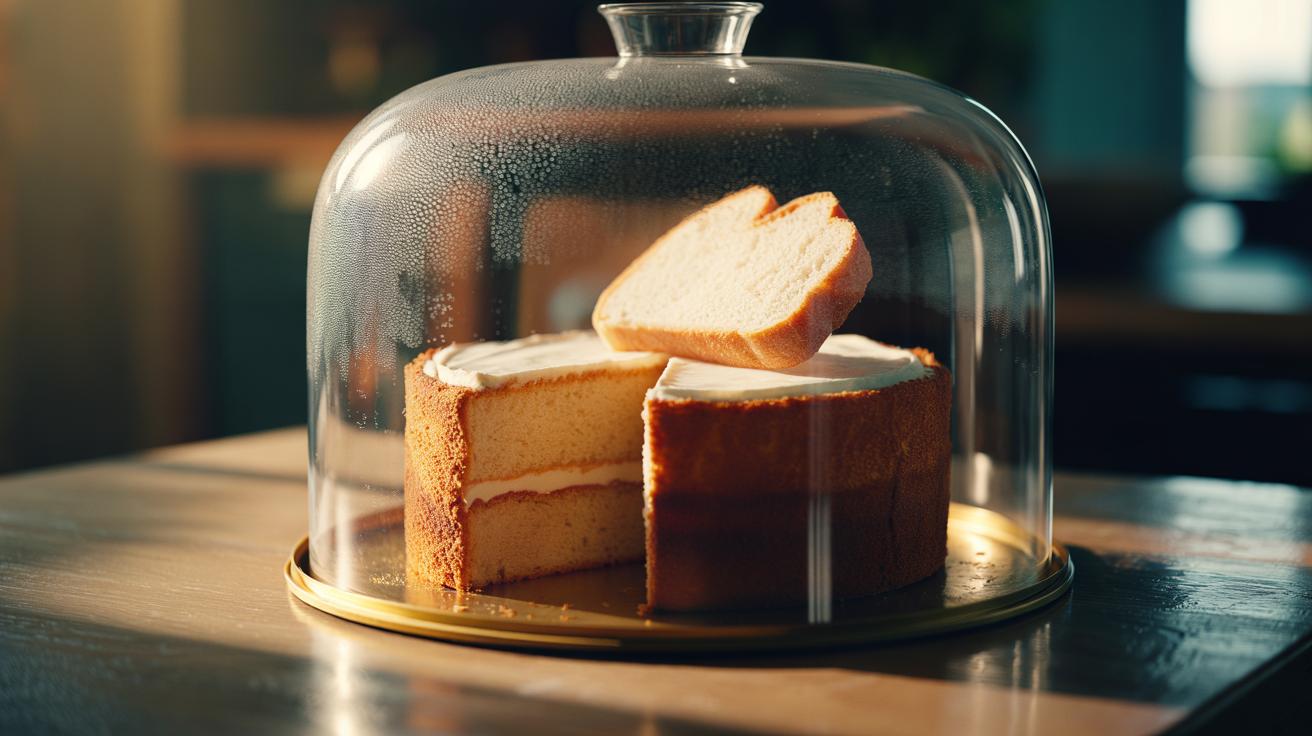
It sounds suspiciously like an old wives’ tale, yet the trick is grounded in food science: set a slice of bread against your cake and the crumb stays soft, sometimes seemingly almost instantly. For home bakers and café owners alike, this small act can save texture, flavour, and presentation. The bread becomes a moisture buffer, feeding humidity into the exposed crumb while soaking up dryness that would otherwise steal from your sponge. Moisture retention is the hidden battle in baked goods. Win it, and your dessert sings. Ignore it, and staling sets in fast. It’s cheap. It’s simple. It works.
Why Bread Keeps Cake Soft
Staling isn’t just “drying out”. It’s largely starch retrogradation, a process where gelatinised starch molecules re-crystallise after baking, firming the crumb and dulling flavour. Moisture loss accelerates that rigidity. A fresh slice of bread, with a relatively high water activity, sits beside your cake and creates a gentle humidity gradient. Water vapour migrates from the bread to the drier cake surface, reducing evaporation from the sponge and softening the interface. The bread acts as a sacrificial moisture reservoir; it goes stale first, so the cake doesn’t have to.
Enclosure is crucial. Seal the cake and bread together in an airtight tin or box to trap a microclimate where vapour exchanges slowly and efficiently. Place the bread against cut faces, which are most vulnerable to drying. Frosting can help, but buttercream alone won’t completely stop migration through time. Because the goal is balance, not sogginess, the bread should be plain, unscented, and not touching delicate finishes like fondant details. Give it an hour and reassess. Sometimes that’s enough. Sometimes you’ll want to keep it overnight for a deeper softening that doesn’t tip into stickiness.
How To Use The Bread Slice Trick Safely
Choose plain white or milk bread with a neutral flavour and soft crumb. Avoid seeded loaves or sourdoughs that can perfume the cake. Anchor a half-slice to the exposed cut surface with a cocktail stick if needed, or lay it on baking parchment that just kisses the sponge. The closer the bread is to the vulnerable crumb, the better the moisture exchange. Immediately cover the cake in a cake tin or lidded container; in a pinch, wrap the whole set-up with cling film without compressing the icing.
Check after 60–90 minutes. If the bread feels leathery and the cake is springy again, job done. For larger cakes, rotate or replace the bread every few hours. Keep the environment cool and dry, but not cold. Refrigeration speeds staling because starch retrogrades fastest around fridge temperatures, so unless the filling is highly perishable, store at room temperature. For buttercream or ganache, the bread may sit nearby rather than in direct contact to protect finishes. With whipped cream or fresh fruit, food safety rules apply: refrigerate the cake and rely on tight wrapping and timely serving instead of the bread method.
Alternatives, Storage Temperatures, and Pitfalls
Sometimes bread isn’t ideal. Strongly scented loaves can transfer aroma, and delicate decorations may mark where the slice touches. Consider a light simple syrup soak brushed onto layers before icing. Use airtight storage, a full crumb coat, or quick freezing to lock in water. If you must chill for food safety, freeze rather than refrigerate for texture quality. Freezing pauses retrogradation; thaw, still wrapped, to reabsorb condensation into the cake rather than the air. Below is a quick guide to common methods and when to use them.
| Method | Mechanism | Best For | Watch-outs |
|---|---|---|---|
| Bread slice | Local humidity buffer | Cut cakes, cupcakes | Flavour transfer; needs airtight box |
| Simple syrup | Direct water binding via sugar | Layer sponges | Over-soaking leads to gumminess |
| Airtight wrap | Limits evaporation | Unfrosted or chilled layers | Can smudge soft icing |
| Freezing | Pauses staling | Advance prep | Condensation on thaw if unwrapped |
| Refrigeration | Food safety only | Dairy-heavy fillings | Speeds retrogradation; dry crumb |
One final pitfall: time. Bread buys hours, sometimes a day, not a week. Match the method to the cake’s fat, sugar, and structure; high-fat, high-sugar sponges resist staling better than lean ones. For delicate genoise or angel food, be gentler and rely on syrup and airtight storage alongside the bread trick.
The charm of the bread slice hack is its elegance. It respects the cake’s architecture, uses cheap ingredients, and leverages the physics of water rather than macho heat or heavy-handed syrups. Small interventions can rescue texture and protect flavour, keeping a Tuesday bake presentable for Wednesday’s coffee break. As energy prices rise and waste becomes unacceptable, techniques like this matter. They save money. They save effort. Most of all, they save dessert. What other simple, science-backed kitchen tricks deserve a permanent place in your cake tin?
Did you like it?4.4/5 (20)