In a nutshell
- 🍌 Leverages a banana peel’s natural oils, light waxes, and trace potassium to cleanse, condition lightly, and level the film for a fast lustrous shine.
- 🧽 Follow a precise step-by-step: brush clean, rub the inner peel in small circles (5–10s per area), wipe damp then dry, brisk brush (45–60s), optional neutral cream to lock sheen.
- ⚠️ Use only on smooth leather; avoid suede, nubuck, and patent. Patch test first and always remove sugary residue to prevent tackiness and dust build-up.
- 🥾 Best for full‑grain calf; corrected‑grain may streak without a wipe-down. Treat as a quick surface refresh, not deep nourishment or colour repair.
- 🌍 Practical and sustainable: nearly free, low waste, ideal for emergencies; the peel primes and a sparing neutral cream perfects for durable, camera-ready gloss.
Polish tins are shrinking while hack culture grows, and few tips spark more curiosity than the promise that a humble banana peel can revive tired leather to a glossy, newsroom-ready finish. It sounds like a stunt. It isn’t. Inside the yellow wrapper lies a cocktail of natural oils, soft waxes and trace minerals that can cleanse, nourish and brighten in minutes. Used judiciously, that slick interior membrane behaves like a light conditioner and burnisher in one. The caveat? Technique matters. Banana is a spot-refresh tool, not a full restoration system. Here’s how its chemistry works, when to reach for it, and the precise steps to achieve a lustrous shine without sticky mishaps.
The Chemistry Behind Banana Peel Shine
Banana peel contains small amounts of lipids, natural waxes, and sugars bound with water. Together they form a gentle emulsion. On contact with leather, those oils slip into the upper grain, loosening surface grime while adding a whisper of suppleness. Trace potassium acts as a mild electrolyte, helping the film level out during buffing so light scatters more evenly. That’s why a dull cap toe, dry from commuter scuffs, can pop again after a 90-second rub and a vigorous brush. Banana peel works because its oils mimic the behaviour of traditional conditioners at a much lighter dose.
There are limits. The peel’s moisture can leave residue if overused, and sugars can attract dust if you don’t finish with a clean cloth. Dyed leathers vary, too. High-shine calf responds well; suede or nubuck should never be treated this way. Think of the peel as a quick surface treatment—a glossy top-up before a meeting—rather than a deep nourishment or colour repair. Below is a snapshot of the active components and their practical effects.
| Component | What It Does on Leather |
|---|---|
| Natural lipids and waxes | Provide light conditioning; improve glide during buffing; enhance lustre without heavy buildup. |
| Potassium (trace) | Encourages even film formation; helps achieve a more uniform shine across the toe and quarters. |
| Mild acids/enzymes | Loosen surface grime; support gentle cleaning prior to buffing; avoid on delicate finishes. |
| Moisture and sugars | Act as temporary carriers; must be wiped off to prevent tackiness and dust attraction. |
Step-by-Step Method for a Quick, Lustrous Finish
Start with a clean base. Knock off grit using a horsehair brush for 20–30 seconds. Take a fresh banana and break off a small section of peel. The inside should be slightly moist, not mushy. Always patch test on an inconspicuous area first. If the colour holds and the surface feels smooth, proceed.
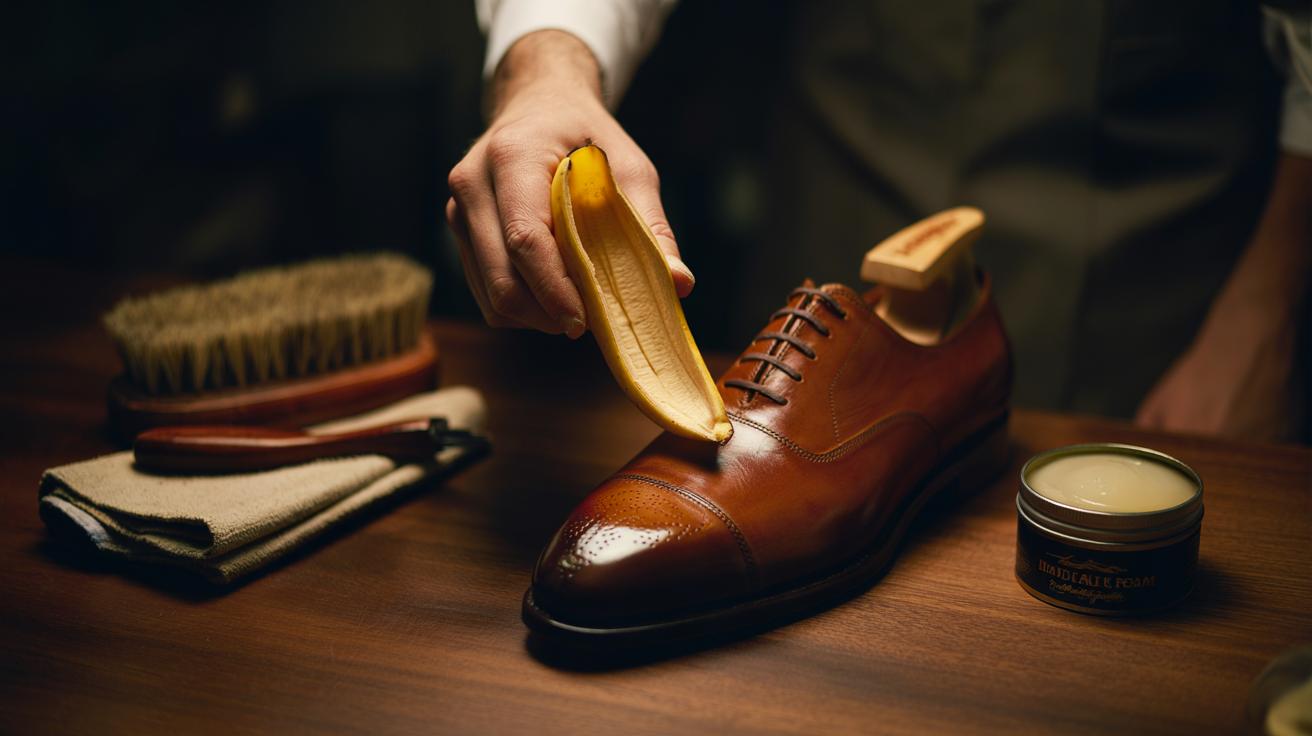
Work in small circles over the toe cap and vamp using the peel’s inner membrane. Five to ten seconds per section is enough. Don’t press hard; let the light oils do their job. If you see smearing, you’re using too much moisture—flip to a drier bit of peel. For brogues, angle the peel to pass over perforations without forcing pulp inside. Keep it swift. This is a pronto refresh, not a marathon polish.
Now remove residue. Wipe with a barely damp cotton cloth to lift sugars and any loosened dust. Immediately switch to a dry cloth, then brush briskly for 45–60 seconds to generate heat and level the film. Finish with a tight-weave microfibre for a mirror kiss on the toe. Optional: a fingertip of neutral cream along the edges will lock in the sheen. Never use on suede or nubuck, and avoid heavily cracked finishes where moisture can creep beneath the topcoat.
Care Considerations, Limitations, and Longevity
The peel excels when you need speed. Commuter splash marks. A last-minute studio hit. Airport lounges with no polish in sight. Used once every few weeks, it can stave off dullness until you can condition properly. But it won’t feed the fibres like a dedicated lanolin-based conditioner, nor will it replace pigment wax for scuffed toes. Think of banana as a tactical gloss, not strategic maintenance.
Leather type matters. Full‑grain calf with a smooth finish generally responds best. Corrected‑grain shoes can benefit from the quick clean but may show streaks if you skip the wipe-down step. Avoid patent leather—its plasticised coating doesn’t absorb oils and can smear. After use, store shoes in a ventilated area; don’t bag them immediately. Sugary residue, if left, can encourage odour or dust build-up. That’s why the damp wipe and energetic brush are non-negotiable.
Long term, create a rhythm. Weekly brushing, monthly conditioning, and occasional wax for edge definition. Slot banana peels into the emergency drawer: handy, sustainable, nearly free. If you want a richer depth of colour, follow the peel treatment with a sparing layer of neutral cream, then buff. The peel primes; the cream perfects. Your goal is a resilient finish that looks alive, not a thick shell that cracks.
As hacks go, this one earns its place in the kit: fast, thrifty, and surprisingly effective at reviving a commuter-beaten pair to a lustrous shine with minimal product. It respects leather when used sparingly, and it cuts waste—both financial and environmental. Yet the real craft lies in restraint, in the brushwork, and in knowing when to switch back to traditional care. Are you ready to test the peel on your daily shoes, or will you keep it as a secret weapon for those urgent, on-the-spot rescues?
Did you like it?4.3/5 (21)