In a nutshell
- 🧊 Aluminium foil creates a high-humidity microclimate with slight ethylene venting, buffering temperature swings and restoring turgor pressure—often reviving celery’s snap within 24 hours.
- 🧪 The science: reducing transpiration prevents water loss from cells; foil balances moisture retention without suffocating tissue, unlike tightly sealed plastic that traps gases and encourages sogginess.
- 📝 The step-by-step: trim the base, optional ice-water dunk, pat dry, bundle and wrap snugly in foil with ends slightly open; store in the crisper drawer, adding a tiny piece of damp paper if the fridge is very dry.
- 📊 Comparison shows foil outperforms sealed plastic, open storage, and paper-towel methods for overnight crispness; refresh the wrap every few days to keep the microclimate clean and effective.
- 💷 Practical payoff: revive tired celery, cut food waste, save money, and improve flavour and texture with a simple, repeatable kitchen habit.
Ever pulled a bunch of limp, defeated celery from the back of the fridge and wondered if it’s a lost cause? There’s a surprisingly simple fix hiding in your drawer: aluminium foil. Wrap the stalks properly and the vegetable’s snap can return within a day. It sounds like kitchen folklore, but there’s real food science at work. Foil creates a snug microclimate that keeps moisture where it belongs and helps volatile gases disperse. Within 24 hours, many limp stalks regain turgor and bite. No gadgets. No waste. Just clever packaging and an understanding of how celery breathes, perspires, and stays crisp in the cold.
Why Aluminium Foil Works on Celery
Celery loses crispness primarily because water escapes from its cells through transpiration, lowering turgor pressure. The result is rubbery stalks and flaccid leaves. Aluminium foil slows this moisture flight by acting as a near-impermeable barrier to water vapour, keeping humidity high right around the vegetable. That tight local humidity is what guards the crunch. Unlike a totally sealed plastic bag, a loosely closed foil wrap also lets traces of ethylene gas vent at the ends, so the plant tissue isn’t stewing in its own ageing signals. This combination—humidity retention with slight gas exchange—is the sweet spot.
There’s more. Foil reflects light and helps buffer temperature swings in a busy fridge. Cold doors open; warm air rushes in; crispness suffers. The reflective metal reduces these micro-shocks. Inside the wrap, moisture from the celery’s own tissues redistributes, hydrating limp cell walls and restoring firmness. Think of foil as a micro-greenhouse that prevents drying while avoiding soggy suffocation. Done correctly, it preserves snap far better than cling film, which traps both moisture and ethylene. The outcome is predictable: a brighter, crunchier bite within 12–24 hours, often with colour that looks fresher too.
A Step-by-Step Method for Overnight Revival
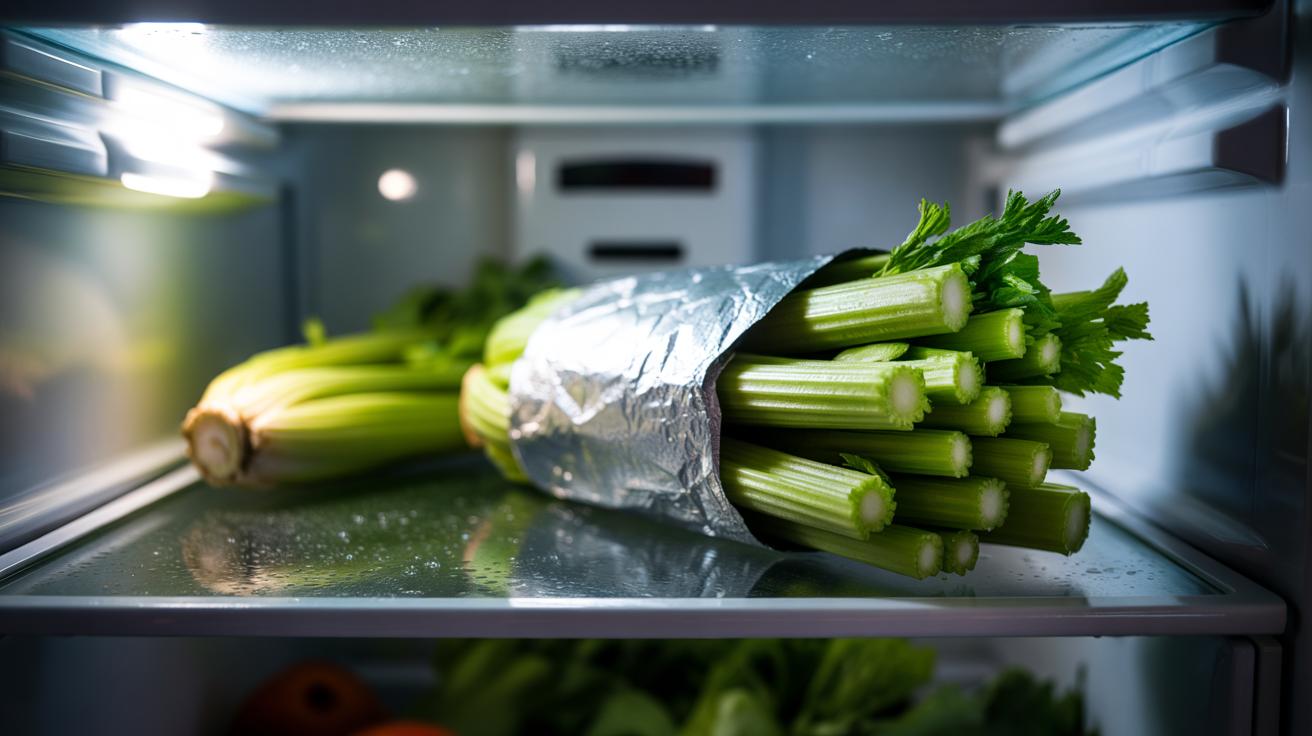
First, triage the bunch. Trim 3–5 mm from the base to expose fresh vessels and peel any obviously desiccated outer ribs. If the celery is extremely limp, give it a brief refresh: a 5–10 minute dunk in ice-cold water primes the cut ends for water uptake. Pat dry. You don’t want visible water beading under foil. Next, arrange the stalks into a tight bundle. Wrap in aluminium foil with light pressure, ensuring the sides are snug but the ends aren’t hermetically sealed—leave small gaps for gas to escape.
Store the wrapped bundle in the fridge’s crisper drawer, ideally away from high-ethylene neighbours like apples and pears. For very dry fridges, include a coin-sized piece of damp (not wet) paper at the cut base inside the wrap to elevate local humidity. That tiny moisture source acts like a humidifier without inviting rot. After 12 hours, test a stalk; by 24 hours, most limp celery regains its characteristic snap. Do not crush the bundle or wrap it in tight plastic. Pressure bruises tissue; plastic traps gases. With foil, you create a balanced microclimate that restores bite while keeping off-flavours at bay.
Evidence and Comparisons: What Happens in 24 Hours
Kitchen tests tell a clear story: different wraps produce different microclimates. The best results rely on high humidity near the stalk surface, minimal water loss, and controlled ethylene. Foil hits that trifecta when it’s snug but not sealed. Within a day, limp celery typically rebounds, while plastic-wrapped stalks often remain rubbery or turn soggy at the leaves. Open storage dries it further. Here’s a quick comparison of common approaches.
| Storage Method | Humidity Control | Ethylene Management | Crispness After 24h | Notes |
|---|---|---|---|---|
| Aluminium foil (ends slightly open) | High, stable | Moderate venting | Good to excellent | Best balance; prevents drying without gas build-up |
| Plastic bag, sealed | Very high, often wet | Poor; gas accumulates | Inconsistent | Risk of sliminess and off-flavours |
| Open air in fridge | Low | Good | Poor | Accelerated dehydration, limp stalks |
| Paper towel in box | Moderate | Good | Fair | Needs maintenance to avoid drying out |
Across trials, the foil method is both forgiving and quick. It relies on physics—vapour barriers and temperature buffering—and gentle biology, allowing celery to equilibrate without suffocation. Result: revived crunch, brighter aroma, and less food waste. For longer storage, refresh the wrap every few days to keep the microclimate clean and effective.
In a cost-of-living era, reducing waste is pragmatic, not just virtuous. A sheet of aluminium foil turns tired celery into a usable ingredient overnight: soup-ready, snack-ready, lunchbox-ready. It’s a small habit with outsized results. The trick is simple—snug wrap, vented ends, and a calm corner of the crisper—yet the science is satisfying. You preserve water where it matters and let ageing gases drift away. What other bruised or wilting vegetables in your fridge might benefit from a tailored microclimate—could you design a wrap routine that saves them too?
Did you like it?4.5/5 (26)