In a nutshell
- 🌙 Harness nighttime leverage: Align circadian timing and sleep quality with lighter, earlier meals to curb next-day cravings and improve overnight metabolism.
- 🤝 Use social proof and shared goals: Visible check-ins and group norms reduce decision fatigue, making healthy evening choices the default when willpower dips.
- 🧩 Build a routine of timing and visibility: Set a last-meal cut-off time, share easy rituals (tea photo, step screenshot), and adopt a group digital curfew to wind down.
- 📊 Share data, meals, and micro-wins: Track steps, dinner time, and simple victories; pair progress with compassionate accountability to avoid comparison traps.
- ⚡ Expect fast dietary dedication: Group cues turn evening habits into auto-pilot, yielding steadier mornings, fewer cravings, and sustainable weight-loss momentum.
Weight loss is often framed as a daylight pursuit: salads at lunch, steps at noon, willpower at five. Yet the real accelerator may be hiding in the evening. As the UK tilts towards darker commutes and earlier nights, social proof turns into a powerful torch, guiding small choices after 6 p.m. that compound during sleep. When your intentions are visible to others, you behave as if you’re already the healthier person you hope to become. People stick to plans they share. Combine that with simple night-time rituals and you unlock a quiet but potent ally: shared goals that make dietary dedication feel fast, easy, and oddly enjoyable.
The Psychology Behind Nighttime Weight Loss
Night-time isn’t magic. It’s leverage. Biological rhythms keep working as you rest, and those rhythms are shaped by what you do in the final hours before bed. Circadian timing nudges appetite signals, while sleep quality modulates ghrelin, leptin and next-day cravings. Eat late and heavy, and you may push digestion into the hours meant for repair. Plan a lighter, earlier meal and you drift into better sleep, which often shows up as improved appetite control tomorrow. Your evening habits decide how your body uses fuel while you sleep. That’s where social proof comes in, because psychology is the hinge that moves biology.
When you see peers batch-cooking, posting their herbal tea instead of wine, or logging a short walk after dinner, your brain normalises those behaviours. This isn’t peer pressure; it’s permission. Shared norms reduce decision load when you’re tired. You copy what’s visible and valued. Crucially, visibility in the evening matters because willpower dips as the day closes. Make the desired behaviour the default behaviour by making it public. That shift, repeated across a week, turns into earlier meals, calmer sleep, and a quieter appetite the next day.
How Shared Goals Create Faster Dietary Dedication
Shared goals rewrite the rules of persistence. In groups—whether a WhatsApp chat, a Slack channel, or a local running club—members define what “on plan” looks like, and each post reinforces that picture. This is the engine of social proof: you take cues from people you trust, ideally those with similar constraints, budgets and schedules. Commitment becomes contagious, especially in the evening when friction is highest. A quick check-in acts like a nudge. A friendly nudge becomes a habit. Habits reduce effort. The fastest plan is the one you don’t have to debate every night.
Clarity helps. Groups that publish simple rules—last meal by 8 p.m., protein at dinner, no phones in bed—see fewer relapses because decisions are pre-made. Evidence of progress compounds: screenshots of step counts, photos of balanced plates, a short line about saying no to snacks. Below is a simple map of how social proof fast-tracks dedication through the night-time window.
| Mechanism | How Social Proof Helps | Practical Night Routine |
|---|---|---|
| Consistency | Public check-ins cue repeat action | Post “kitchen closed” selfie at 8 p.m. |
| Cueing | Peers model the next step | Share a 10-minute walk route |
| Self-efficacy | Micro-wins build belief | Track an early dinner streak |
| Reward | Likes replace snack rewards | Swap dessert for praise |
Designing an Evening Routine Powered by Social Proof
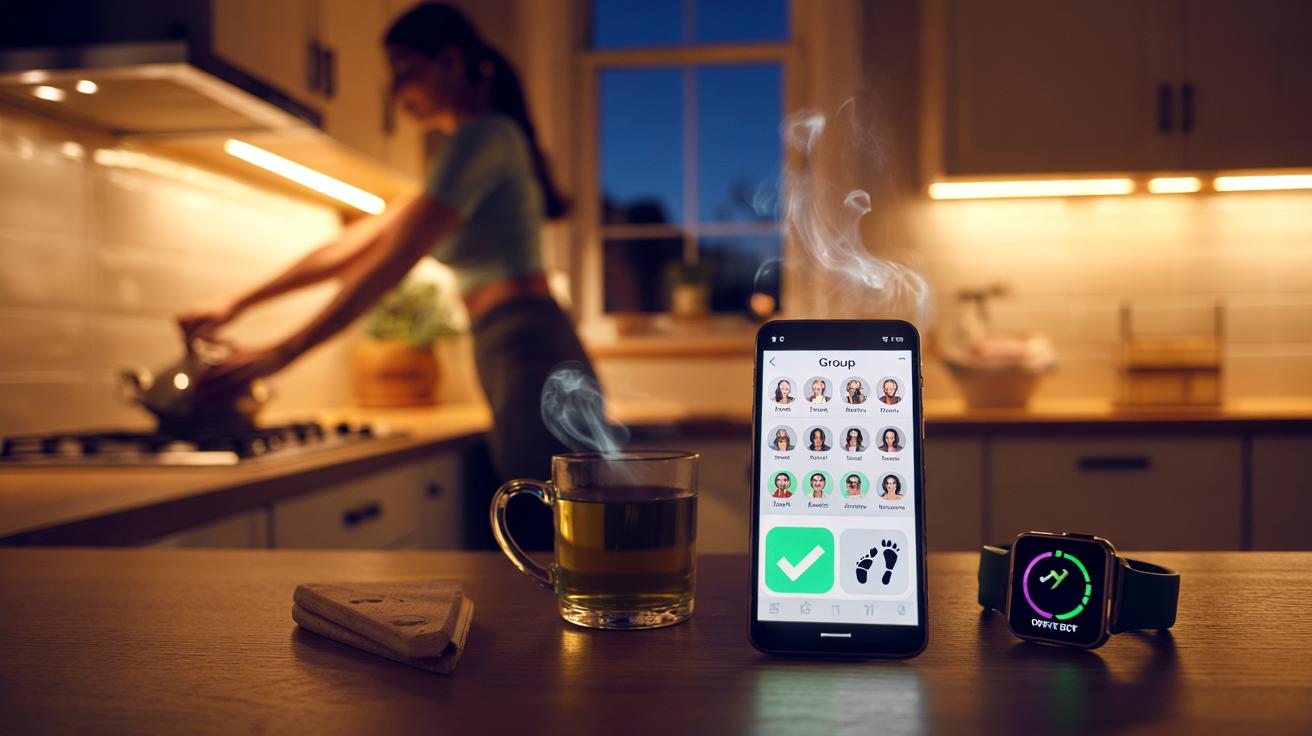
Start with two anchors: timing and visibility. Choose a cut-off time for your last meal that fits your life—8 p.m. is common—and tell your group. Not a boast, a timestamp. Next, design a low-friction ritual you can share without fuss: a tea mug photo; a step-count screenshot; a note that the dishwasher is on and the snack cupboard is shut. Make the healthy choice the easy story to tell. The story you tell becomes the habit you keep.
Layer in light and screens. Dim lamps, close bright apps. Blue light keeps you wired; chatter keeps hunger alive. Agree a group “digital curfew” and pair it with a short wind-down: stretching, a warm shower, a book. Keep it brief so it sticks on busy nights. If late shifts or childcare stretch your evening, compress the sequence rather than cancel it—half a portion, a small walk, bed on time. The social piece matters most. A 15-second check-in beats a perfect plan done alone. Over a fortnight you’ll notice the spillover: steadier mornings, fewer cravings, less friction at lunch.
What to Share: Data, Meals, and Micro-Wins
Specific signals beat vague intentions. Share three kinds of proof: data, meals, and wins. Data can be step counts, dinner time, lights-out time, or a simple hunger rating. Meals should be real food in real kitchens—no filters, no performance. Wins are tiny: ignoring crisps during a TV ad break, choosing yoghurt over ice cream, pouring a half glass of wine and leaving it. Micro-wins keep the momentum human. They stop perfectionism from crashing your week.
Set guardrails to avoid comparison traps. No body shaming, no weigh-ins after 9 p.m., no rigid absolutes during social occasions. Celebrate effort, not purity. A template helps: “Last meal 19:30, 12k steps, camomile tea, in bed 22:45. Craved biscuits, had grapes.” That line is a data snapshot and a story. It invites encouragement and gives others a model. If someone wobbles, respond with compassionate accountability: name the next right step, not the failure. Consistency grows when people feel safe to try again tomorrow.
Night-time weight loss isn’t a trick; it’s a chain of small, visible choices that turn fatigue into auto-pilot. When you align circadian-friendly habits with social proof, the evening stops being a danger zone and starts becoming your quiet advantage. Groups amplify intention, translate it into rituals, and gently close the kitchen on time. The payoff arrives in calmer hunger, steadier energy, and a plan you can run all winter. What would your first shared night-time habit be—and who will you invite to make it normal, visible, and delightfully easy?
Did you like it?4.5/5 (20)