In a nutshell
- 🔬 The science: acetic acid dehydrates foliage fast; household vinegar at 5% hits seedlings, while horticultural strengths 10–20% need caution; it’s a contact action, not systemic, and works best in sun.
- ⚡ The two-minute method: use white vinegar 5% plus a drop of washing-up liquid, shield targets (e.g., a cut milk carton), and spot-spray lightly; Do not mix with bleach; wilt appears in minutes, repeat weekly if needed.
- 🌿 Results to expect: great on young annuals and moss on paving; limited on taprooted perennials like dandelion—leaves burn, roots persist; repeat or combine with hand weeding, and skip salt.
- 🛡️ Safety and law: wear gloves/eye protection; vinegar is non-selective, keep pets and children away until dry; in the UK it’s a home remedy, not an approved herbicide—avoid drift, ponds, and windy days.
- 🌱 Smarter strategy: prioritise precision on dry, sunny days and pair with mulch, dense planting, sharp hoes, and healthy soil to reduce regrowth while minimising non-target impacts.
Britain’s gardens are stirring again, and with them come opportunistic weeds pushing through gravel, patio joints, and vegetable beds. If you want a quick, low-cost fix before a weekend barbecue or a Monday morning walkabout, a bottle of white vinegar can be a surprisingly sharp ally. It acts fast. It’s accessible. It’s reassuringly familiar. Used skilfully, vinegar can scorch young weeds in minutes and tidy a border before the kettle boils. Here’s how to turn a pantry staple into a precise, plant-safe tool, why it works so swiftly, and when to choose it over a conventional herbicide without compromising your soil, your pets, or your conscience.
The Science Behind Vinegar’s Weed-Stopping Power
At the heart of vinegar is acetic acid, a weak organic acid that disrupts cell membranes and draws water out of plant tissues. On young, soft foliage, this dehydration is brutal and quick. Leaves collapse, edges curl, colour shifts from glossy green to straw. That “instant” win is largely a foliar burn—vigorous on seedlings, cosmetic on tougher roots. Sunlight accelerates the effect by heating and drying the damaged tissues, so a clear, dry day multiplies your impact. This is contact action, not systemic. Vinegar does not travel through the plant’s plumbing like a chemical translocated herbicide would.
Household white vinegar typically carries around 5% acetic acid. That’s sufficient for annual weeds and fresh seedlings. For thicker-leaved intruders or moss in paving, some gardeners reach for horticultural vinegar (10–20% acetic acid). It bites harder but demands much greater care for skin, eyes, and nearby ornamentals. Expect blistering speed on tiny weeds. Expect repeated hits on anything with a taproot. The fast visual feedback is why this method feels so satisfying when you have two minutes and a path to reclaim.
The Two-Minute Method: Mix, Aim, and Tame
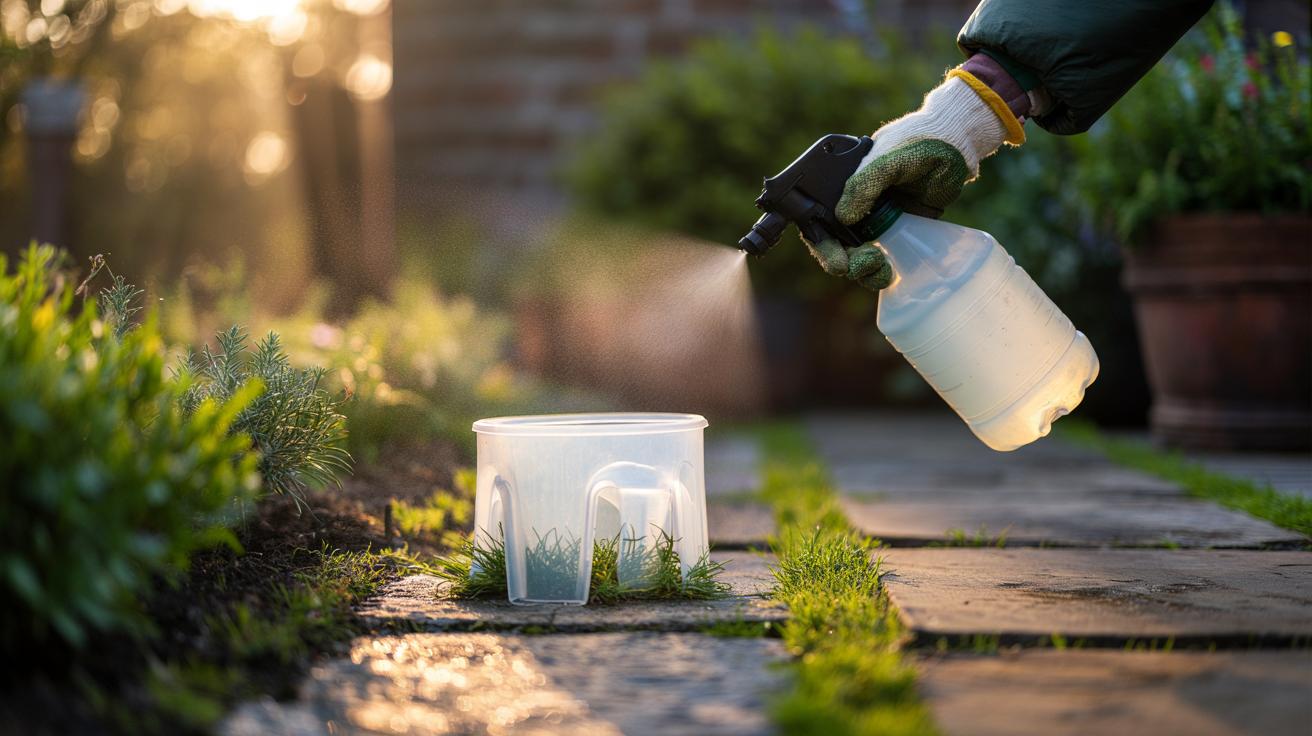
You need a trigger spray or hand spritzer, plain white vinegar (5%), a drop of washing-up liquid as a surfactant, and a simple shield. Fill your sprayer with neat vinegar; add one or two drops of soap to help the liquid cling to waxy leaves. That’s all. No salt. No bleach. Never mix vinegar with bleach—chlorine gas can form and is dangerous. Slip a cut plastic milk carton over the target like a mini cloche to shield nearby plants. Now spray once or twice directly on the leaves until just wet. Not dripping.
Work in bright, dry conditions. Midday is ruthless. In cracks and gravel, a sponge or small paintbrush can paint vinegar exactly where you want it, preventing drift. On patios, follow up with a stiff brush once the foliage browns to lift dead material. If a droplet lands on a prized leaf, immediately rinse with water. Think “spot treatment,” not broadcast spray. You’ll often see visible wilt in minutes on seedlings, with full desiccation within hours. Return in a week for any stubborn regrowth and repeat the dart-like application.
What Works, What Doesn’t: Managing Expectations in a UK Garden
Vinegar is superb for young annuals—chickweed, bittercress, shepherd’s purse—and quick-clearing paved areas. It singes moss and algae on hard surfaces, improving grip before guests arrive. On tougher customers such as dandelions, plantain, and creeping buttercup, it topples the leaves but not always the root. You’ll need repeat sessions or a complementary method (hand weeding, a knife in the crack, mulching). Beware windy days; drift can pucker your border’s finest. Wait until rain has passed and the foliage is dry, so the acid isn’t diluted before it can act.
| Weed Type | Vinegar Strength | Likely Outcome | Reapply? |
|---|---|---|---|
| Fresh annual seedlings | 5% | Rapid scorch, high control | Usually no |
| Dandelion, plantain (taproot) | 5–10% | Leaf burn, root survives | Yes, weekly until exhausted |
| Bindweed, nettles, brambles | 10–20% | Temporary top kill | Yes, often ineffective long term |
| Moss on paving | 5% | Good browning and lift | As needed |
Skip salt—it can linger in soil and harm ornamentals. For beds and borders, focus on accuracy: a shield, a brush, and restraint. On lawns, use a knife for isolated weeds or plug-repair afterwards; vinegar will mark grass. After treatment near edible crops, rinse any accidental splashes promptly and avoid repeated soil drenching to keep pH stable.
Safety, Law, and Planet: Using Vinegar Responsibly
Gloves, eye protection, and common sense matter. Horticultural strengths can irritate skin and burn eyes. Keep pets and children off treated areas until leaves are dry. Vinegar is a non-selective contact herbicide—anything green it touches may be damaged. Store it upright, clearly labelled, and away from metals you care about; acetic acid can corrode. If you spill, dilute heavily with water and mop up. Dispose of rinse water on hardstanding, not into storm drains.
In the UK, only approved plant protection products may be marketed as herbicides, and vinegar sold as food isn’t an authorised pesticide. That means you’re using a household product as a home remedy. Be courteous to neighbours and wildlife: avoid spraying on windy days, near ponds, or when pollinators are busy. From a sustainability angle, vinegar avoids synthetic residues but still affects non-target plants and soil life if overused. The golden rule is precision: use less, aim better, and combine with mulch, sharp hoes, and healthy soil to reduce the need for repeat applications.
Vinegar won’t conquer every weed, yet for patio tidies, seedling blitzes, and quick visual wins, it’s a nimble, kitchen-born tactic that pays off in minutes. Make it accurate, treat on sunny, dry days, and pair it with smarter prevention—dense planting, deep mulch, and sharp tools—to slash future flare-ups. Weed control is a portfolio, not a single product. If you gave vinegar a two-minute trial this week—shield, spray, and step back—where in your garden would you target first, and what result would you be delighted to see?
Did you like it?4.3/5 (27)