In a nutshell
- 🌱 Eggshells deliver plant-available calcium and trace minerals within days when finely ground, gently buffering soil pH without shocking biology.
- 🔬 The science: high surface area, steady moisture, and mild acidity drive rapid dissolution; fine powder acts fast, while coarse shards release nutrients slowly.
- 🛠️ Preparation and use: rinse, dry, bake at 120–150°C, then grind to a powder; apply 1–2 tbsp per litre of mix or ½–1 cup per m² of bed—moisture is the accelerator.
- 🍅 Best targets: tomatoes, peppers, aubergines, brassicas, and salads gain sturdier growth and cleaner fruit set; treat early and top up lightly as flowering begins with this precision amendment.
- ⚠️ Pitfalls: whole shells act too slowly, over-liming risks lock-up, and shells don’t deter slugs; sanitise, grind fine, water consistently—right size, right place, right time.
From breakfast plate to backyard bed, eggshells are the humble kitchen cast-off transforming vegetable plots across the UK. They’re not magic, but they work startlingly quickly when handled right. Ground fine, shells release plant-ready calcium and trace minerals within days, feeding tomatoes, brassicas and container crops just when they need it most. The trick is surface area, moisture and mild acidity. Get those three aligned and you’ll see sturdier stems, steadier pH and fewer nutrient-related hiccups. It’s a precise, low-cost way to enrich soil without resorting to synthetic fertilisers. Think of eggshells as a targeted boost for resilience, flavour and yield.
Why Eggshells Supercharge Soil in Days
Eggshells are about 95% calcium carbonate, bound in a porous matrix that microbes colonise with ease. That porosity matters. It creates a large contact area for soil acids and root exudates to dissolve calcium into solution fast. You’ll also find slivers of phosphorus, magnesium and potassium tucked in the shell lattice, tiny but useful in hungry beds. In practical terms, that cocktail steadies cell walls, improves enzyme function and smooths nutrient uptake, particularly where peat-free composts or rain-leached soils run light on calcium. Stronger tissues mean leaves that don’t collapse in heat or wind, and fruits that set cleanly.
Unlike chalk or lime that can swing pH abruptly, finely milled shells act as a gentle buffer. They nudge acidity towards neutral without shocking biology. That benefits worms, mycorrhizae and nitrogen-cycling bacteria, all of which underpin a thriving vegetable patch. Garden myths persist about eggshells deterring slugs; the evidence is thin. Their real power lies in nutrition and micro-scale pH stabilisation. When crushed to a powder and kept damp, shells begin releasing plant-available calcium within a few days, accelerating root growth in seedlings and preventing early-season deficiencies.
The Science of Rapid Nutrient Release
Speed comes down to surface area and chemistry. Powdered shells present thousands of reactive edges to mild soil acids—carbonic acid from respiration, organic acids from roots and compost. As these acids touch the shell, they liberate Ca²⁺ ions into pore water, where roots can drink them almost immediately. Heat hastens it. In active compost or a warm bed, microbial metabolism drives a steady trickle of acidity that keeps shells dissolving. Fine, clean shells act fast; coarse shards act slowly. That’s why your method matters more than the number of breakfasts you eat.
Moisture is the second lever. Dry soil stalls dissolution; evenly damp soil keeps calcium moving. Pair that with slightly acidic conditions—common after heavy rain or in beds fed with woody mulches—and release accelerates. Balance is key. Over-liming can lock up iron and manganese; eggshells seldom push that far if you avoid dumping handfuls of coarse fragments. Instead, think of shells as a precision amendment that tops up calcium while maintaining microbial comfort. A quick kitchen test—powdered shell fizzing gently in vinegar—demonstrates the principle: small particles, rapid reaction.
Preparation and Application: From Kitchen to Bed
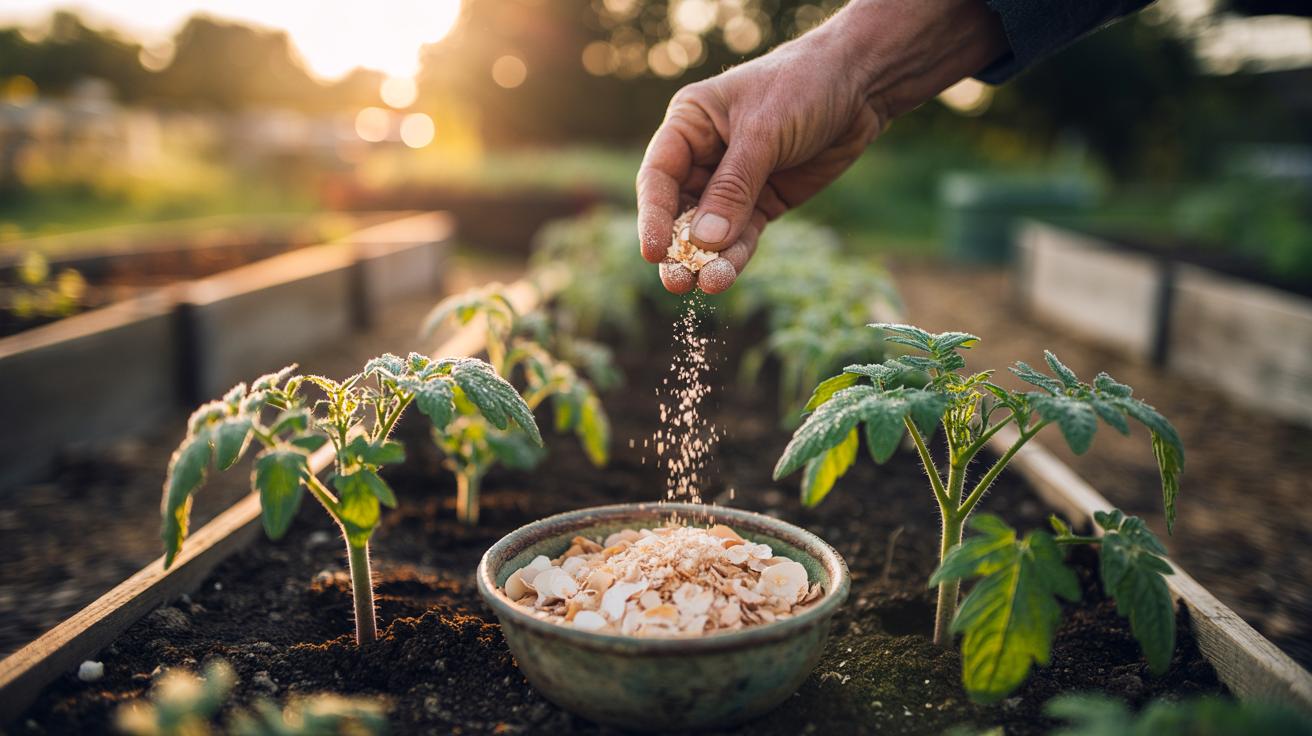
Rinse shells, air-dry, then bake at 120–150°C for 10 minutes to sanitise and crisp. Pulse to a near-powder in a blender or with a rolling pin inside a bag. Aim for gritty flour, not chunky gravel. Sprinkle 1–2 tablespoons per litre of potting mix for seedlings, or ½–1 cup per square metre on beds, raked into the top 5 cm. For fruiting crops—tomatoes, peppers, courgettes—water the area first, then dust and mulch. Moisture is your accelerator. In compost, layer shells through the heap to pre-charge it with calcium and raise the pH slightly, which helps balance acidic inputs like coffee grounds.
| Method | Particle Size | Release Window | Best Use |
|---|---|---|---|
| Lightly Crushed | 5–10 mm pieces | Months | Long-term soil conditioning |
| Finely Ground | Powder | Days to weeks | Seedlings, fast corrections |
| Compost-Blended | Mixed, mostly fine | Compost cycle | General calcium top-up |
Pair shells with organic matter. A shallow mulch locks in moisture, reducing waste and boosting microbial action. Avoid dumping raw, smelly membranes—they tempt pests. Clean, dry, and fine are the rules that turn breakfast into better harvests.
Crops That Benefit and the Pitfalls to Avoid
Calcium stabilises cell walls, so any crop chasing rapid growth will benefit. Tomatoes, peppers and aubergines are prime candidates, particularly in containers where nutrients leach quickly. Brassicas—cabbage, kale, sprouting broccoli—gain sturdier stems and tighter heads. Beans and peas appreciate steadier pH in cool, wet spells. Leafy salads respond with crisper texture, especially in peat-free mixes. Apply early in the growth cycle and lightly top-up as flowering begins. You’re not force-feeding; you’re smoothing supply so plants never hit a wall.
Now the snags. Whole shells decay at a snail’s pace; they look tidy but do little this season. Over-application can edge alkaline soils towards lock-up, so know your baseline—simple pH kits are inexpensive and revealing. Don’t rely on shells alone for blossom-end rot; inconsistent watering is often the real culprit. Sanitise to avoid odour and bacteria, grind fine for speed, and resist the myth of slug-proof borders—use proper barriers or night-time picks. When in doubt, blend shells into compost for a safer, slower release. Right size, right place, right time is the winning formula.
Used with a light hand and a kitchen-savvy method, eggshells become a nimble, regenerative feed that brings real improvements within days. They bolster structure, ease acidity, and backstop fruiting crops at critical moments without drowning your soil in salts. It’s circular, frugal gardening that rewards care with flavour. Start with a jar on the counter, a quick bake, a fast grind, and a measured sprinkle. Then watch seedlings stand taller and trusses set cleanly. Which bed in your garden would benefit most from a swift, targeted calcium lift this week—and how will you test the results?
Did you like it?4.5/5 (22)