In a nutshell
- 🌱 Calcium from eggshells enhances soil structure via aggregate stability and flocculation, boosting infiltration, oxygen flow, and deeper root growth—delivering slow, durable lawn resilience.
- ⏱️ Two-minute method: rinse, dry, and grind shells into fine eggshell powder; apply lightly at roughly 20–30 g/m² after mowing and before light rain—powder matters, not coarse shards.
- 🧪 Check soil pH: aim for ~6.0–6.5; eggshells (calcium carbonate) gently raise pH, so avoid on alkaline or chalky soils and don’t double up if already liming.
- 🧰 Pick the right calcium: eggshells/lime add calcium and lift pH slowly; gypsum supplies calcium without changing pH—better for clay dispersion or sodium issues.
- 🌤️ Combine with basics: annual aeration, mulch-mowing, deep but infrequent watering, and balanced slow-release fertiliser; expect improvements over months, not days.
What if your next lush, emerald lawn started at breakfast? The thin, chalky layer inside your egg box is loaded with calcium, a quiet hero for lawns because it improves soil structure, balances acidity, and helps roots spread. In two minutes, you can turn kitchen eggshells into a useful amendment that nudges compacted soils towards life and air. Not a gimmick. A grounded, low-cost practice. A stable soil structure is the difference between thirsty grass and a lawn that holds moisture, resists compaction, and greens up faster in spring. Here’s the science, the simple method, and the limits you should respect to make eggshells work for you.
How Calcium Transforms Soil Structure
Healthy lawns do not start with seed or fertiliser; they start with soil architecture. Calcium, provided by eggshells as calcium carbonate, supports aggregate stability. It encourages tiny clay particles to bind into crumbly clusters, a process called flocculation. Those crumbs create pores. Pores let rain infiltrate instead of puddling on the surface. Roots then explore deeper. Oxygen moves. Microbes wake up. The result is subtle yet profound: a lawn that looks vigorous after a dry week because its roots inhabit a better-built home.
Here’s the chemistry in a sentence. Calcium is a divalent cation (Ca2+) that participates in cation exchange, helping knit fine particles together and displacing problematic sodium where that’s an issue. Grass doesn’t “eat calcium” for speed; it benefits structurally. Structure drives resilience far more than a quick hit of nitrogen. The improved tilth reduces mower scalping, evens out moisture delivery, and cuts the risk of moss filling compacted gaps. On slightly acidic soils, the carbonate also gently nudges pH towards the sweet spot for turf—typically around 6.0 to 6.5 for many UK lawns—making existing nutrients more available.
There are caveats. Eggshells release calcium slowly; they don’t react overnight. That’s not a flaw, it’s a feature for steady improvement. Finely ground shells offer more surface area and dissolve faster in mildly acidic conditions. Coarse shards look unsightly and do almost nothing in the short term. If your soil is already alkaline or sits on chalk, adding more carbonate is unnecessary and may be counterproductive.
The Two-Minute Eggshell Method
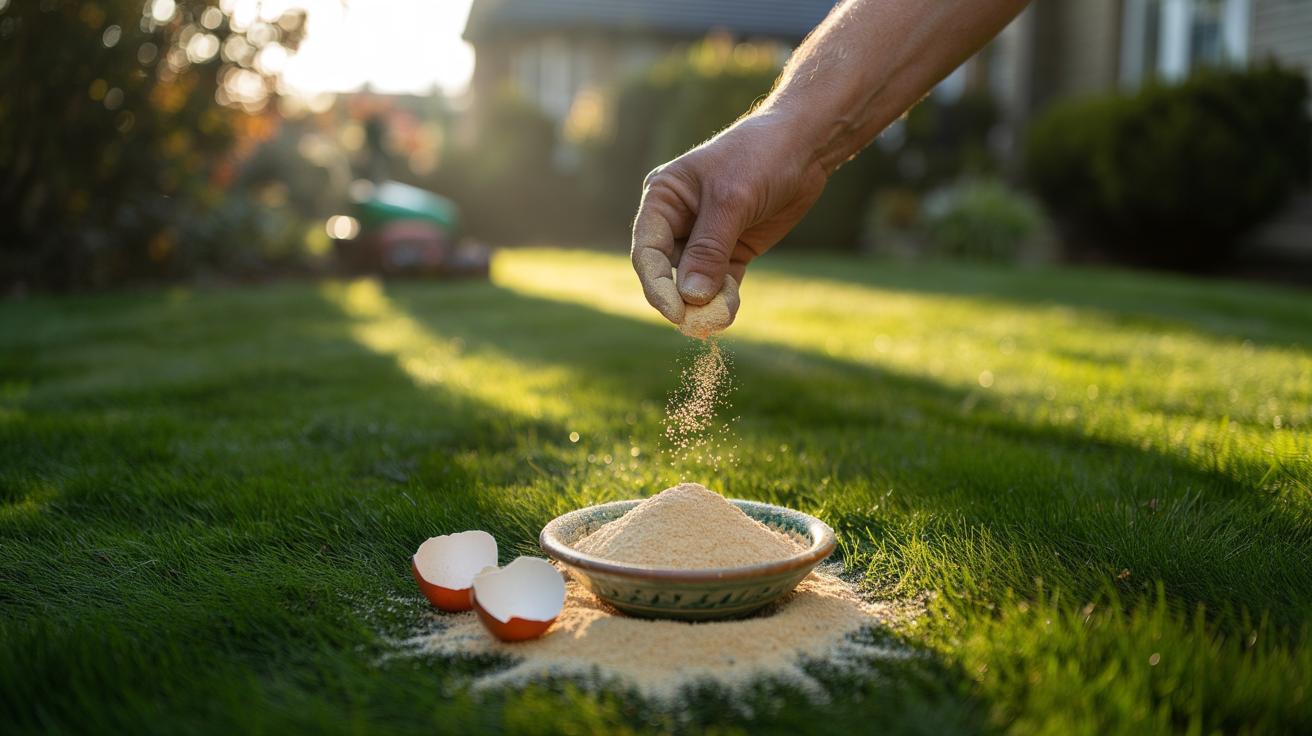
You can prep a season’s worth of eggshell powder in two minutes. Rinse shells after cracking, air-dry in a bowl on the windowsill for a day (or save up through the week), then blitz. When you’re ready, set a timer: 120 seconds with a clean spice grinder or food processor turns brittle shells into a fine, flour-like dust. Done. Powder is the difference between a cosmetic scattering and genuinely available calcium. If you’ve got only a rolling pin, place shells in a bag and crush hard; sieve out the dust and repeat for the rest.
Application is simple. Dust lightly across the lawn at roughly a handful—about 20–30 g—per square metre, ideally after mowing and before light rain or a watering can pass. Don’t bury it. The powder settles into the canopy, meets the thatch layer, and begins its long, slow dissolution. Repeat monthly through spring and early autumn if your soil is acidic and you’re aiming for gradual structural gains. Combine with hollow-tine aeration once a year to magnify the effect, and mulch-mow where possible to feed microbes that help break residues down.
Be selective. Use a cheap soil pH test first; skip eggshells if pH is already 7 or above. Keep the amounts modest if you’re also liming. There’s no need to overdo it: calcium is about structure, not a greener tint in 48 hours. Think of this as a micro-investment in root real estate, not a fertiliser substitute. If pests bother you, briefly heating shells in the oven at 120°C eliminates any odour-prone membrane, but the odour issue is rare once shells are clean and dry.
Science, Limits, and When to Use Gypsum
Not all calcium sources behave the same way. Eggshells are primarily calcium carbonate, akin to garden lime, so they can raise pH slowly while supplying calcium. That’s ideal for acidic, compacted ground. Where structure is poor due to sodium or heavy clay dispersion, gypsum (calcium sulphate) is often a better choice; it delivers calcium without lifting pH. This distinction matters: the right calcium source improves structure without nudging soil chemistry in the wrong direction. Here’s a quick comparison to guide your choice.
| Amendment | Provides Calcium? | Changes pH? | Speed | Best For |
|---|---|---|---|---|
| Eggshell Powder | Yes | Yes, slowly up | Slow release | Acidic soils needing gentle structure gains |
| Garden Lime (CaCO3) | Yes | Yes, moderate up | Moderate | Low pH correction with added calcium |
| Gypsum (CaSO4) | Yes | No | Moderate | Clay dispersion, sodium issues, neutral pH soils |
Realistic expectations keep you winning. You’ll see structural benefits from eggshells over months and seasons, not days. Pair the practice with basics: mow at 6–7 cm, water deeply but infrequently, overseed thin patches, and feed with a balanced, slow-release fertiliser in spring and early autumn. If your lawn sits on calcareous subsoil, prioritise organic matter and gypsum instead of carbonate sources. And remember: granularity matters. The finer the grind, the bigger the impact, because microbes and mild soil acids can actually reach the calcium locked inside each shard.
Turn breakfast leftovers into lawn insurance. With two minutes at the grinder, you’ve banked a gentle, structural boost that supports roots, steadies pH on sour soils, and helps water move the way it should. It’s frugal. It’s tidy. It’s science-led rather than faddish. Small, repeated improvements beat one-off fixes for long-term lawn health. Will you test your soil this weekend, grind a jar of shells, and trial a strip across one metre to see how your turf responds—then scale it up based on what you find?
Did you like it?4.5/5 (20)