In a nutshell
- 🕒 Use a 10‑minute foil rest to lock in juices, redistribute moisture, and serve steaks hotter with cleaner slices.
- 🔥 Keep the crust crisp with a loose foil tent (never sealed) so it doesn’t steam; protect that Maillard crust.
- 🌡️ Pull just shy of target and rely on carryover cooking (about 2–5°C rise) for even doneness across cuts and thicknesses.
- 🍽️ Follow the method: dry, salt, hard sear, use a thermometer, rest under foil, then whisk resting juices into sauce for instant finish.
- 🧰 Troubleshoot fast: create airflow to avoid soggy crust, preheat properly to prevent grey bands, and adjust rest to thickness (6–12 minutes).
Weeknight or weekend, the promise is irresistible: a steak that bleeds flavour, not liquid, and lands on the plate piping hot. The trick that chefs swear by is simple, fast, and oddly underused at home. Rest your steak in foil for 10 minutes and those runaway juices stay put. That short pause is not dead time; it’s when science gets delicious. Muscle fibres relax, moisture redistributes, and the crust you seared so carefully remains crunchy. Go too long and it steams. Too short and it leaks. Nail the timing, though, and you’ll get perfect steaks every time, whether it’s ribeye, sirloin, rump, or fillet.
Why Foil Works in 10 Minutes
When a steak hits hot metal, proteins tighten and push liquid toward the centre. Pull it off the heat and two forces take over: pressure equalisation and carryover cooking. The first lets expelled juices migrate back into the fibres. The second gently raises internal temperature by 2–5°C, finishing the job without hard heat. Foil transforms this delicate window. It cuts evaporative cooling, traps just enough warmth to keep the core active, and helps the exterior remain appetisingly hot. That is why 10 minutes is the sweet spot for most cuts 2–4 cm thick.
The fear, of course, is mushy crust. It happens when the foil is sealed too tightly. Steam builds, the crust softens, and you lose that proud sizzle. The fix: a loose foil tent. Do not crimp the foil around the steak; arch it so air can circulate and condensation doesn’t drip back. This keeps the Maillard reaction crust intact while still protecting precious heat and moisture.
What about flavour? Those juices you’d otherwise lose to the board are now waiting under the steak. They mingle with rendered fat and browned bits, creating a ready-made finishing jus. Slide the steak onto a warm plate, whisk the pooled juices with a knob of butter and a splash of wine or stock, then spoon over. It’s not waste; it’s sauce, smartly saved by foil.
Step-by-Step: The 10-Minute Foil Method
Start with a dry surface. Pat the steak thoroughly and salt generously at least 30 minutes ahead (or the day before for thicker cuts). Preheat a heavy pan or grill until shimmering hot. You want instant colour, not a slow grey creep. Sear in a high-smoke-point fat for 90–120 seconds per side, basting in the final minute. For a deep crust without overcooking, let the steak move as little as possible. Use a thermometer, not guesswork; pull ribeye or sirloin at 50–52°C for medium-rare, fillet at 48–50°C.
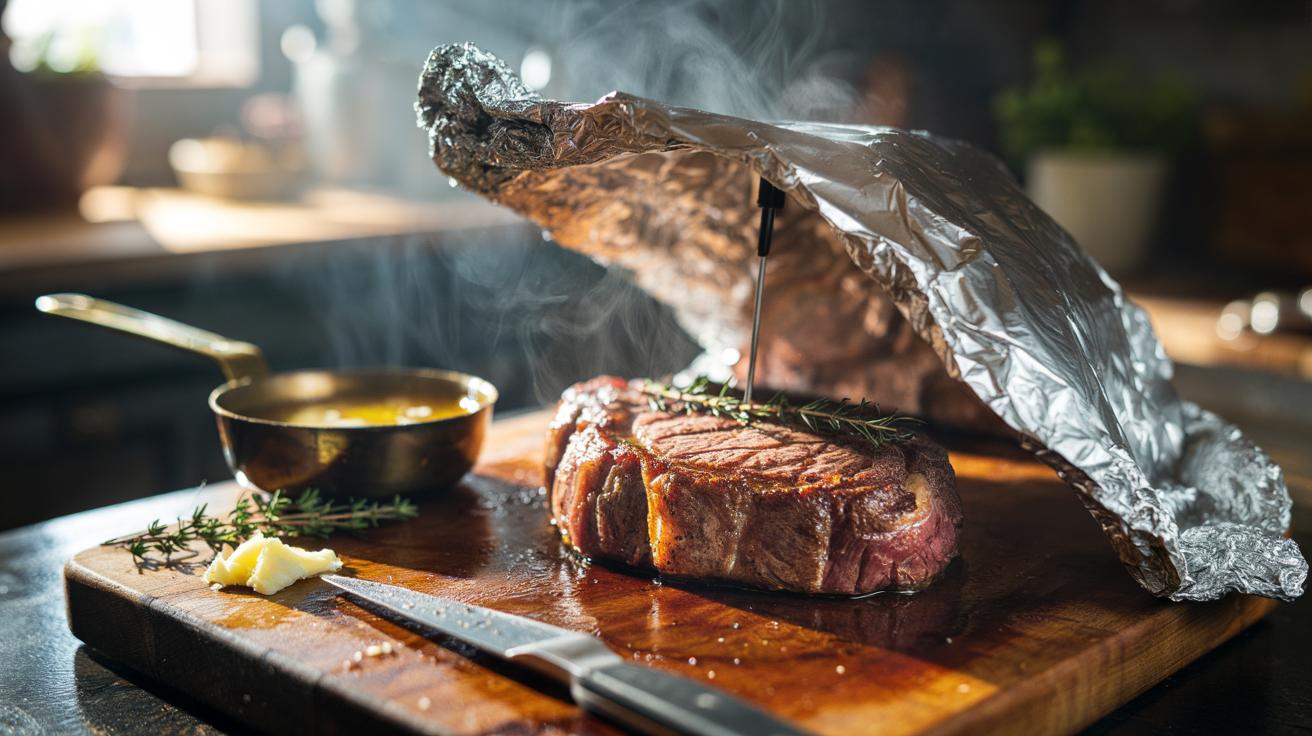
Transfer to a warm plate and form a loose canopy with foil, pegged at the edges to leave small vents. Wrap the steak loosely and rest for 10 minutes. This preserves heat while preventing sogginess. During the rest, heat a clean knob of butter with garlic and thyme until foaming; this is your finishing baste. The butter shouldn’t scorch—think nutty, not bitter. If you like, warm your serving plates now to keep everything piping hot.
At minute ten, lift the foil, tilt the plate, and collect the juices. Return the steak to the pan for a five-second kiss per side if you crave an extra snap on the crust. Off the heat, pour in the resting juices, swirl, and spoon over. Finish with flaky salt and a crack of black pepper. The result is juicy, evenly cooked, brilliantly hot steak with zero plate leakage.
Times, Temperatures, and Cuts That Shine
Not all steaks behave the same. Marbled cuts like ribeye carry internal fat that bastes them from within; leaner fillet or rump needs gentle handling and tighter temperature control. Thickness matters even more than weight: a 2 cm steak cooks fast and risks overshooting during the rest, while a 4 cm steak benefits from a longer sear and a slightly longer foil pause. The aim is consistent: pull just shy of your target, then let carryover cooking and a 10-minute rest close the gap without drying the exterior.
| Cut | Thickness | Pull Temp (°C/°F) | Rest in Foil | Notes |
|---|---|---|---|---|
| Ribeye | 2.5–3 cm | 50–52 / 122–125 | 10 minutes | High marbling; keeps crust well under a loose tent. |
| Sirloin | 2–3 cm | 50–52 / 122–125 | 8–10 minutes | Balanced fat; quick sear, classic beefy flavour. |
| Fillet | 3–4 cm | 48–50 / 118–122 | 10–12 minutes | Very lean; be gentle to avoid dryness. |
| Rump | 2–3 cm | 50–52 / 122–125 | 10 minutes | Robust chew; benefits from a patient rest. |
For medium, add roughly 3–4°C to each pull temperature; for rare, subtract 2°C. Very thin steaks (under 2 cm) can rest 6–8 minutes; very thick or bone-in cuts may prefer 12. The principle holds: pull early, tent loosely, and let heat finish the centre while juices move home. Your steak will carve clean, not weep across the plate.
Troubleshooting: Keep the Crust, Avoid Grey Bands
If your crust goes soft, your foil is too tight or the steak is sitting in its own steam. Solve it by propping the foil with a spoon handle to create an airy arch and by resting on a rack over a plate. Airflow is your ally. If you spot a thick grey band beneath the crust, your sear wasn’t hot enough or the steak was too cold. Start at room temperature, and let the pan preheat until a drop of oil shimmers and moves like water.
Dry edges? That’s overcooking during carryover. Pull earlier, particularly with lean cuts. A digital probe gives you confidence, and it’s cheaper than ruining a premium ribeye. If you need to hold for guests, don’t extend the foil rest endlessly. After 10–12 minutes, move the steak to a barely warm oven (60°C) with the foil tent still loose. Never seal tightly; you’ll steam the crust you worked to build.
Finally, make those juices work for you. Deglaze your resting plate with a splash of Madeira, stock, or even water, whisk in a teaspoon of cold butter, and pour back. Finish with a pinch of sea salt. That’s flavour you rescued, not lost. Pair with crisp chips and peppercorn sauce, and you’ve got steakhouse results in your kitchen.
The beauty of the 10-minute foil rest is its reliability. It respects physics, not superstition, so it works whether you favour a smoky ribeye or a velvet-smooth fillet. The method is minimal: a fierce sear, an early pull, a loose foil tent, and patience. Do that, and your steak will be hotter, juicier, and cleaner to carve. Ready to try it tonight—and which cut will you test first to taste the difference?
Did you like it?4.4/5 (30)