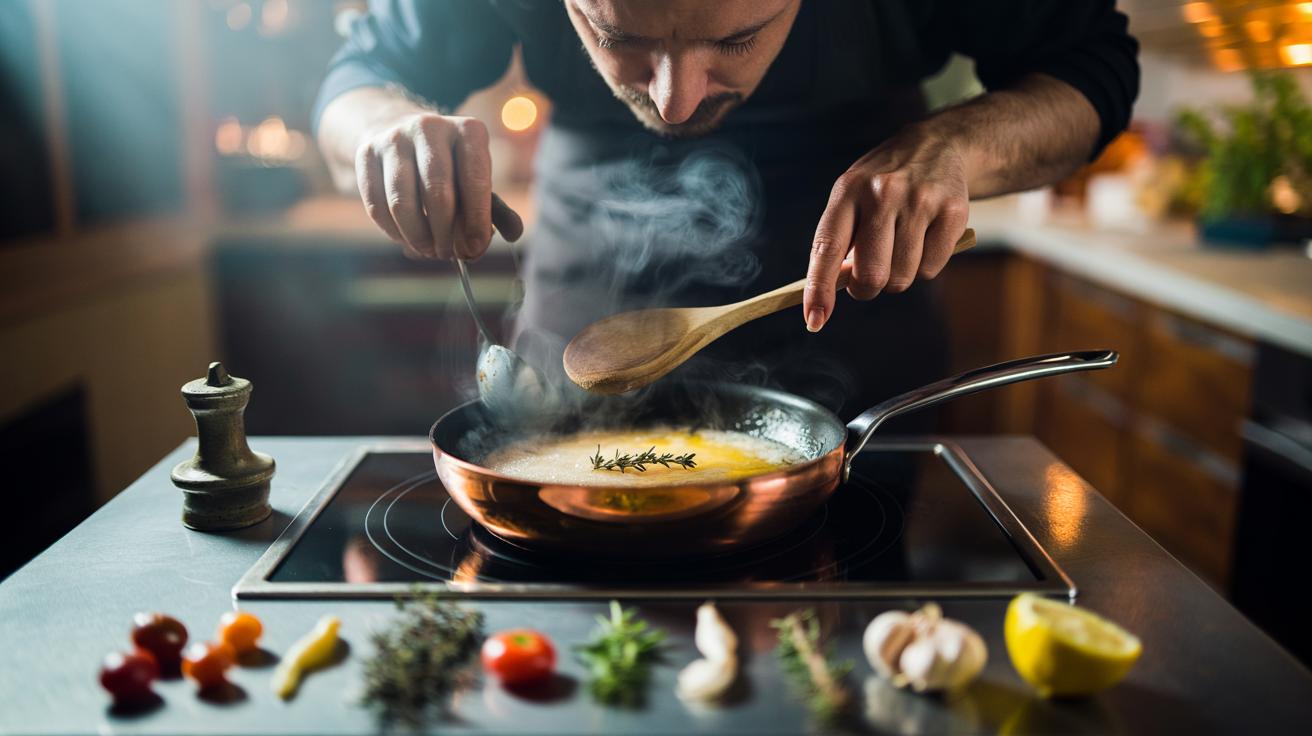
In a nutshell
- 🍳 Memory anchoring pairs sensory cues (sound, smell, touch) with steps, creating fast retrieval pathways that cut cognitive load and turn recipes into reliable routines.
- 👃 Practical anchors you can deploy tonight: sensory, gesture, spatial (mise en place, method of loci), and rhythm; pick three and repeat to lock them in.
- 🔥 Perform under pressure with a pre-cook ritual, a 20-second verbal script, and a single heat safety cue; reinforce with retrieval practice and spaced repetition.
- 🧠 Scale from steps to principles using anchor families—heat, texture, flavour—and frameworks for pan sauces and stir-fries, plus a fat–acid–salt flavour triangle.
- ✨ Results: stronger recipe retention, sharper timing, and more creativity—cook by cues, not the clock—freeing attention to taste, adjust, and finish with confidence.
Tonight could be the night your cooking changes for good. Not with a new gadget, but with a mental tool elite performers use: memory anchoring. It turns fleeting steps and temperatures into sticky, sensory cues you can recall without peeking at your phone. Imagine hearing the sizzle and knowing to flip, feeling the pan’s weight and sensing when to deglaze, or catching a lemony aroma and automatically lowering the heat. Cook with your memory, not your screen. This is practical neuroscience in an apron, a bridge between recipe words and reflexes. Master the anchors, and recipe retention becomes muscle memory—fast.
What Is Memory Anchoring in the Kitchen
Memory anchoring is the deliberate pairing of a step with a cue—sound, scent, touch, location, or phrase—so your brain can retrieve the action when the cue appears. It’s less a trick than a translation layer. Recipes are abstract. Kitchens are sensory. Anchors bind the two in real time. When garlic hits oil and releases that sweet-sharp aroma, it becomes a natural trigger for the next move—add tomatoes, reduce heat, stir. Anchors must be consistent to become automatic. Repeat the same cue-step pairing and your brain stores it as a fast path.
The science is straightforward. Your hippocampus stores the episode; your basal ganglia streamlines the routine; attention and reward consolidate it. Pairing cues with action creates robust retrieval pathways. Over a few sessions, you form a compact loop: cue, action, tiny reward (taste, visual finish), reinforcement. The loop hardens, and your working memory relaxes. That frees you to notice browning, balance salt, and adjust heat by ear. Less cognitive load means fewer mistakes and more flavour. The result: steps that once felt fragile now feel obvious—anchored to the kitchen itself.
Practical Anchors You Can Deploy Tonight
Start with what’s already present. Use sensory anchors: the first scent of toasted cumin becomes your “add onions” signal; the dulling of a butter sizzle cues a pasta toss; a slick pan feel reminds you to add a knob of fat. Practice anchors during cooking, not after. Gesture anchors are powerful: tap the spoon twice on the pot rim before seasoning, grip the pan handle whenever you reduce heat, or say a short phrase—“golden, then flip”—to lock timing. Environment helps: place salt to the left of the hob only when searing proteins; when it’s there, you salt at the same moment every time.
Structure your mise en place as a memory map. Lay ingredients left-to-right in order of use, creating a visual timeline you can scan in a blink. Try the method of loci on your counter: starch at the back left, aromatics front left, liquids centre, acids front right, garnish back right. Walk that route with your eyes as you cook. Add rhythm anchors: whisk to a four-count; flip at the end of the second verse of a short song. Small, repeatable cues beat elaborate tricks you won’t keep. Tonight, choose three anchors and apply them to one recipe.
| Anchor Type | Example Cue | Use-Case | Tip |
|---|---|---|---|
| Sensory (Sound) | Shift from hiss to soft sizzle | Reduce heat after deglaze | Listen before looking at the clock |
| Sensory (Smell) | Nutty aroma of browned butter | Add lemon and remove from heat | Stand close for the first minute |
| Gesture | Spoon tap twice | Season evenly | Use the same gesture every time |
| Spatial | Left-to-right ingredient layout | Follow step order without notes | Reset the layout between batches |
How to Make Anchors Stick Under Pressure
Busy weekday? Guests watching? Anchors must survive stress. Start with a pre-cook ritual: wipe the board, align your knife, set salt and tasting spoon within reach, breathe out slowly. Rituals compress nerves and prime recall. Next, rehearse key steps out loud in 20 seconds: “Sear 2 minutes each side, baste with butter, rest five.” This micro script becomes a verbal anchor you return to when timers ping and pans demand attention. Then, commit to a single “safety cue” for heat—hand hover count over the pan or steam visibility level—so your temperature decisions remain consistent under pressure.
Reinforce with retrieval practice and spaced repetition. The morning after, recall the steps without looking. At dinner, cook the same dish but change one variable—different pan or fat—so the anchor adapts. By the weekend, interleave: two recipes back-to-back, reusing the same anchors. Test yourself before peeking at the recipe—memory grows through effortful recall. Capture micro feedback: if the sizzle faded too fast, the heat anchor was too low; if garlic browned early, shift your “add tomatoes” cue to an earlier aroma. Small corrections harden your habit loop, turning anchors into instinct.
From Recipes to Intuition: Scaling Anchors to Creativity
Once you can cook one recipe on anchors alone, pivot from steps to principles. Create anchor families. Heat anchors: sound of vigorous hiss for searing, gentle whisper for sweating, bubbling bass note for poaching. Texture anchors: the drag of a wooden spoon as starch releases, the bounce of a steak when medium-rare. Flavour anchors: an “aroma chord”—garlic plus thyme plus butter—that you recognise as “ready for deglaze.” Anchors that describe states, not steps, unlock improvisation. You’re no longer chasing minutes; you’re responding to cues embedded in ingredients and equipment.
Turn these into portable frameworks. Map pan sauces as a three-anchor loop: fond appears (visual), deglaze scent blooms (smell), nappe thickness coats the spoon (touch). For stir-fries, use a heat ladder: smoke wisp for aromatics, audible crackle for protein, softened shine for veg. Build a flavour triangle anchor—fat, acid, salt—so each tasting pass asks the same question: which corner is missing? When anchors scale, recipes become templates and templates become your style. That’s the shift from home cook to confident creator, where attention moves from remembering to refining.
What begins as a simple cue—scent, sound, gesture—quickly becomes a fluent language that keeps you present at the stove while quietly upgrading technique. With memory anchoring, recipe retention stops being a crutch and starts being a springboard for precision and flair. Choose three anchors tonight, repeat them this week, and watch your hands remember what your eyes forget. The next time butter foams or the pan whispers, will you reach for your phone—or will the cue carry you to the next perfect step?
Did you like it?4.5/5 (20)